[{"name":"Everest Base Camp Trek","duration":"14","image_url":"https:\/\/www.adventurefamilytreks.com\/storage\/trip-galleries\/1\/thumb_267f7609e190738f5789263f4581ee8c.webp","offer_price":1399,"url":"https:\/\/www.adventurefamilytreks.com\/trips\/everest-base-camp-trek"},{"name":"Everest Three Passes Trek","duration":"18","image_url":"https:\/\/www.adventurefamilytreks.com\/storage\/trip-galleries\/2\/thumb_0e53861c05eacf22be83d712ebc8262e.webp","offer_price":2549,"url":"https:\/\/www.adventurefamilytreks.com\/trips\/everest-three-passes-trek"},{"name":"Gokyo Lake Trek","duration":"12","image_url":"https:\/\/www.adventurefamilytreks.com\/storage\/trip-galleries\/3\/thumb_0f2294f6bf68a77a57e03e6193fe7a04.webp","offer_price":1325,"url":"https:\/\/www.adventurefamilytreks.com\/trips\/gokyo-lake-trek"},{"name":"Everest Panorama Trek","duration":"11","image_url":"https:\/\/www.adventurefamilytreks.com\/storage\/trip-galleries\/4\/thumb_95bcd76d71f2ed77080cc7103aff9eee.webp","offer_price":1255,"url":"https:\/\/www.adventurefamilytreks.com\/trips\/everest-panorama-trek"},{"name":"Annapurna Base Camp Trek","duration":"9","image_url":"https:\/\/www.adventurefamilytreks.com\/storage\/trip-galleries\/5\/thumb_178547896b3136459b4f87627a3a3a6e.webp","offer_price":950,"url":"https:\/\/www.adventurefamilytreks.com\/trips\/annapurna-base-camp-trek"},{"name":"Annapurna Circuit Trek","duration":"17","image_url":"https:\/\/www.adventurefamilytreks.com\/storage\/trip-galleries\/6\/thumb_764d91bdecc6fe371510b4fe6759c5c1.webp","offer_price":1360,"url":"https:\/\/www.adventurefamilytreks.com\/trips\/annapurna-circuit-trek"},{"name":"Ghorepani Poon Hill Trek","duration":"10","image_url":"https:\/\/www.adventurefamilytreks.com\/storage\/trip-galleries\/7\/thumb_ac00562c98cb449924bab4c2a6127b2f.webp","offer_price":499,"url":"https:\/\/www.adventurefamilytreks.com\/trips\/ghorepani-poon-hill-trek"},{"name":"Mardi Himal Trek","duration":"9","image_url":"https:\/\/www.adventurefamilytreks.com\/storage\/trip-galleries\/8\/thumb_cfa64840203bfceedc7bc13315f48167.webp","offer_price":950,"url":"https:\/\/www.adventurefamilytreks.com\/trips\/mardi-himal-trek"},{"name":"Manaslu Circuit Trek","duration":"16","image_url":"https:\/\/www.adventurefamilytreks.com\/storage\/trip-galleries\/9\/thumb_25a43c369c14da548a5c1060511db8af.webp","offer_price":1350,"url":"https:\/\/www.adventurefamilytreks.com\/trips\/manaslu-circuit-trek"},{"name":"Tsum Valley and Manaslu Circuit Trek","duration":"19","image_url":"https:\/\/www.adventurefamilytreks.com\/storage\/trip-galleries\/10\/thumb_75785836f8c5b616ca1089209b5c9114.webp","offer_price":2395,"url":"https:\/\/www.adventurefamilytreks.com\/trips\/tsum-valley-and-manaslu-circuit-trek"},{"name":"Langtang Valley Trek","duration":"10","image_url":"https:\/\/www.adventurefamilytreks.com\/storage\/trip-galleries\/11\/thumb_45fec48f749f7de3de7796f7b990d9c6.webp","offer_price":950,"url":"https:\/\/www.adventurefamilytreks.com\/trips\/langtang-valley-trek"},{"name":"Langtang Valley and Gosainkunda Trek","duration":"14","image_url":"https:\/\/www.adventurefamilytreks.com\/storage\/trip-galleries\/12\/thumb_5a9fdc7afecc2a40e55de88b5fa91354.webp","offer_price":1090,"url":"https:\/\/www.adventurefamilytreks.com\/trips\/langtang-valley-and-gosainkunda-trek"},{"name":"Langtang Gosaikunda and Helambu Trek","duration":"17","image_url":"https:\/\/www.adventurefamilytreks.com\/storage\/trip-galleries\/13\/thumb_31bf05eceaad7335ecc7d6c1d4f82894.webp","offer_price":1105,"url":"https:\/\/www.adventurefamilytreks.com\/trips\/langtang-gosaikunda-and-helambu-trek"},{"name":"Tamang Heritage Trail Trek","duration":"10","image_url":"https:\/\/www.adventurefamilytreks.com\/storage\/trip-galleries\/14\/thumb_e2111974173f92e4b73dfd6cb0a71028.webp","offer_price":795,"url":"https:\/\/www.adventurefamilytreks.com\/trips\/tamang-heritage-trail-trek"},{"name":"Lower Mustang Trek","duration":"10","image_url":"https:\/\/www.adventurefamilytreks.com\/storage\/trip-galleries\/15\/thumb_0331ace1dc2a0b2ce5cd70ef9d111a0c.webp","offer_price":1085,"url":"https:\/\/www.adventurefamilytreks.com\/trips\/lower-mustang-trek"},{"name":"Upper Mustang Overland Tour","duration":"12","image_url":"https:\/\/www.adventurefamilytreks.com\/storage\/trip-galleries\/16\/thumb_6efa991d81256b1e2bdc4c7697d75b76.webp","offer_price":1470,"url":"https:\/\/www.adventurefamilytreks.com\/trips\/upper-mustang-overland-tour"},{"name":"Upper Mustang Trek","duration":"16","image_url":"https:\/\/www.adventurefamilytreks.com\/storage\/trip-galleries\/17\/thumb_ef4cc4eabad957d6fce177afa2467fda.webp","offer_price":1749,"url":"https:\/\/www.adventurefamilytreks.com\/trips\/upper-mustang-trek"},{"name":"Jomsom Muktinath Trekking","duration":"7","image_url":"https:\/\/www.adventurefamilytreks.com\/storage\/trip-galleries\/18\/thumb_459abc824710ec143d3d1b4ac4e9ca2f.webp","offer_price":880,"url":"https:\/\/www.adventurefamilytreks.com\/trips\/jomsom-muktinath-trekking"},{"name":"Everest Base Camp Trek via Gokyo Lake","duration":"18","image_url":"https:\/\/www.adventurefamilytreks.com\/storage\/trip-galleries\/19\/thumb_ed0cd8e82d19354d7648f4567d292ea4.webp","offer_price":1550,"url":"https:\/\/www.adventurefamilytreks.com\/trips\/everest-base-camp-trek-via-gokyo-lake"},{"name":"Pikey Peak Trek","duration":"11","image_url":"https:\/\/www.adventurefamilytreks.com\/storage\/trip-galleries\/20\/thumb_f6c4c9d7fa961381a7ebb39b261ad479.webp","offer_price":795,"url":"https:\/\/www.adventurefamilytreks.com\/trips\/pikey-peak-trek"},{"name":"Annapurna Circuit with Tilicho Lake Trek","duration":"18","image_url":"https:\/\/www.adventurefamilytreks.com\/storage\/trip-galleries\/21\/thumb_42f46fd430bcd10b82b08fa84172a695.webp","offer_price":1420,"url":"https:\/\/www.adventurefamilytreks.com\/trips\/annapurna-circuit-with-tilicho-lake-trek"},{"name":"Kanchenjunga Circuit Trek","duration":"22","image_url":"https:\/\/www.adventurefamilytreks.com\/storage\/trip-galleries\/22\/thumb_57b4698a87bd68798f3b8d19bda7c051.webp","offer_price":2755,"url":"https:\/\/www.adventurefamilytreks.com\/trips\/kanchenjunga-circuit-trek"},{"name":"Lower Dolpo Trek","duration":"18","image_url":"https:\/\/www.adventurefamilytreks.com\/storage\/trip-galleries\/23\/thumb_5f44bdb1e3a48466c738966e98116a90.webp","offer_price":2395,"url":"https:\/\/www.adventurefamilytreks.com\/trips\/lower-dolpo-trek"},{"name":"Upper Dolpo Trek","duration":"24","image_url":"https:\/\/www.adventurefamilytreks.com\/storage\/trip-galleries\/24\/thumb_358dce4b51923768bd638a409a6a2d65.webp","offer_price":3140,"url":"https:\/\/www.adventurefamilytreks.com\/trips\/upper-dolpo-trek"},{"name":"Rara Lake Trek","duration":"15","image_url":"https:\/\/www.adventurefamilytreks.com\/storage\/trip-galleries\/25\/thumb_eb5f3d47ec26a85d1c6df91a05a9d152.webp","offer_price":2299,"url":"https:\/\/www.adventurefamilytreks.com\/trips\/rara-lake-trek"},{"name":"Kathmandu Pokhara Lumbini Chitwan Tour","duration":"10","image_url":"https:\/\/www.adventurefamilytreks.com\/storage\/trip-galleries\/26\/thumb_de043396bb4ce7cea6902ddf4e59a9fe.webp","offer_price":1155,"url":"https:\/\/www.adventurefamilytreks.com\/trips\/kathmandu-pokhara-lumbini-chitwan-tour"},{"name":"Kathmandu Pokhara Lumbini Tour","duration":"8","image_url":"https:\/\/www.adventurefamilytreks.com\/storage\/trip-galleries\/27\/thumb_a73a2b91734ef7fd18d9e3b8b4b250c3.webp","offer_price":1070,"url":"https:\/\/www.adventurefamilytreks.com\/trips\/kathmandu-pokhara-lumbini-tour"},{"name":"Kathmandu Pokhara Chitwan Tour","duration":"8","image_url":"https:\/\/www.adventurefamilytreks.com\/storage\/trip-galleries\/28\/thumb_711054ccb4283af4b1b972714e4a5f41.webp","offer_price":1040,"url":"https:\/\/www.adventurefamilytreks.com\/trips\/kathmandu-pokhara-chitwan-tour"},{"name":"Kathmandu Pokhara Tour","duration":"7","image_url":"https:\/\/www.adventurefamilytreks.com\/storage\/trip-galleries\/29\/thumb_013e25b67e0e0dc65a0bade481e76896.webp","offer_price":890,"url":"https:\/\/www.adventurefamilytreks.com\/trips\/kathmandu-pokhara-tour"},{"name":"Kathmandu Chitwan Tour","duration":"6","image_url":"https:\/\/www.adventurefamilytreks.com\/storage\/trip-galleries\/30\/thumb_019a401ba1cb7c3b960009367df3e163.webp","offer_price":790,"url":"https:\/\/www.adventurefamilytreks.com\/trips\/kathmandu-chitwan-tour"},{"name":"Nepal Highlight Tour","duration":"10","image_url":"https:\/\/www.adventurefamilytreks.com\/storage\/trip-galleries\/31\/thumb_c3749ca10c1940ae9943c8fecc621e75.webp","offer_price":1340,"url":"https:\/\/www.adventurefamilytreks.com\/trips\/nepal-highlight-tour"},{"name":"Nagarkot Sunrise View and Changunarayan Hike","duration":"1","image_url":"https:\/\/www.adventurefamilytreks.com\/storage\/trip-galleries\/32\/thumb_8a77f44e597a8e0499b9ce0e21f53634.webp","offer_price":75,"url":"https:\/\/www.adventurefamilytreks.com\/trips\/nagarkot-sunrise-view-and-changunarayan-hike"},{"name":"Chitwan Jungle Safari Tour","duration":"3","image_url":"https:\/\/www.adventurefamilytreks.com\/storage\/trip-galleries\/33\/thumb_bca35529a62e84527dfc1e699e7edffb.webp","offer_price":305,"url":"https:\/\/www.adventurefamilytreks.com\/trips\/chitwan-jungle-safari-tour"},{"name":"Chitwan Wildlife Adventure Tour","duration":"4","image_url":"https:\/\/www.adventurefamilytreks.com\/storage\/trip-galleries\/34\/thumb_9fb0d6f7644726d75597b3080333d378.webp","offer_price":445,"url":"https:\/\/www.adventurefamilytreks.com\/trips\/chitwan-wildlife-adventure-tour"},{"name":"Bardia National Park Tour","duration":"7","image_url":"https:\/\/www.adventurefamilytreks.com\/storage\/trip-galleries\/35\/thumb_0c1f6dd7e950d1aa9a8cac473953f4b1.webp","offer_price":945,"url":"https:\/\/www.adventurefamilytreks.com\/trips\/bardia-national-park-tour"},{"name":"Hindu Pilgrimage Tour in Nepal","duration":"10","image_url":"https:\/\/www.adventurefamilytreks.com\/storage\/trip-galleries\/36\/thumb_476a3de7ae7d6d2bc5ff518dcddbde33.webp","offer_price":1455,"url":"https:\/\/www.adventurefamilytreks.com\/trips\/hindu-pilgrimage-tour-in-nepal"},{"name":"Buddhist Pilgrimage Tour in Nepal","duration":"8","image_url":"https:\/\/www.adventurefamilytreks.com\/storage\/trip-galleries\/37\/thumb_b0d4276fe307d8ae8be112a481af8f03.webp","offer_price":1050,"url":"https:\/\/www.adventurefamilytreks.com\/trips\/buddhist-pilgrimage-tour-in-nepal"},{"name":"Rara Lake Tour","duration":"9","image_url":"https:\/\/www.adventurefamilytreks.com\/storage\/trip-galleries\/38\/thumb_60fb6ddcc9c7c7cd5ace271c7c8f505b.webp","offer_price":1895,"url":"https:\/\/www.adventurefamilytreks.com\/trips\/rara-lake-tour"},{"name":"Kathmandu Sightseeing Tour","duration":"1","image_url":"https:\/\/www.adventurefamilytreks.com\/storage\/trip-galleries\/39\/thumb_2bb48f23851d0c66d8621872b3cf557c.webp","offer_price":50,"url":"https:\/\/www.adventurefamilytreks.com\/trips\/kathmandu-sightseeing-tour"},{"name":"Everest Base Camp Heli Tour","duration":"1","image_url":"https:\/\/www.adventurefamilytreks.com\/storage\/trip-galleries\/40\/thumb_7b8742eecb74aa7162dd5fd5171ec4e5.webp","offer_price":1435,"url":"https:\/\/www.adventurefamilytreks.com\/trips\/everest-base-camp-heli-tour"},{"name":"Annapurna Base Camp Heli Tour","duration":"1","image_url":"https:\/\/www.adventurefamilytreks.com\/storage\/trip-galleries\/41\/thumb_6e6ff98ec81da8fa61da935637f3c219.webp","offer_price":830,"url":"https:\/\/www.adventurefamilytreks.com\/trips\/annapurna-base-camp-heli-tour"},{"name":"Trishuli River Rafting","duration":"1","image_url":"https:\/\/www.adventurefamilytreks.com\/storage\/trip-galleries\/42\/thumb_e656b3999f28167b8bffb437ad918740.webp","offer_price":65,"url":"https:\/\/www.adventurefamilytreks.com\/trips\/trishuli-river-rafting"},{"name":"Bhote Koshi Bungee Jumping","duration":"1","image_url":"https:\/\/www.adventurefamilytreks.com\/storage\/trip-galleries\/43\/thumb_af71f5edbeff20a6327a3bf0380cacc2.webp","offer_price":235,"url":"https:\/\/www.adventurefamilytreks.com\/trips\/bhote-koshi-bungee-jumping"},{"name":"Paragliding in Pokhara","duration":"1","image_url":"https:\/\/www.adventurefamilytreks.com\/storage\/trip-galleries\/44\/thumb_8a419c3b30480c7e9743cc151538b363.webp","offer_price":70,"url":"https:\/\/www.adventurefamilytreks.com\/trips\/paragliding-in-pokhara"},{"name":"Mera Peak Climbing","duration":"18","image_url":"https:\/\/www.adventurefamilytreks.com\/storage\/trip-galleries\/45\/thumb_183ba6fe9e41d06d63baee8fdf5bea1f.webp","offer_price":2625,"url":"https:\/\/www.adventurefamilytreks.com\/trips\/mera-peak-climbing"},{"name":"Island Peak Climbing","duration":"18","image_url":"https:\/\/www.adventurefamilytreks.com\/storage\/trip-galleries\/46\/thumb_eaef9ff982186ea8a11e136e1fb7983e.webp","offer_price":2210,"url":"https:\/\/www.adventurefamilytreks.com\/trips\/island-peak-climbing"},{"name":"Lobuche Peak Climbing","duration":"17","image_url":"https:\/\/www.adventurefamilytreks.com\/img\/default.gif","offer_price":2250,"url":"https:\/\/www.adventurefamilytreks.com\/trips\/lobuche-peak-climbing"},{"name":"Pisang Peak Climbing","duration":"17","image_url":"https:\/\/www.adventurefamilytreks.com\/img\/default.gif","offer_price":2150,"url":"https:\/\/www.adventurefamilytreks.com\/trips\/pisang-peak-climbing"},{"name":"Tibet Lhasa Tour","duration":"8","image_url":"https:\/\/www.adventurefamilytreks.com\/storage\/trip-galleries\/49\/thumb_b98422dd8eb5c47c26c54f8ee0d73f08.webp","offer_price":2275,"url":"https:\/\/www.adventurefamilytreks.com\/trips\/tibet-lhasa-tour"},{"name":"Kailash Mansarovar Overland Yatra","duration":"13","image_url":"https:\/\/www.adventurefamilytreks.com\/storage\/trip-galleries\/50\/thumb_07faf7a76a0c1cd05cdc5dbac1fe104d.webp","offer_price":2550,"url":"https:\/\/www.adventurefamilytreks.com\/trips\/kailash-mansarovar-overland-yatra"},{"name":"Best Bhutan Tour","duration":"9","image_url":"https:\/\/www.adventurefamilytreks.com\/storage\/trip-galleries\/51\/thumb_4d3c108e80aadaf9f7869b7d58146e69.webp","offer_price":2355,"url":"https:\/\/www.adventurefamilytreks.com\/trips\/best-bhutan-tour"},{"name":"Bhutan Tour from Nepal","duration":"13","image_url":"https:\/\/www.adventurefamilytreks.com\/storage\/trip-galleries\/52\/thumb_6cbc3ac907f7b9f2f04c1142d69f9a8e.webp","offer_price":2585,"url":"https:\/\/www.adventurefamilytreks.com\/trips\/bhutan-tour-from-nepal"},{"name":"Best Of Bhutan Tour","duration":"5","image_url":"https:\/\/www.adventurefamilytreks.com\/storage\/trip-galleries\/53\/thumb_5d8bf7a8e09f0e322ea04ec257fc58b5.webp","offer_price":1785,"url":"https:\/\/www.adventurefamilytreks.com\/trips\/best-of-bhutan-tour"},{"name":"Bhutan Cultural Tour-6 Days","duration":"6","image_url":"https:\/\/www.adventurefamilytreks.com\/storage\/trip-galleries\/55\/thumb_0cf6ea9c199c83529e1ec4f7f9e3ef1e.webp","offer_price":2195,"url":"https:\/\/www.adventurefamilytreks.com\/trips\/bhutan-cultural-tour-6-days"},{"name":"Incredible Bhutan Tour","duration":"8","image_url":"https:\/\/www.adventurefamilytreks.com\/storage\/trip-galleries\/56\/thumb_e85bdd981c795f54d0d8b637fcef4c57.webp","offer_price":2450,"url":"https:\/\/www.adventurefamilytreks.com\/trips\/incredible-bhutan-tour"},{"name":"Kailash Mansarovar Inner Kora","duration":"15","image_url":"https:\/\/www.adventurefamilytreks.com\/img\/default.gif","offer_price":2650,"url":"https:\/\/www.adventurefamilytreks.com\/trips\/kailash-mansarovar-inner-kora"},{"name":"Best of Tibet Tours","duration":"13","image_url":"https:\/\/www.adventurefamilytreks.com\/storage\/trip-galleries\/58\/thumb_8ae3f9dda6019a9584ad2a5b85c31941.webp","offer_price":3265,"url":"https:\/\/www.adventurefamilytreks.com\/trips\/best-of-tibet-tours"},{"name":"Kailash Mansarovar Yatra via Lhasa","duration":"13","image_url":"https:\/\/www.adventurefamilytreks.com\/storage\/trip-galleries\/59\/thumb_bd177e3aa1a94da0b224d8d74d828e2c.webp","offer_price":3130,"url":"https:\/\/www.adventurefamilytreks.com\/trips\/kailash-mansarovar-yatra-via-lhasa"}]
Nestled in the heart of the Khumbu region, Phakding is one of the most important villages on the famous Everest trek route in Nepal. Located at an altitude of 2,610 meters (8,563 feet), this picturesque Sherpa settlement is the first overnight stop for most trekkers heading toward Everest Base Camp, Gokyo Lakes, or the Three Passes Trek.
Although many travelers pass through quickly, Phakding is far more than a simple stopover. Surrounded by pine forests, prayer-flag-covered suspension bridges, monasteries, and the roaring Dudh Koshi River, the village introduces trekkers to the beauty, culture, and spirit of trekking in Nepal.
The atmosphere here is peaceful and welcoming. Traditional tea houses line the riverbanks, Sherpa families greet visitors warmly, and the fresh Himalayan air creates the perfect beginning to an Everest adventure.
Where is Phakding Located?
Phakding lies in the Khumbu Pasang Lhamu Rural Municipality of Solukhumbu District in eastern Nepal. It sits between Lukla and Namche Bazaar, directly on the main Everest Base Camp trekking trail.
Distance from Lukla: approximately 6–8 km
Trekking duration from Lukla: 3–4 hours
Distance to Namche Bazaar: around 10 km
Region: Sagarmatha National Park (UNESCO World Heritage Site)
Trekkers usually arrive in Lukla via a short mountain flight from Kathmandu before beginning the scenic walk to Phakding along the Dudh Koshi Valley.
Why Phakding is Important on the Everest Trek Route
Phakding plays a vital role in the success of any Everest trek. After landing at Lukla’s high-altitude airport, trekkers descend slightly to Phakding to begin the acclimatization process gradually.
This gentle introduction to high-altitude trekking allows travelers to:
Adjust to thinner air
Rest before steeper climbs
Prepare physically and mentally for Namche Bazaar and higher elevations
The village is often called the “calm before the climb” because it offers comfort and tranquility before the more demanding trekking days ahead.
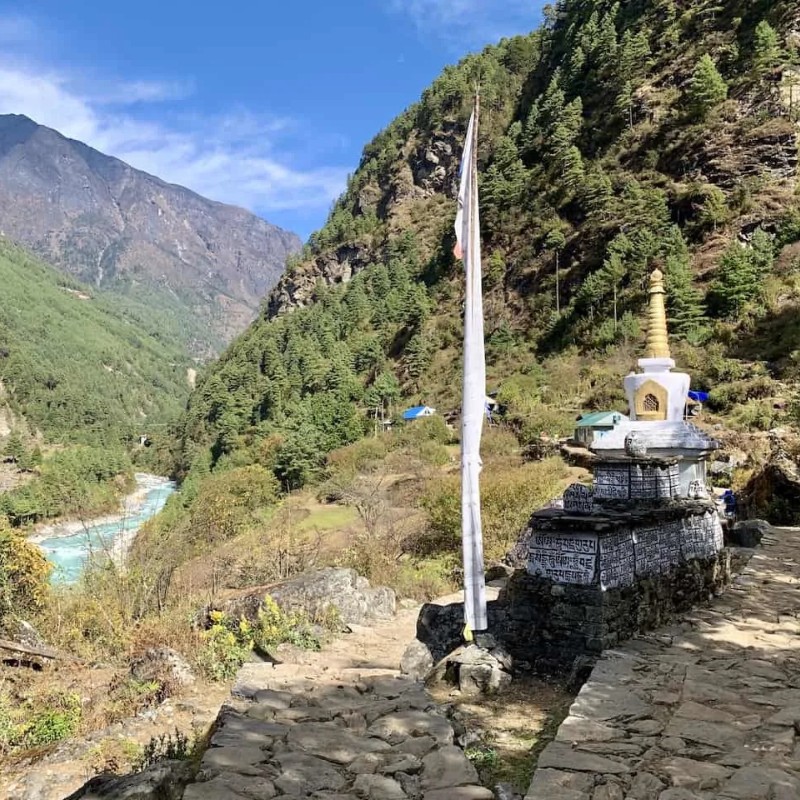
The scenic trekking trail from Lukla to Phakding, following the turquoise waters of the Dudh Koshi River.
Natural Beauty of Phakding
One of the reasons trekkers instantly fall in love with Phakding is its incredible natural setting. The village sits beside the turquoise waters of the Dudh Koshi River, surrounded by forests, terraced hillsides, alpine meadows, and dramatic Himalayan peaks.
Dudh Koshi River
The river flowing through Phakding originates from glaciers high in the Everest region. Its milky-white waters create a constant soothing soundtrack throughout the village.
Trekkers often walk alongside the riverbanks, crossing suspension bridges decorated with colorful Buddhist prayer flags.
Rhododendron Forests
In spring, the hills around Phakding burst into life with vibrant rhododendron blooms in red, pink, and white shades. These forests create one of the most beautiful sections of the Everest trail.
Birdwatchers can also spot:
Himalayan Monal (Nepal’s national bird)
Blood Pheasant
Golden Eagles
Mountain Views
Although Everest itself is not visible from Phakding, trekkers can enjoy views of:
Kusum Kanguru (6,367m)
Kongde Ri
Forest-covered valleys and glacier-fed rivers
At sunrise and sunset, these peaks glow beautifully above the valley.
The Famous Suspension Bridges
The suspension bridges around Phakding are among the most iconic sights on the Everest trekking route. Hanging high above roaring rivers and decorated with prayer flags, these bridges are unforgettable experiences for trekkers.
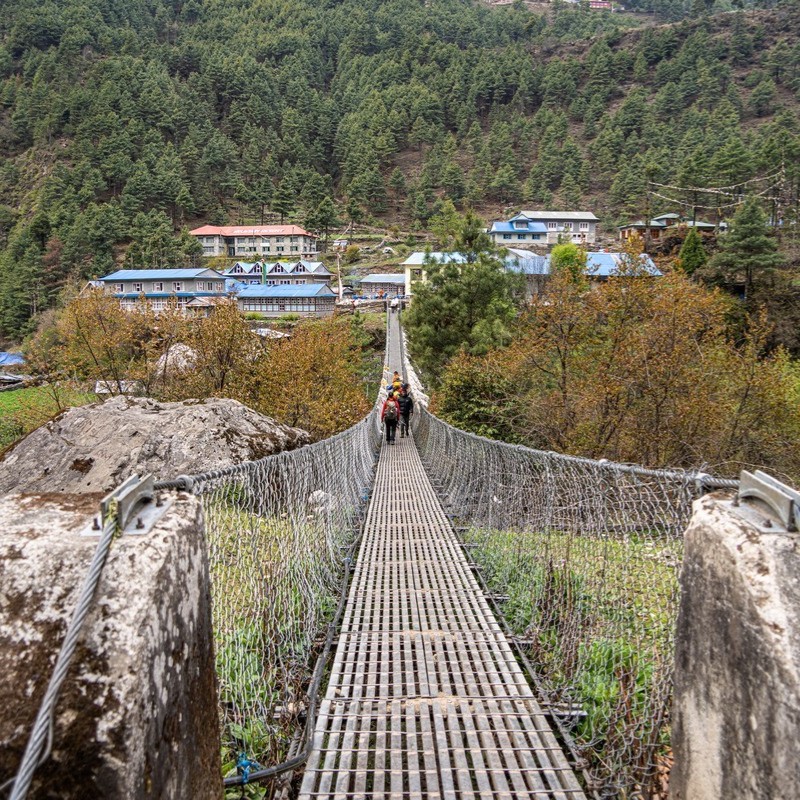
Trekkers crossing a suspension bridge on the way to Phakding in Nepal’s Everest region.
Hillary Suspension Bridge
The most famous bridge near Phakding is the Hillary Suspension Bridge, located further along the trail toward Namche Bazaar.
Built with support from Sir Edmund Hillary, this bridge:
Connects the northern Khumbu region
Crosses dramatically above the Dudh Koshi River
Serves as a major landmark for Everest trekkers
Crossing it is both thrilling and memorable.
Sherpa Culture in Phakding
Phakding is home primarily to the Sherpa community, world-famous for their mountaineering skills and warm hospitality.
Life in the village revolves around:
Tibetan Buddhism
Family-run tea houses
Traditional farming
Trekking tourism
Prayer wheels, mani walls, chortens, and monasteries are found throughout the village.
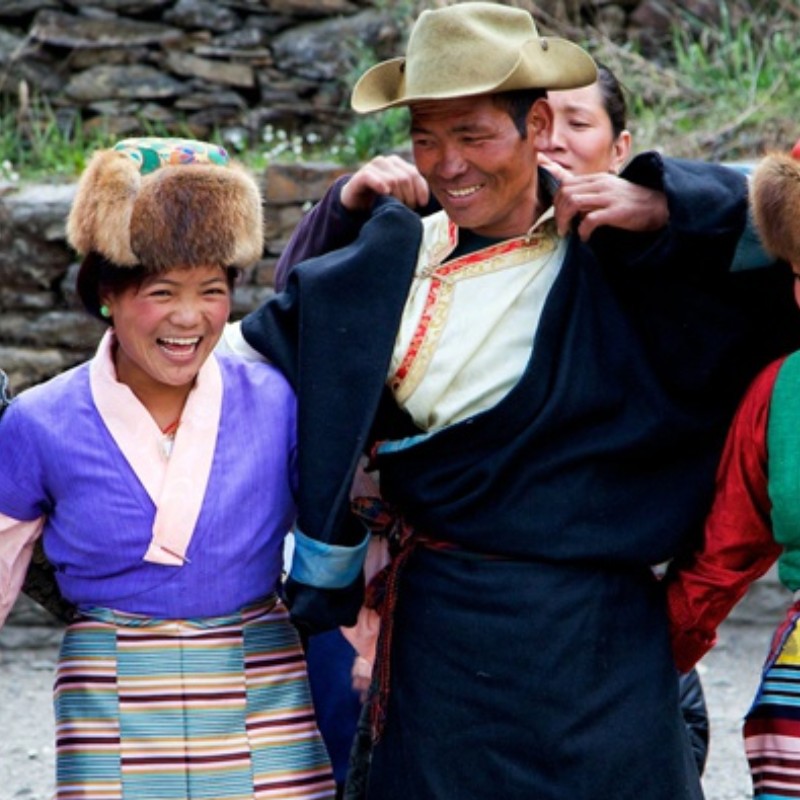
Sherpa community members celebrating Lhosar, the Tibetan New Year festival, in Phakding village.
Rimijung Monastery (Phakding Monastery)
One of the cultural highlights of Phakding is the peaceful Rimijung Monastery, also known as Phakding Gompa.
The monastery:
Belongs to the Nyingma school of Tibetan Buddhism
Houses monks and nuns
Offers meditation sessions
Features beautiful murals and prayer halls
Visitors can observe Buddhist rituals and experience the spiritual atmosphere of the Khumbu region.
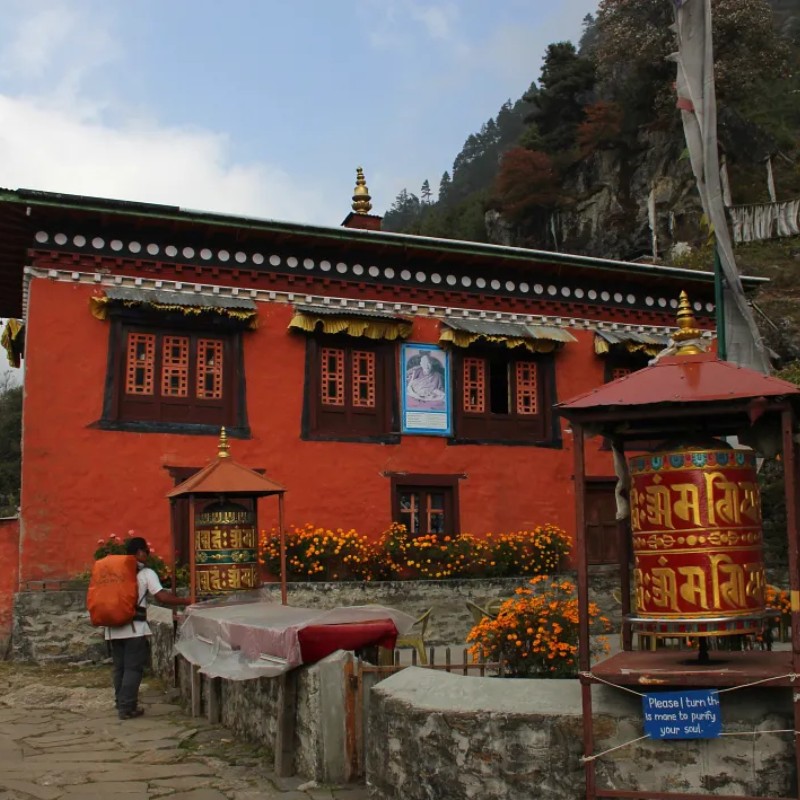
Rimjung Monastery in Phakding, a peaceful Buddhist monastery along the Everest Base Camp trekking route.
Accommodation in Phakding
Despite being a small Himalayan village, Phakding has excellent trekking infrastructure with numerous tea houses, lodges, cafes, bakeries, and restaurants.
Popular Hotels and Lodges in Phakding
Some well-known accommodations include:
Namaste Lodge Phakding
Shangrila Lodge
Mountain Resort Phakding
Snowland Lodge
Royal Sherpa Lodge
Yeti Mountain Home (luxury option)
Most lodges provide:
Comfortable beds
Hot meals
Wi-Fi
Charging facilities
Hot showers
Tea houses beside the river offer especially relaxing overnight stays.
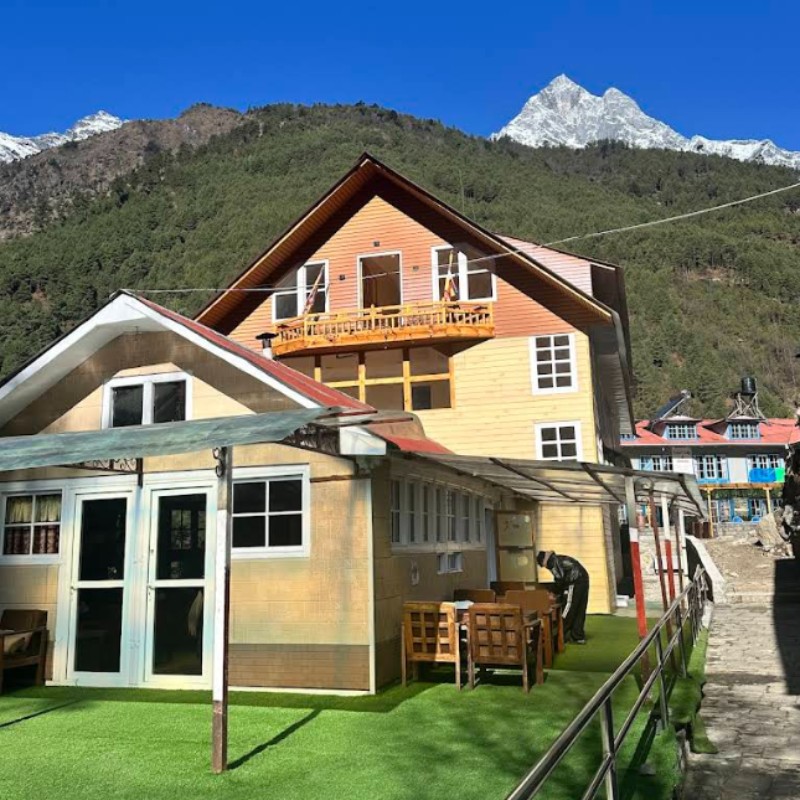
Namaste Lodge in Phakding, a comfortable trekking lodge surrounded by Himalayan scenery in the Everest region.
Cafes, Restaurants & Food in Phakding
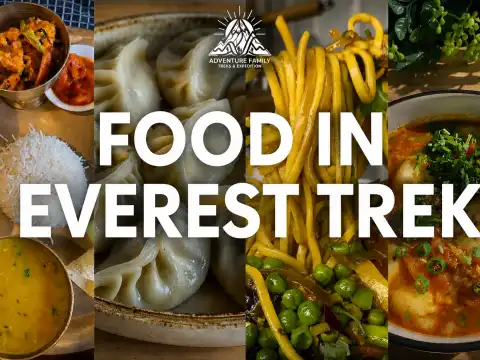
Food culture in Phakding combines traditional Sherpa cuisine with international trekking meals.
Traditional Sherpa Dishes
Trekkers should try:
Sherpa Stew
Tsampa
Dal Bhat
Tibetan bread
Butter tea
International Food Options
Many lodges and cafes also serve:
Pizza
Pasta
Pancakes
Fried rice
Noodles
Coffee and bakery items
The communal dining halls become social hubs where trekkers share stories beside warm stoves.
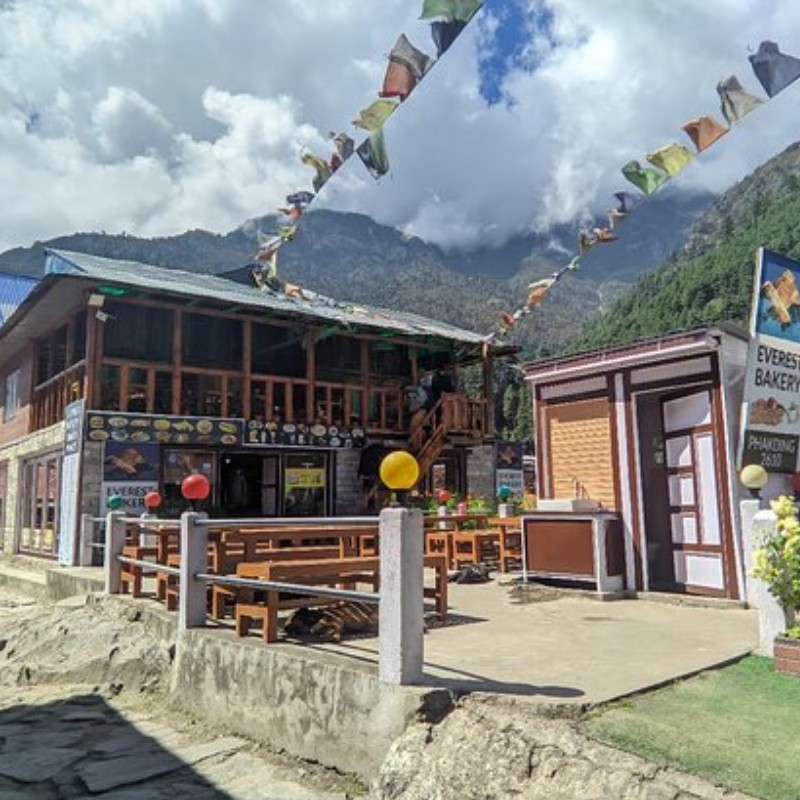
Everest Bakery in Phakding, a popular stop for trekkers along the Everest Base Camp trail.
Wildlife and Flora Around Phakding
Since Phakding lies within Sagarmatha National Park, the area supports rich Himalayan biodiversity.
Wildlife
Animals found near Phakding include:
Himalayan Tahr
Musk Deer
Mountain Yaks
Danphe birds
Himalayan butterflies
Vegetation
The lower altitude allows lush vegetation including:
Pine forests
Bamboo groves
Rhododendrons
Wildflowers
Alpine meadows
Spring is especially beautiful for nature lovers.
Weather and Best Time to Visit Phakding
Phakding enjoys milder weather than higher Everest villages.
Best Seasons for Trekking in Nepal
Spring (March–May)
Clear skies
Rhododendron blooms
Pleasant temperatures
Excellent trekking conditions
Autumn (September–November)
Stable weather
Best mountain visibility
Most popular trekking season
Winter (December–February)
Cold nights
Quiet trails
Crystal-clear views
Monsoon (June–August)
Heavy rain
Green landscapes
Fewer trekkers
Trekking from Phakding to Namche Bazaar
The trek from Phakding to Namche Bazaar is one of the most exciting sections of the Everest Base Camp route.
Route Highlights
Monjo Village
Sagarmatha National Park entrance
Jorsalle
Hillary Suspension Bridge
First Everest viewpoint (on clear days)
This section includes steep uphill climbs but rewards trekkers with breathtaking Himalayan scenery.
Local Experiences in Phakding
Visitors can enjoy several authentic experiences in the village:
Interact with Sherpa families
Visit Buddhist monasteries
Shop for handmade crafts
Enjoy riverside walks
Photograph suspension bridges
Learn local traditions
Experience Sherpa hospitality
Phakding is not only a trekking destination — it is a cultural gateway to the Himalayas.
Travel Tips for Trekking in Nepal via Phakding
Essential Packing List
Waterproof trekking boots
Warm layers
Gloves and hat
Sleeping bag
Trekking poles
Water purification tablets
Sunscreen and sunglasses
Power bank
Altitude Awareness
Although Phakding’s altitude is moderate, trekkers should:
Stay hydrated
Walk slowly
Eat well
Rest properly
Avoid alcohol
Proper acclimatization is essential for higher elevations.
Conclusion
Phakding is one of the most charming villages on the Everest trek route and a true introduction to the beauty of trekking in Nepal. With its peaceful riverside setting, Sherpa hospitality, suspension bridges, monasteries, and mountain scenery, the village offers much more than just a place to sleep.
Whether you are beginning your Everest Base Camp adventure, exploring the Khumbu region, or simply seeking authentic Himalayan culture, Phakding leaves a lasting impression on every traveler.
Before the high-altitude challenges begin, Phakding offers a rare moment of calm, culture, and natural beauty — the perfect gateway to Everest.