
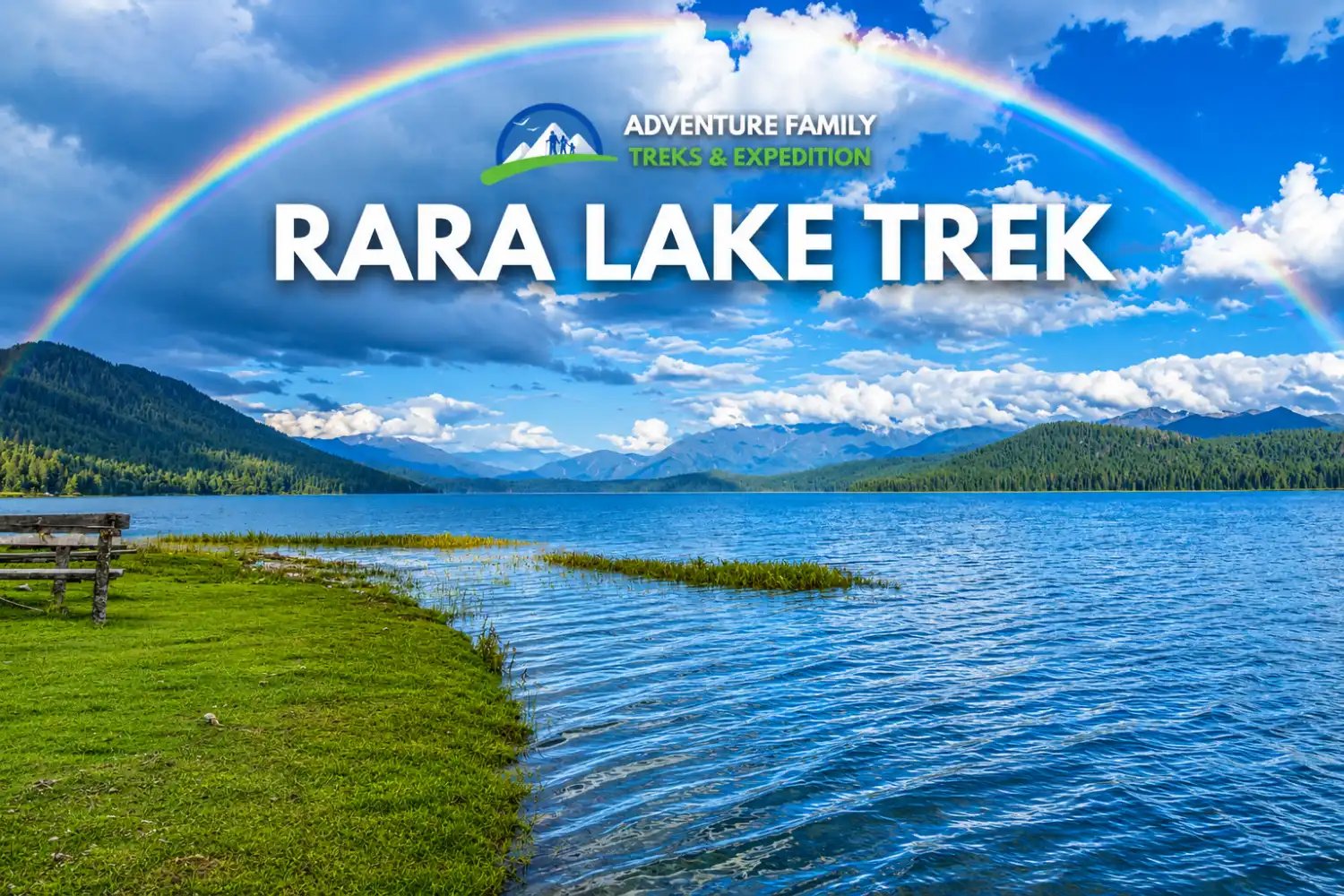
Rara Lake is Nepal's largest lake, sitting at 2,990 meters inside Rara National Park in the remote far-west of the country. Because it's so far from Kathmandu and Pokhara, it sees a fraction of the foot traffic that Everest or Annapurna do — which is exactly why trekkers who make the trip come back talking about the silence, the turquoise water ringed by blue pine forest, and the almost total absence of crowds. This guide covers everything you need to plan a Rara Lake trek in 2027: difficulty, permits, a day-by-day itinerary, accommodation, food, packing, cost, and altitude sickness precautions.
| Region | Karnali Province, Far-Western Nepal (Mugu district) |
| Max altitude | 2,990 m (Rara Lake), passes up to ~3,500 m depending on route |
| Duration | 7–10 days including Kathmandu–Nepalgunj–Jumla/Talcha flights |
| Trek difficulty | Moderate |
| Best season | March–May and September–November |
| Starting point | Jumla (overland trek) or Talcha Airport near Rara (short trek) |
| Permits | Rara National Park entry permit + TIMS card |
| Trek style | Teahouse and camping (teahouses are basic and limited) |
Rara Lake is often described as Nepal's most beautiful lake, and it's easy to see why: still, deep-blue water surrounded by dense conifer forest and snow-capped peaks in the distance, with almost no development around its shores. Because Rara National Park protects the entire area, there's no lakeside construction — just a scattering of villages, forest, and wildlife including Himalayan black bear, musk deer, and over 200 bird species. For trekkers who've done the Everest or Annapurna circuits and want something quieter, Rara offers genuine remoteness without needing extreme trekking experience.
Spring (March–May) brings rhododendron blooms lower down and clear mountain views, with daytime temperatures around 15–20°C at the lake and cold nights.
Autumn (September–November) offers the most stable weather and the clearest skies, making it the most popular season, though "popular" here still means a small number of trekkers.
Summer/monsoon (June–August) brings rain, leeches on the lower trails, and clouded views — best avoided unless you specifically want to see the region's wildflowers and don't mind wet trails.
Winter (December–February) is possible but harsh — Rara Lake often partially freezes, flights into Talcha Airport are frequently cancelled due to weather, and trails can be snowbound. Only experienced winter trekkers should attempt this window.
The Rara Lake trek is rated moderate — it doesn't involve technical climbing or high mountain passes like the Everest Three Passes or Annapurna Circuit, but the remoteness itself adds difficulty. Trails involve steady ascents and descents through forest and open ridgeline, typically 5–7 hours of walking per day. The bigger challenges are logistical: fewer teahouses, less reliable flight schedules into Jumla and Talcha, and being far from any hospital if something goes wrong. A reasonable level of fitness (comfortable with multi-day hiking) is enough for most healthy adults; prior high-altitude trekking experience is helpful but not mandatory given the relatively moderate elevation.
Two permits are needed for the Rara Lake trek:
Because Rara is in a restricted, sparsely staffed region, most trekkers arrange permits through a local trekking agency rather than trying to process them independently — it also simplifies flight bookings into Jumla and Talcha, which can be affected by weather delays. Permit fees and entry rules can change year to year, so confirm current rates with a licensed operator or the Department of National Parks and Wildlife Conservation before you travel.
There are two common approaches: the classic overland route from Jumla (longer, more cultural immersion through the Sinja Valley) and the short route flying directly into Talcha Airport near the lake. Below is a typical 9-day itinerary combining the classic route in and the short flight out.
Day 1: Fly Kathmandu to Nepalgunj Short flight to the Terai lowlands; overnight in Nepalgunj.
Day 2: Fly Nepalgunj to Jumla Scenic mountain flight into Jumla (2,300 m); afternoon to explore the town and organize final trek logistics.
Day 3: Trek Jumla to Chere Chan Chaur (or similar first stop) Gentle trail through pine forest and small villages; roughly 5–6 hours.
Day 4: Trek to Ghurchi Lagna Pass area A steady climb through forest with your first high-altitude views; roughly 6 hours.
Day 5: Trek to the shores of Rara Lake Descend into the Rara valley and arrive at the lake — most trekkers spend the rest of the day walking along the shoreline.
Day 6: Explore Rara Lake / rest day Circle the lake on foot (roughly 3–4 hours for the full lakeside loop), visit Rara village, and take in Chuchemara Danda viewpoint for a wider panorama of the lake and surrounding peaks.
Day 7: Trek to Talcha Airport A short walk (2–3 hours) to Talcha Airport, the gateway for the return flight.
Day 8: Fly Talcha to Nepalgunj Weather-dependent mountain flight back to Nepalgunj; buffer day recommended in case of delays.
Day 9: Fly Nepalgunj to Kathmandu Return flight and end of trip.
This itinerary can be shortened to around 6–7 days by flying both in and out of Talcha Airport, skipping the Jumla approach — faster, but you miss the Sinja Valley villages along the way.
Teahouses exist along the route but are far more basic than what you'll find on Everest or Annapurna — expect simple rooms, shared or squat-style toilets, and limited hot water (often bucket showers, sometimes for a small extra charge). Around Rara Lake itself there are a handful of lodges and a national park guesthouse. Some trekking agencies bring camping equipment as a backup, particularly for the Jumla–Rara stretch where teahouse spacing can be inconsistent. Booking through an agency that knows the current state of teahouses along your specific route is worth it here more than on almost any other Nepal trek.
Meals are simple and centered on dal bhat (lentils, rice, vegetable curry), along with noodle soups, potato dishes, and basic breakfast items like eggs, porridge, and Tibetan bread. Menus are shorter than on the busier trekking routes, and availability depends on what's been carried in — don't expect much variety. Bottled water is scarce and expensive this far out; bring a water filter or purification tablets and refill from streams and taps along the trail rather than relying on purchased bottles.
Costs vary by operator, group size, and season, but as a rough guide for 2027 planning:
Budget travelers can cut costs by trekking the longer overland route in via Jumla rather than flying both directions, and by traveling in a small group to split guide/porter costs.
At just under 3,000 meters, Rara Lake itself carries a lower altitude sickness risk than treks that climb above 4,000–5,000 meters, but it's still high enough to matter, especially if you fly in directly rather than acclimatizing gradually. Watch for headache, nausea, dizziness, and fatigue in the first day or two, and don't push higher if symptoms appear — rest, hydrate, and descend if they worsen. Because the region is remote with limited medical facilities, travel insurance that covers emergency helicopter evacuation is strongly recommended for this trek specifically.
How long is the Rara Lake trek? Most itineraries run 6–9 days depending on whether you fly in and out of Talcha Airport or trek the longer route via Jumla.
Do I need a guide for the Rara Lake trek? It's not strictly mandatory, but given the remoteness, limited teahouse infrastructure, and unpredictable flight schedules, most trekkers hire a guide and often a porter as well.
Is Rara Lake trek suitable for beginners? Yes, in terms of fitness — the walking itself is moderate. The remoteness and flight reliability are the bigger considerations, so first-time trekkers should go with an experienced operator.
How do I get to Rara Lake? Fly Kathmandu–Nepalgunj–Jumla or Kathmandu–Nepalgunj–Talcha, then trek the remaining distance. Overland travel by jeep is possible but very long and rough.
Is Wi-Fi or phone signal available? Very limited. Some lodges near the lake may offer paid Wi-Fi, but don't count on reliable connectivity anywhere on the route.
What is the best month to visit Rara Lake? October and April are generally considered the best months, balancing clear skies with manageable temperatures.
Can I swim in Rara Lake? Swimming is discouraged and, in parts of the protected area, restricted — the lake is cold year-round and considered sacred by local communities.
What permits do I need? A Rara National Park entry permit and a TIMS card.
Are flights to Jumla and Talcha reliable? Not always — mountain flights in this region are frequently delayed or cancelled due to weather, especially in winter. Build at least one buffer day into your itinerary.
Is travel insurance necessary? Yes — given the remoteness and reliance on flights, insurance covering trip delays, medical care, and helicopter evacuation is highly recommended.
The Rara Lake trek trades the crowded trails and well-worn teahouse circuits of Everest and Annapurna for something much quieter: a genuinely remote corner of Nepal built around one of its most striking natural landmarks. It asks more of you logistically — unpredictable flights, basic teahouses, and a longer journey just to reach the trailhead — but for trekkers who've done the classic routes and want to see a different side of the country, it's one of the most rewarding treks in the far west.
Planning a trip to Rara Lake? Get in touch for a customized itinerary, current permit and flight costs, and a guide who knows the region — or browse our other far-west Nepal treks including Humla and Api Saipal Base Camp for ideas on combining multiple remote regions in one trip.
