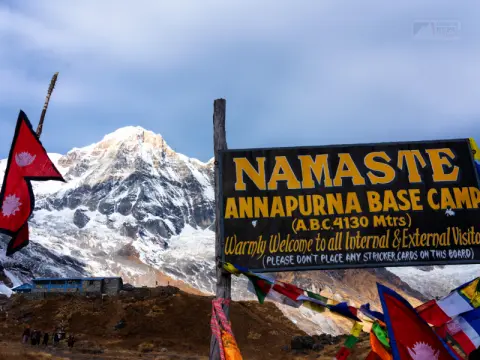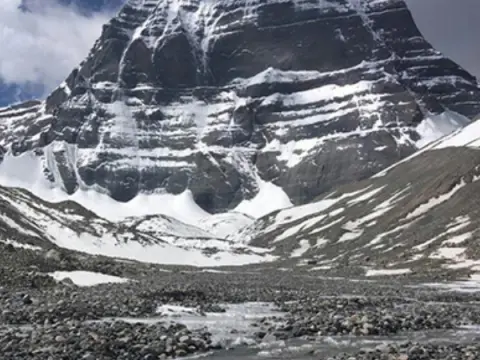
The Himalayas are more than just the tallest mountains on Earth — they are a living, growing testament to the immense power of our planet. Stretching across Nepal, India, Bhutan, China, and Pakistan, this colossal mountain range separates the Indian subcontinent from the Tibetan Plateau and contains the highest peaks on Earth, including Mount Everest.
But how did these magnificent mountains form? Why are they still rising today? And how have they shaped climate, culture, religion, and life across Asia?
Let’s journey into the story of the Himalayas — a story written in stone, collision, ice, and time.
The Birth of the Himalayas: A Collision of Continents
Around 225 million years ago, India was not connected to Asia at all. It was a large island drifting far south of the Equator near present-day Australia, separated from Asia by a vast ocean known as the Tethys Sea.
When the supercontinent Pangaea began breaking apart around 200 million years ago, the Indian Plate started moving northward at remarkable speed. Scientists estimate that India traveled over 6,000 kilometers toward Eurasia. Eventually, about 40–50 million years ago, the Indian Plate collided with the Eurasian Plate.
Unlike oceanic plates, continental plates are both thick and relatively buoyant. Instead of one plate sinking beneath the other, the immense pressure forced the Earth’s crust upward. Rocks folded, twisted, and stacked upon one another, giving rise to the Himalayas and the Tibetan Plateau.
This process is known as continental collision or orogeny, and it created one of the most dramatic geological features on Earth.
A Mountain Range Still Growing
The Himalayas are geologically young mountains. Even today, the Indian Plate continues to push northward into Asia at roughly 67 millimeters per year. As a result, the Himalayas continue to rise by several millimeters annually.
Scientists estimate that peaks such as Mount Everest have risen more than 9 kilometers in only 50 million years — incredibly rapid in geological terms.
The growth, however, is balanced by erosion, gravity, and tectonic stretching. Earthquakes frequently occur throughout the region because enormous stresses continue building within the crust. Some of the deadliest earthquakes in history are linked directly to this ongoing tectonic collision.
The Roof of the World
The Himalayas are often called the “Roof of the World.” The range contains more than 100 peaks higher than 7,200 meters and includes all fourteen of the world’s “eight-thousanders” — mountains over 8,000 meters high.
Some of the most famous peaks include:
- Mount Everest (8,850 m) – the highest mountain on Earth
- K2 (8,611 m) – one of the world’s most difficult climbs
- Kangchenjunga (8,586 m) – the third-highest peak
- Annapurna (8,091 m) – known for its beauty and danger
- Dhaulagiri (8,167 m) – the “White Mountain” of Nepal
Mount Everest itself became a symbol of human ambition after Edmund Hillary and Tenzing Norgay first summited it in 1953.
The Himalayas and Climate
The Himalayas are not just mountains — they are climate-makers.
These towering barriers prevent cold Arctic air from sweeping into South Asia, helping keep the Indian subcontinent warmer than many regions at similar latitudes. They also block and redirect monsoon winds, causing heavy rainfall across Nepal, northern India, and Bhutan.
Without the Himalayas:
- South Asia would be far colder
- Monsoon systems would behave differently
- Deserts like the Gobi and Taklamakan might not exist in their current form
The range creates a dramatic contrast between lush southern slopes and the dry Tibetan Plateau to the north.
Rivers Born from Ice
The Himalayas are the source of some of the world’s greatest rivers, sustaining hundreds of millions of people.
Major river systems include:
- The Indus River
- The Ganges
- The Brahmaputra
These rivers originate from Himalayan glaciers and snowfields, feeding fertile plains across India, Pakistan, Nepal, Bangladesh, and Tibet.
The Himalayas contain around 15,000 glaciers and hold the largest body of ice outside the Arctic and Antarctica. Because of this, the region is often called the “Third Pole.”
However, climate change is causing glaciers to retreat rapidly, threatening water supplies and increasing the risk of glacial lake outburst floods.
A Land of Extraordinary Biodiversity
From tropical forests at the foothills to frozen alpine deserts at high elevations, the Himalayas contain an astonishing range of ecosystems.
Wildlife found in the Himalayas includes:
- Snow leopards
- Himalayan tahr
- Red pandas
- Himalayan black bears
- Musk deer
- Rare alpine birds such as the Himalayan monal
The region’s biodiversity changes dramatically with altitude, rainfall, and temperature. Dense forests, alpine meadows, glacial lakes, and rugged cliffs all coexist within a relatively narrow geographical zone.
Spiritual Heart of Asia
For thousands of years, the Himalayas have inspired spiritual devotion and myth.
In Hinduism, the mountains are personified as Himavat, the king of mountains and father of the goddess Parvati. Sacred rivers like the Ganges originate here, and pilgrimage sites such as Kedarnath, Badrinath, and Amarnath attract millions of worshippers.
In Buddhism, the Himalayas are home to ancient monasteries, meditation caves, and sacred peaks. Mount Kailash, one of the holiest mountains in the world, is revered by Hindus, Buddhists, Jains, and Bon practitioners alike.
The mountains are not only physical giants — they are spiritual symbols of purity, transcendence, and divine power.
Human Adventure and Exploration
The Himalayas have always challenged explorers, climbers, and adventurers.
From the mysterious disappearance of George Mallory in 1924 to modern expeditions using satellite communication and advanced equipment, Everest and the surrounding peaks continue to test human endurance.
Yet the mountains remain dangerous. Avalanches, extreme cold, altitude sickness, crevasses, and sudden storms make Himalayan climbing one of the most hazardous pursuits on Earth.
Despite these risks, thousands continue to journey into the Himalayas every year — drawn by the beauty, mystery, and challenge of the world’s highest mountains.
The Himalayas Today: Beauty and Fragility
The Himalayas are ancient in appearance yet young in geological age. They continue to rise, shift, crack, and evolve. They influence weather, feed rivers, support biodiversity, and shape the cultures of millions.
But the region also faces growing threats:
- Climate change and glacier retreat
- Deforestation
- Landslides and earthquakes
- Over-tourism and environmental degradation
Protecting the Himalayas is not only important for the people who live there — it matters for much of Asia and the entire planet.
Final Thoughts
The Himalayas are the result of one of Earth’s greatest geological events: the collision of two continents. From this violent encounter emerged snow-capped giants, sacred landscapes, mighty rivers, and unique ecosystems.
They are mountains born from motion — and even today, they are still rising.
Standing beneath the towering peaks of the Himalayas reminds us of something profound: Earth is alive, dynamic, and endlessly powerful.