

Quick Inquiry
| Trip code | KMY-0002-Lhasa |
| Duration | 13 days |
| Max. elevation | 5630 m |
| Level | Difficult |
| Transportation | Jeep, Bus |
| Accomodation | Hotel & Guest House |
| Starts at | Lhasa |
| Ends at | Lhasa |
| Trip route | Lhasa - Shigatse - Saga - Mansarovar - Darchen - Dirapuk - Zhuthulpuk |
| Cost | USD 3,130 per person |
A Sacred Journey to Mount Kailash & Lake Mansarovar through the Heart of Tibet
Embark on a spiritually enriching and unforgettable Kailash Mansarovar Yatra via Lhasa, combining the cultural wonders of Tibet with a pilgrimage to the sacred Mount Kailash (6,638 m) and Lake Mansarovar (4,590 m).
This carefully designed journey begins in Lhasa, the spiritual and cultural heart of Tibet. Explore iconic Tibetan landmarks including Potala Palace, Jokhang Temple and Barkhor Street before traveling across the spectacular Tibetan Plateau toward Lake Mansarovar and Mount Kailash.
The highlight of the pilgrimage is the sacred Kailash Parikrama (Kora), a challenging 52-kilometer circumambulation of Mount Kailash, including the high-altitude Dolma La Pass (5,630 m). Along the way, experience breathtaking Himalayan landscapes, ancient monasteries, remote Tibetan settlements and the profound spiritual atmosphere of this revered pilgrimage destination.
The Lhasa route offers a unique combination of Tibetan culture, spirituality and adventure. Instead of traveling directly toward Mount Kailash, this itinerary allows pilgrims to spend valuable time acclimatizing in Lhasa while discovering some of Tibet's most important cultural and religious landmarks.
The journey through Lhasa also provides an opportunity to experience the distinctive Tibetan Buddhist heritage before continuing toward the sacred Kailash region.
Your pilgrimage begins in Lhasa, situated at an altitude of approximately 3,650 meters. Known as the spiritual heart of Tibet, Lhasa is home to some of the world's most significant Tibetan Buddhist monuments.
During your stay, explore:
The iconic Potala Palace, perched dramatically above Lhasa, was historically the winter residence of the Dalai Lamas and remains one of Tibet's most important cultural landmarks.
Located in the heart of the old city, Jokhang Temple is regarded as one of the holiest temples in Tibetan Buddhism and an important pilgrimage destination.
Walk around the traditional Barkhor area and experience the atmosphere of pilgrims, prayer wheels, monasteries, traditional Tibetan architecture and local markets.
After exploring Lhasa and allowing time for acclimatization, the journey continues across the magnificent Tibetan Plateau toward the Kailash region.
The landscape gradually transforms into a dramatic wilderness of snow-covered mountains, vast plains, turquoise lakes and remote Tibetan settlements.
As you approach Lake Mansarovar, the spiritual significance of the journey becomes even more profound.
At the sacred lake, pilgrims have time for Darshan, Puja, meditation and spiritual reflection, subject to local regulations and conditions.
Standing at 6,638 meters, Mount Kailash is revered by followers of Hinduism, Buddhism, Jainism and Bon.
For Hindu pilgrims, Mount Kailash is traditionally regarded as the sacred abode of Lord Shiva. Buddhists associate the mountain with important Buddhist traditions, while Jain and Bon traditions also attach profound spiritual significance to the region.
Although climbing Mount Kailash is prohibited, pilgrims undertake the sacred circumambulation known as Kailash Kora or Parikrama.
The Kailash Parikrama covers approximately 52 kilometers and is generally completed over three days, depending on weather, health, local conditions and the operating itinerary.
The Kora begins at Yama Dwar, from where pilgrims walk through the spectacular Kailash valley toward Dirapuk.
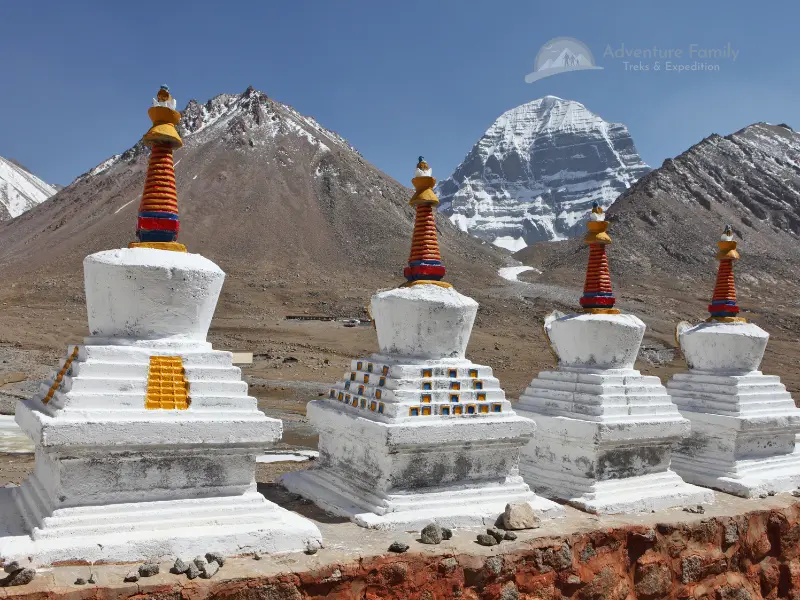
The north face of Mount Kailash provides an unforgettable backdrop throughout this section.
This is the most challenging day of the Parikrama.
The trail crosses Dolma La Pass (5,630 m), the highest point of the journey, before descending toward the sacred Gauri Kund and continuing toward Zuthulpuk.
Proper acclimatization, physical preparation and a gradual pace are essential for this section.
The final section of the Kora follows a comparatively easier trail before reaching the roadhead and returning toward Darchen.
Completing the Parikrama is an emotional and deeply spiritual achievement for many pilgrims.
The main pilgrimage season generally falls during the warmer months when conditions on the Tibetan Plateau are more favorable.
May to September is generally considered the most suitable period for travel, although exact operating dates depend on Tibet travel regulations, permits, weather, road conditions and local authorities.
July and August can offer relatively favorable conditions but may also experience increased precipitation in some areas.
Adventure Family Treks & Expedition recommends choosing travel dates based on current permit availability, weather conditions and the official operating schedule.
Difficulty: Moderate to Challenging / High Altitude
The Kailash Mansarovar Yatra is not a conventional sightseeing tour. Much of the journey takes place at high altitude, and the Kailash Kora includes steep ascents and challenging terrain.
The crossing of Dolma La Pass at approximately 5,630 meters is particularly demanding.
Participants should be prepared for:
A good level of physical fitness and appropriate acclimatization are strongly recommended.
Accommodation during the journey varies according to the location.
In Lhasa and other major destinations, accommodation is generally provided in comfortable hotels.
During the Kailash Parikrama, accommodation is more basic and may include guesthouses or camps depending on the approved itinerary and local arrangements.
Meals are generally arranged throughout the journey, with suitable vegetarian options available for pilgrims.
Travel to Tibet requires specific permits and documentation, and regulations can change.
For international travelers, the required Tibet travel documentation is generally arranged through an authorized travel agency in coordination with the relevant authorities.
Adventure Family Treks & Expedition assists clients with the necessary travel arrangements, permits and documentation according to the applicable regulations at the time of travel.
Altitude is one of the most important considerations during the Kailash Mansarovar Yatra.
The itinerary is designed to provide acclimatization opportunities before reaching the highest sections of the pilgrimage.
We recommend:
At Adventure Family Treks & Expedition, we understand that Kailash Mansarovar is more than just a destination—it is a deeply meaningful spiritual journey.
Our experienced team focuses on providing dependable logistics, professional coordination and attentive support throughout the pilgrimage.
Our experienced travel professionals and field staff understand the unique requirements of high-altitude pilgrimage journeys.
We carefully coordinate transportation, accommodation, meals, permits and other essential arrangements.
High-altitude travel requires careful planning. We emphasize appropriate acclimatization, communication and responsible travel practices.
Our team helps you experience the cultural, religious and spiritual significance of Lhasa, Lake Mansarovar and Mount Kailash.
We assist pilgrims from the planning stage through the completion of the journey, helping make the experience as smooth and comfortable as possible.
The Kailash region is environmentally and culturally sensitive. We encourage all pilgrims to respect Tibetan culture, religious traditions and the natural environment.
Travelers are expected to:
The journey is suitable for travelers and pilgrims who are physically prepared for high-altitude conditions and the demands of the Kailash Kora.
Because altitude affects everyone differently, participants should carefully consider their physical condition and seek appropriate medical advice before undertaking the journey.
Arrive in Lhasa, the spiritual capital of Tibet. Meet our local representative and transfer to the hotel. Rest and acclimatize to the high altitude. Overnight in Lhasa.
Explore the cultural and spiritual highlights of Lhasa. Visit the magnificent Potala Palace, followed by Jokhang Temple, one of the holiest Buddhist temples in Tibet. In the evening, explore the traditional Barkhor Street. Overnight in Lhasa.
Enjoy a relaxed day in Lhasa for proper acclimatization. Free time to explore the city or visit additional cultural sites, subject to local regulations. Overnight in Lhasa.
Drive across the spectacular Tibetan Plateau toward Shigatse, Tibet's second-largest city. En route, enjoy panoramic views of mountains and high-altitude landscapes. Visit Tashilhunpo Monastery if time permits. Overnight in Shigatse.
Continue the scenic drive toward Saga, passing through vast Tibetan landscapes, high mountain ranges and remote settlements. The journey offers an unforgettable introduction to the Tibetan Plateau. Overnight in Saga.
Drive toward the sacred Lake Mansarovar, one of the most revered pilgrimage destinations in Asia. Enjoy your first views of the holy lake and the surrounding Himalayan scenery. Visit Chiu Gompa and spend time for spiritual activities and meditation. Overnight near Lake Mansarovar.
Spend the morning at Lake Mansarovar for Darshan, Puja and other spiritual activities, subject to local regulations. Later, continue to Darchen, the gateway to the Mount Kailash Parikrama. Prepare for the upcoming Kora. Overnight in Darchen.
Begin the sacred Kailash Kora (Parikrama). Drive to Yama Dwar, the traditional starting point, and begin walking toward Dirapuk.
The trail provides spectacular views of the western and northern faces of Mount Kailash. Overnight at Dirapuk in basic accommodation.
The most challenging and spiritually significant day of the Kora.
Ascend toward Dolma La Pass (5,630 m), the highest point of the pilgrimage. Continue through the rugged landscape and descend toward the area of Gauri Kund before proceeding to Zuthulpuk.
Overnight in basic accommodation at Zuthulpuk.
Complete the final section of the Kailash Parikrama and return to the roadhead. Meet the vehicle and drive toward Saga. Relax after completing the sacred Kora. Overnight in Saga.
Retrace the scenic Tibetan Plateau route toward Shigatse. Enjoy the changing landscapes and mountain views along the way. Overnight in Shigatse.
Drive back to Lhasa. Enjoy the remaining time for shopping, relaxation or personal exploration. Overnight in Lhasa.
Transfer to Lhasa Airport or railway station for your onward journey. Your sacred Kailash Mansarovar Yatra via Lhasa concludes with unforgettable spiritual and cultural memories.