[{"name":"Everest Base Camp Trek","duration":"14","image_url":"https:\/\/www.adventurefamilytreks.com\/storage\/trip-galleries\/1\/thumb_267f7609e190738f5789263f4581ee8c.webp","offer_price":1399,"url":"https:\/\/www.adventurefamilytreks.com\/trips\/everest-base-camp-trek"},{"name":"Everest Three Passes Trek","duration":"21","image_url":"https:\/\/www.adventurefamilytreks.com\/storage\/trip-galleries\/2\/thumb_ea7d027d33a4c5246538603d4a9f65ff.webp","offer_price":1860,"url":"https:\/\/www.adventurefamilytreks.com\/trips\/everest-three-passes-trek"},{"name":"Gokyo Lake Trek","duration":"12","image_url":"https:\/\/www.adventurefamilytreks.com\/storage\/trip-galleries\/3\/thumb_0f2294f6bf68a77a57e03e6193fe7a04.webp","offer_price":1325,"url":"https:\/\/www.adventurefamilytreks.com\/trips\/gokyo-lake-trek"},{"name":"Everest Panorama Trek","duration":"11","image_url":"https:\/\/www.adventurefamilytreks.com\/storage\/trip-galleries\/4\/thumb_95bcd76d71f2ed77080cc7103aff9eee.webp","offer_price":1255,"url":"https:\/\/www.adventurefamilytreks.com\/trips\/everest-panorama-trek"},{"name":"Annapurna Base Camp Trek","duration":"9","image_url":"https:\/\/www.adventurefamilytreks.com\/storage\/trip-galleries\/5\/thumb_178547896b3136459b4f87627a3a3a6e.webp","offer_price":650,"url":"https:\/\/www.adventurefamilytreks.com\/trips\/annapurna-base-camp-trek"},{"name":"Annapurna Circuit Trek","duration":"17","image_url":"https:\/\/www.adventurefamilytreks.com\/storage\/trip-galleries\/6\/thumb_764d91bdecc6fe371510b4fe6759c5c1.webp","offer_price":1360,"url":"https:\/\/www.adventurefamilytreks.com\/trips\/annapurna-circuit-trek"},{"name":"Ghorepani Poon Hill Trek","duration":"10","image_url":"https:\/\/www.adventurefamilytreks.com\/storage\/trip-galleries\/7\/thumb_ac00562c98cb449924bab4c2a6127b2f.webp","offer_price":499,"url":"https:\/\/www.adventurefamilytreks.com\/trips\/ghorepani-poon-hill-trek"},{"name":"Mardi Himal Trek","duration":"9","image_url":"https:\/\/www.adventurefamilytreks.com\/storage\/trip-galleries\/8\/thumb_cfa64840203bfceedc7bc13315f48167.webp","offer_price":950,"url":"https:\/\/www.adventurefamilytreks.com\/trips\/mardi-himal-trek"},{"name":"Manaslu Circuit Trek","duration":"16","image_url":"https:\/\/www.adventurefamilytreks.com\/storage\/trip-galleries\/9\/thumb_25a43c369c14da548a5c1060511db8af.webp","offer_price":1350,"url":"https:\/\/www.adventurefamilytreks.com\/trips\/manaslu-circuit-trek"},{"name":"Tsum Valley and Manaslu Circuit Trek","duration":"19","image_url":"https:\/\/www.adventurefamilytreks.com\/storage\/trip-galleries\/10\/thumb_75785836f8c5b616ca1089209b5c9114.webp","offer_price":2395,"url":"https:\/\/www.adventurefamilytreks.com\/trips\/tsum-valley-and-manaslu-circuit-trek"},{"name":"Langtang Valley Trek","duration":"10","image_url":"https:\/\/www.adventurefamilytreks.com\/storage\/trip-galleries\/11\/thumb_45fec48f749f7de3de7796f7b990d9c6.webp","offer_price":950,"url":"https:\/\/www.adventurefamilytreks.com\/trips\/langtang-valley-trek"},{"name":"Langtang Valley and Gosainkunda Trek","duration":"14","image_url":"https:\/\/www.adventurefamilytreks.com\/storage\/trip-galleries\/12\/thumb_5a9fdc7afecc2a40e55de88b5fa91354.webp","offer_price":1090,"url":"https:\/\/www.adventurefamilytreks.com\/trips\/langtang-valley-and-gosainkunda-trek"},{"name":"Langtang Gosaikunda and Helambu Trek","duration":"17","image_url":"https:\/\/www.adventurefamilytreks.com\/storage\/trip-galleries\/13\/thumb_31bf05eceaad7335ecc7d6c1d4f82894.webp","offer_price":1105,"url":"https:\/\/www.adventurefamilytreks.com\/trips\/langtang-gosaikunda-and-helambu-trek"},{"name":"Tamang Heritage Trail Trek","duration":"10","image_url":"https:\/\/www.adventurefamilytreks.com\/storage\/trip-galleries\/14\/thumb_e2111974173f92e4b73dfd6cb0a71028.webp","offer_price":795,"url":"https:\/\/www.adventurefamilytreks.com\/trips\/tamang-heritage-trail-trek"},{"name":"Lower Mustang Trek","duration":"10","image_url":"https:\/\/www.adventurefamilytreks.com\/storage\/trip-galleries\/15\/thumb_0331ace1dc2a0b2ce5cd70ef9d111a0c.webp","offer_price":1085,"url":"https:\/\/www.adventurefamilytreks.com\/trips\/lower-mustang-trek"},{"name":"Upper Mustang Overland Tour","duration":"12","image_url":"https:\/\/www.adventurefamilytreks.com\/storage\/trip-galleries\/16\/thumb_6efa991d81256b1e2bdc4c7697d75b76.webp","offer_price":1470,"url":"https:\/\/www.adventurefamilytreks.com\/trips\/upper-mustang-overland-tour"},{"name":"Upper Mustang Trek","duration":"16","image_url":"https:\/\/www.adventurefamilytreks.com\/storage\/trip-galleries\/17\/thumb_ef4cc4eabad957d6fce177afa2467fda.webp","offer_price":1749,"url":"https:\/\/www.adventurefamilytreks.com\/trips\/upper-mustang-trek"},{"name":"Jomsom Muktinath Trekking","duration":"7","image_url":"https:\/\/www.adventurefamilytreks.com\/storage\/trip-galleries\/18\/thumb_459abc824710ec143d3d1b4ac4e9ca2f.webp","offer_price":880,"url":"https:\/\/www.adventurefamilytreks.com\/trips\/jomsom-muktinath-trekking"},{"name":"Everest Base Camp Trek via Gokyo Lake","duration":"18","image_url":"https:\/\/www.adventurefamilytreks.com\/storage\/trip-galleries\/19\/thumb_ed0cd8e82d19354d7648f4567d292ea4.webp","offer_price":1550,"url":"https:\/\/www.adventurefamilytreks.com\/trips\/everest-base-camp-trek-via-gokyo-lake"},{"name":"Pikey Peak Trek","duration":"11","image_url":"https:\/\/www.adventurefamilytreks.com\/storage\/trip-galleries\/20\/thumb_f6c4c9d7fa961381a7ebb39b261ad479.webp","offer_price":795,"url":"https:\/\/www.adventurefamilytreks.com\/trips\/pikey-peak-trek"},{"name":"Annapurna Circuit with Tilicho Lake Trek","duration":"18","image_url":"https:\/\/www.adventurefamilytreks.com\/storage\/trip-galleries\/21\/thumb_42f46fd430bcd10b82b08fa84172a695.webp","offer_price":1420,"url":"https:\/\/www.adventurefamilytreks.com\/trips\/annapurna-circuit-with-tilicho-lake-trek"},{"name":"Kanchenjunga Circuit Trek","duration":"22","image_url":"https:\/\/www.adventurefamilytreks.com\/storage\/trip-galleries\/22\/thumb_57b4698a87bd68798f3b8d19bda7c051.webp","offer_price":2755,"url":"https:\/\/www.adventurefamilytreks.com\/trips\/kanchenjunga-circuit-trek"},{"name":"Lower Dolpo Trek","duration":"18","image_url":"https:\/\/www.adventurefamilytreks.com\/storage\/trip-galleries\/23\/thumb_5f44bdb1e3a48466c738966e98116a90.webp","offer_price":2395,"url":"https:\/\/www.adventurefamilytreks.com\/trips\/lower-dolpo-trek"},{"name":"Upper Dolpo Trek","duration":"24","image_url":"https:\/\/www.adventurefamilytreks.com\/storage\/trip-galleries\/24\/thumb_358dce4b51923768bd638a409a6a2d65.webp","offer_price":3140,"url":"https:\/\/www.adventurefamilytreks.com\/trips\/upper-dolpo-trek"},{"name":"Rara Lake Trek","duration":"15","image_url":"https:\/\/www.adventurefamilytreks.com\/storage\/trip-galleries\/25\/thumb_eb5f3d47ec26a85d1c6df91a05a9d152.webp","offer_price":2299,"url":"https:\/\/www.adventurefamilytreks.com\/trips\/rara-lake-trek"},{"name":"Kathmandu Pokhara Lumbini Chitwan Tour","duration":"10","image_url":"https:\/\/www.adventurefamilytreks.com\/storage\/trip-galleries\/26\/thumb_de043396bb4ce7cea6902ddf4e59a9fe.webp","offer_price":1155,"url":"https:\/\/www.adventurefamilytreks.com\/trips\/kathmandu-pokhara-lumbini-chitwan-tour"},{"name":"Kathmandu Pokhara Lumbini Tour","duration":"8","image_url":"https:\/\/www.adventurefamilytreks.com\/storage\/trip-galleries\/27\/thumb_a73a2b91734ef7fd18d9e3b8b4b250c3.webp","offer_price":1070,"url":"https:\/\/www.adventurefamilytreks.com\/trips\/kathmandu-pokhara-lumbini-tour"},{"name":"Kathmandu Pokhara Chitwan Tour","duration":"8","image_url":"https:\/\/www.adventurefamilytreks.com\/storage\/trip-galleries\/28\/thumb_711054ccb4283af4b1b972714e4a5f41.webp","offer_price":1040,"url":"https:\/\/www.adventurefamilytreks.com\/trips\/kathmandu-pokhara-chitwan-tour"},{"name":"Kathmandu Pokhara Tour","duration":"7","image_url":"https:\/\/www.adventurefamilytreks.com\/storage\/trip-galleries\/29\/thumb_013e25b67e0e0dc65a0bade481e76896.webp","offer_price":890,"url":"https:\/\/www.adventurefamilytreks.com\/trips\/kathmandu-pokhara-tour"},{"name":"Kathmandu Chitwan Tour","duration":"6","image_url":"https:\/\/www.adventurefamilytreks.com\/storage\/trip-galleries\/30\/thumb_019a401ba1cb7c3b960009367df3e163.webp","offer_price":790,"url":"https:\/\/www.adventurefamilytreks.com\/trips\/kathmandu-chitwan-tour"},{"name":"Nepal Highlight Tour","duration":"10","image_url":"https:\/\/www.adventurefamilytreks.com\/storage\/trip-galleries\/31\/thumb_c3749ca10c1940ae9943c8fecc621e75.webp","offer_price":1340,"url":"https:\/\/www.adventurefamilytreks.com\/trips\/nepal-highlight-tour"},{"name":"Nagarkot Sunrise View and Changunarayan Hike","duration":"1","image_url":"https:\/\/www.adventurefamilytreks.com\/storage\/trip-galleries\/32\/thumb_8a77f44e597a8e0499b9ce0e21f53634.webp","offer_price":75,"url":"https:\/\/www.adventurefamilytreks.com\/trips\/nagarkot-sunrise-view-and-changunarayan-hike"},{"name":"Chitwan Jungle Safari Tour","duration":"3","image_url":"https:\/\/www.adventurefamilytreks.com\/storage\/trip-galleries\/33\/thumb_bca35529a62e84527dfc1e699e7edffb.webp","offer_price":305,"url":"https:\/\/www.adventurefamilytreks.com\/trips\/chitwan-jungle-safari-tour"},{"name":"Chitwan Wildlife Adventure Tour","duration":"4","image_url":"https:\/\/www.adventurefamilytreks.com\/storage\/trip-galleries\/34\/thumb_9fb0d6f7644726d75597b3080333d378.webp","offer_price":445,"url":"https:\/\/www.adventurefamilytreks.com\/trips\/chitwan-wildlife-adventure-tour"},{"name":"Bardia National Park Tour","duration":"7","image_url":"https:\/\/www.adventurefamilytreks.com\/storage\/trip-galleries\/35\/thumb_0c1f6dd7e950d1aa9a8cac473953f4b1.webp","offer_price":945,"url":"https:\/\/www.adventurefamilytreks.com\/trips\/bardia-national-park-tour"},{"name":"Hindu Pilgrimage Tour in Nepal","duration":"10","image_url":"https:\/\/www.adventurefamilytreks.com\/storage\/trip-galleries\/36\/thumb_476a3de7ae7d6d2bc5ff518dcddbde33.webp","offer_price":1455,"url":"https:\/\/www.adventurefamilytreks.com\/trips\/hindu-pilgrimage-tour-in-nepal"},{"name":"Buddhist Pilgrimage Tour in Nepal","duration":"8","image_url":"https:\/\/www.adventurefamilytreks.com\/storage\/trip-galleries\/37\/thumb_b0d4276fe307d8ae8be112a481af8f03.webp","offer_price":1050,"url":"https:\/\/www.adventurefamilytreks.com\/trips\/buddhist-pilgrimage-tour-in-nepal"},{"name":"Rara Lake Tour","duration":"9","image_url":"https:\/\/www.adventurefamilytreks.com\/storage\/trip-galleries\/38\/thumb_60fb6ddcc9c7c7cd5ace271c7c8f505b.webp","offer_price":1895,"url":"https:\/\/www.adventurefamilytreks.com\/trips\/rara-lake-tour"},{"name":"Kathmandu Sightseeing Tour","duration":"1","image_url":"https:\/\/www.adventurefamilytreks.com\/storage\/trip-galleries\/39\/thumb_2bb48f23851d0c66d8621872b3cf557c.webp","offer_price":50,"url":"https:\/\/www.adventurefamilytreks.com\/trips\/kathmandu-sightseeing-tour"},{"name":"Everest Base Camp Heli Tour","duration":"1","image_url":"https:\/\/www.adventurefamilytreks.com\/storage\/trip-galleries\/40\/thumb_7b8742eecb74aa7162dd5fd5171ec4e5.webp","offer_price":1435,"url":"https:\/\/www.adventurefamilytreks.com\/trips\/everest-base-camp-heli-tour"},{"name":"Annapurna Base Camp Heli Tour","duration":"1","image_url":"https:\/\/www.adventurefamilytreks.com\/storage\/trip-galleries\/41\/thumb_6e6ff98ec81da8fa61da935637f3c219.webp","offer_price":830,"url":"https:\/\/www.adventurefamilytreks.com\/trips\/annapurna-base-camp-heli-tour"},{"name":"Trishuli River Rafting","duration":"1","image_url":"https:\/\/www.adventurefamilytreks.com\/storage\/trip-galleries\/42\/thumb_e656b3999f28167b8bffb437ad918740.webp","offer_price":65,"url":"https:\/\/www.adventurefamilytreks.com\/trips\/trishuli-river-rafting"},{"name":"Bhote Koshi Bungee Jumping","duration":"1","image_url":"https:\/\/www.adventurefamilytreks.com\/storage\/trip-galleries\/43\/thumb_af71f5edbeff20a6327a3bf0380cacc2.webp","offer_price":235,"url":"https:\/\/www.adventurefamilytreks.com\/trips\/bhote-koshi-bungee-jumping"},{"name":"Paragliding in Pokhara","duration":"1","image_url":"https:\/\/www.adventurefamilytreks.com\/storage\/trip-galleries\/44\/thumb_8a419c3b30480c7e9743cc151538b363.webp","offer_price":70,"url":"https:\/\/www.adventurefamilytreks.com\/trips\/paragliding-in-pokhara"},{"name":"Mera Peak Climbing","duration":"18","image_url":"https:\/\/www.adventurefamilytreks.com\/storage\/trip-galleries\/45\/thumb_183ba6fe9e41d06d63baee8fdf5bea1f.webp","offer_price":2625,"url":"https:\/\/www.adventurefamilytreks.com\/trips\/mera-peak-climbing"},{"name":"Island Peak Climbing","duration":"18","image_url":"https:\/\/www.adventurefamilytreks.com\/storage\/trip-galleries\/46\/thumb_eaef9ff982186ea8a11e136e1fb7983e.webp","offer_price":2210,"url":"https:\/\/www.adventurefamilytreks.com\/trips\/island-peak-climbing"},{"name":"Lobuche Peak Climbing","duration":"17","image_url":"https:\/\/www.adventurefamilytreks.com\/img\/default.gif","offer_price":2250,"url":"https:\/\/www.adventurefamilytreks.com\/trips\/lobuche-peak-climbing"},{"name":"Pisang Peak Climbing","duration":"17","image_url":"https:\/\/www.adventurefamilytreks.com\/img\/default.gif","offer_price":2150,"url":"https:\/\/www.adventurefamilytreks.com\/trips\/pisang-peak-climbing"},{"name":"Tibet Lhasa Tour","duration":"8","image_url":"https:\/\/www.adventurefamilytreks.com\/storage\/trip-galleries\/49\/thumb_b98422dd8eb5c47c26c54f8ee0d73f08.webp","offer_price":2275,"url":"https:\/\/www.adventurefamilytreks.com\/trips\/tibet-lhasa-tour"},{"name":"Kailash Mansarovar Overland Yatra","duration":"13","image_url":"https:\/\/www.adventurefamilytreks.com\/storage\/trip-galleries\/50\/thumb_07faf7a76a0c1cd05cdc5dbac1fe104d.webp","offer_price":2550,"url":"https:\/\/www.adventurefamilytreks.com\/trips\/kailash-mansarovar-overland-yatra"},{"name":"Best Bhutan Tour","duration":"9","image_url":"https:\/\/www.adventurefamilytreks.com\/storage\/trip-galleries\/51\/thumb_4d3c108e80aadaf9f7869b7d58146e69.webp","offer_price":2355,"url":"https:\/\/www.adventurefamilytreks.com\/trips\/best-bhutan-tour"},{"name":"Bhutan Tour from Nepal","duration":"13","image_url":"https:\/\/www.adventurefamilytreks.com\/storage\/trip-galleries\/52\/thumb_6cbc3ac907f7b9f2f04c1142d69f9a8e.webp","offer_price":2585,"url":"https:\/\/www.adventurefamilytreks.com\/trips\/bhutan-tour-from-nepal"},{"name":"Best Of Bhutan Tour","duration":"5","image_url":"https:\/\/www.adventurefamilytreks.com\/storage\/trip-galleries\/53\/thumb_5d8bf7a8e09f0e322ea04ec257fc58b5.webp","offer_price":1785,"url":"https:\/\/www.adventurefamilytreks.com\/trips\/best-of-bhutan-tour"},{"name":"Bhutan Cultural Tour-6 Days","duration":"6","image_url":"https:\/\/www.adventurefamilytreks.com\/storage\/trip-galleries\/55\/thumb_0cf6ea9c199c83529e1ec4f7f9e3ef1e.webp","offer_price":2195,"url":"https:\/\/www.adventurefamilytreks.com\/trips\/bhutan-cultural-tour-6-days"},{"name":"Incredible Bhutan Tour","duration":"8","image_url":"https:\/\/www.adventurefamilytreks.com\/storage\/trip-galleries\/56\/thumb_e85bdd981c795f54d0d8b637fcef4c57.webp","offer_price":2450,"url":"https:\/\/www.adventurefamilytreks.com\/trips\/incredible-bhutan-tour"},{"name":"Kailash Mansarovar Inner Kora","duration":"15","image_url":"https:\/\/www.adventurefamilytreks.com\/img\/default.gif","offer_price":2650,"url":"https:\/\/www.adventurefamilytreks.com\/trips\/kailash-mansarovar-inner-kora"},{"name":"Best of Tibet Tours","duration":"13","image_url":"https:\/\/www.adventurefamilytreks.com\/storage\/trip-galleries\/58\/thumb_8ae3f9dda6019a9584ad2a5b85c31941.webp","offer_price":3265,"url":"https:\/\/www.adventurefamilytreks.com\/trips\/best-of-tibet-tours"},{"name":"Kailash Mansarovar Yatra via Lhasa","duration":"13","image_url":"https:\/\/www.adventurefamilytreks.com\/storage\/trip-galleries\/59\/thumb_bd177e3aa1a94da0b224d8d74d828e2c.webp","offer_price":3130,"url":"https:\/\/www.adventurefamilytreks.com\/trips\/kailash-mansarovar-yatra-via-lhasa"}]
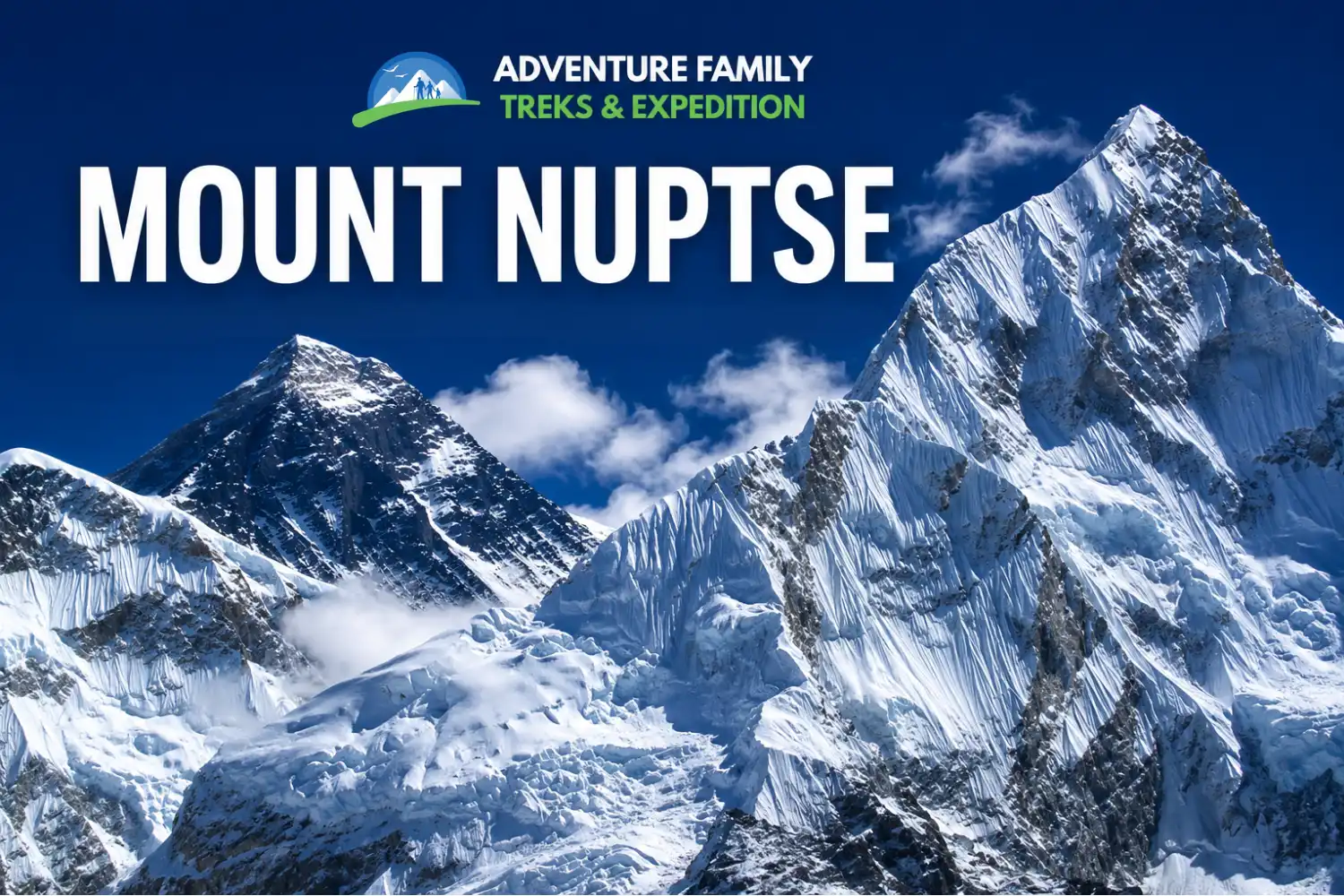
When people think about the Everest region, Mount Everest naturally dominates the conversation. However, standing proudly beside the world's highest mountain is another Himalayan giant that commands equal admiration from trekkers, climbers, and photographers—Nuptse Mountain. Rising to an elevation of 7,861 meters (25,791 feet), Nuptse is one of the most striking peaks in Nepal and forms an essential part of the famous Everest massif.
Although Everest often steals the spotlight, Nuptse creates much of the dramatic scenery experienced during the Everest Base Camp Trek. Its steep rock walls, snow-covered ridges, and imposing south face dominate the skyline above the Khumbu Glacier, making it one of the most photographed mountains in the Himalayas. For many trekkers approaching Everest Base Camp, Nuptse appears larger and more impressive than Everest itself due to its proximity and massive structure.
Where Is Nuptse Mountain Located?
Nuptse is located in the Khumbu region of northeastern Nepal within the Mahalangur Himal range of the greater Himalayas. The mountain lies immediately southwest of Mount Everest and is connected to Everest through the South Col, a high-altitude mountain pass situated between Everest and Lhotse.
The mountain sits entirely within Nepal and forms part of the iconic Everest-Lhotse-Nuptse massif. Its position places it at the heart of Sagarmatha National Park, a UNESCO World Heritage Site renowned for its breathtaking mountain landscapes, unique biodiversity, and Sherpa culture.
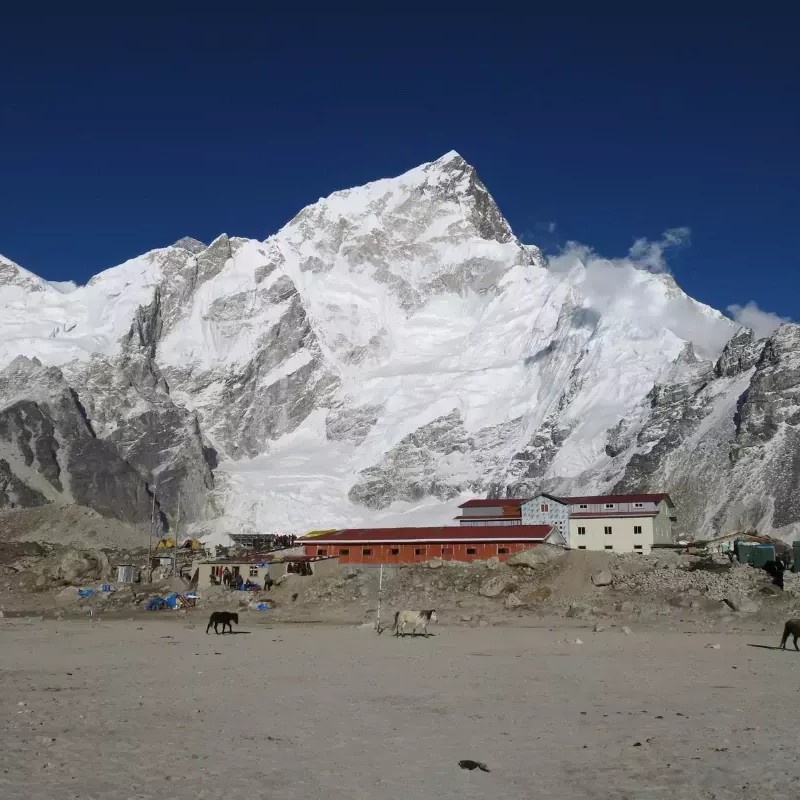
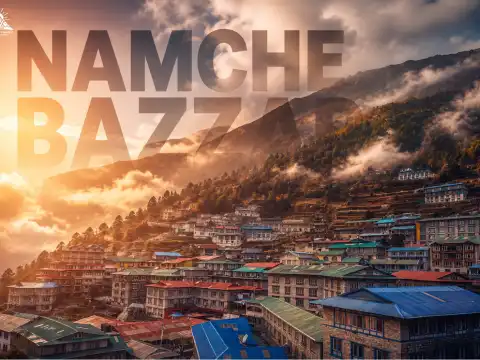
Because of its location near Everest Base Camp, Nuptse is visible from many points along the Everest trekking route, including Namche Bazaar, Tengboche, Dingboche, Lobuche, Gorak Shep, Everest Base Camp, and Kala Patthar.
Mount Nuptse from Gorakshep Everest trekking route.
Meaning of the Name Nuptse
The name Nuptse comes from the Tibetan language. The word "Nup" translates to west, while "Tse" means peak. Together, Nuptse means "West Peak," a name that reflects the mountain's position west of Mount Everest.
The mountain has been known by this name for generations among local Sherpa communities who have lived in the Khumbu region for centuries. Its cultural and geographical significance makes it an important landmark for both residents and visitors.
The Physical Appearance of Nuptse
Unlike Everest's distinct pyramid-shaped summit, Nuptse is characterized by a long, jagged ridge stretching across the skyline. This dramatic ridgeline extends for several kilometers and contains multiple subsidiary summits connected by sharp snow-covered ridges.
One of Nuptse's most remarkable features is its immense south face. Rising thousands of meters above the surrounding valleys, this near-vertical wall is considered one of the most challenging alpine climbing objectives in the Himalayas. The combination of rock, ice, and snow creates an imposing landscape that changes color throughout the day as sunlight moves across its slopes.
From Everest Base Camp, Nuptse appears as a massive fortress guarding the western side of the Khumbu Glacier. Its sheer size and proximity make it one of the most visually dominant mountains in the region.
Geological Formation of Nuptse
Like the rest of the Himalayas, Nuptse was formed through the collision of the Indian and Eurasian tectonic plates. This geological process began approximately fifty million years ago and continues today, slowly pushing the Himalayan range higher each year.
The mountain consists primarily of metamorphic and igneous rock formations that have been uplifted and shaped by tectonic forces, glaciers, and erosion. Over millions of years, these geological processes created the steep ridges, dramatic cliffs, and towering faces that define Nuptse today.
The ongoing movement of tectonic plates means that the Himalayas remain one of the youngest and most dynamic mountain ranges on Earth.
History of Exploration and Climbing
Nuptse attracted attention during the early Everest expeditions of the twentieth century. British explorers and climbers observed the mountain while searching for routes to Mount Everest, but the focus on Everest meant that Nuptse remained largely unexplored for several decades.
The first successful ascent of Nuptse was achieved on May 16, 1961, by a British expedition. Dennis Davis and Tashi Sherpa reached the summit via the North Ridge, marking a significant achievement in Himalayan mountaineering history.
Since that historic climb, Nuptse has become a respected objective for experienced mountaineers seeking a challenging ascent beyond the more commercial routes found on neighboring peaks. Despite its lower elevation compared to Everest and Lhotse, many climbers consider Nuptse technically more demanding due to its steep terrain and objective hazards.
Why Nuptse Is Important in the Everest Region
Nuptse plays a vital role in shaping the landscape of the Everest region. The mountain forms part of the natural boundary surrounding the Khumbu Glacier and contributes significantly to the dramatic scenery experienced by trekkers and climbers.
Its ridges and slopes influence local weather patterns, snowfall accumulation, and wind conditions around Everest Base Camp. The mountain also contributes to the avalanche systems that affect parts of the Khumbu Icefall and surrounding glaciers.
For mountaineers, Nuptse serves as an important landmark during Everest expeditions. Its location helps climbers orient themselves while navigating the complex terrain around Everest Base Camp and the upper Khumbu Valley.
Experiencing Nuptse During the Everest Base Camp Trek
One of the greatest attractions of the Everest Base Camp Trek is the opportunity to witness Nuptse up close. As trekkers ascend through the Khumbu Valley, the mountain gradually reveals its immense size and dramatic structure.
From Namche Bazaar, distant views of Nuptse can be seen on clear days. As the trail climbs through Tengboche and Dingboche, the mountain becomes increasingly prominent. By the time trekkers reach Lobuche and Gorak Shep, Nuptse dominates the landscape with its towering walls and snow-covered ridges.
At Everest Base Camp itself, Nuptse rises directly above the Khumbu Glacier, creating one of the most spectacular mountain panoramas in the world. Many visitors are surprised to discover that Nuptse appears more imposing than Everest from certain viewpoints due to its closer proximity.
Kala Patthar: The Ultimate Viewpoint for Nuptse
Among all viewpoints in the Everest region, Kala Patthar offers perhaps the finest perspective of Nuptse. Located at an elevation of 5,545 meters, this famous viewpoint provides unobstructed panoramic views of Everest, Nuptse, Pumori, Lhotse, and countless surrounding peaks.
During sunrise, the first rays of sunlight illuminate Nuptse's summit and ridges, creating a golden glow against the deep blue Himalayan sky. This magical moment attracts photographers and trekkers from around the world.
The combination of Everest and Nuptse seen from Kala Patthar is often considered one of the most iconic mountain views on Earth.
Climbing Challenges on Nuptse
Nuptse is regarded as one of Nepal's more technical Himalayan peaks. Its steep slopes, unstable snow conditions, rockfall hazards, and avalanche-prone terrain require advanced mountaineering skills and extensive high-altitude experience.
The mountain's south face is particularly famous among elite climbers. The face presents a formidable challenge involving complex mixed climbing on rock, ice, and snow. Harsh weather conditions, strong winds, and rapidly changing temperatures add to the difficulty.
As a result, Nuptse receives far fewer climbing attempts than Everest, making successful ascents highly respected within the mountaineering community.
Wildlife Around Nuptse
The slopes and valleys surrounding Nuptse fall within Sagarmatha National Park, home to a remarkable variety of Himalayan wildlife. Lower elevations support forests of rhododendron, pine, fir, and juniper, providing habitat for numerous animal species.
Trekkers may encounter Himalayan tahr grazing on rocky slopes, musk deer moving quietly through alpine forests, and colorful Himalayan monals searching for food. Snow leopards inhabit remote high-altitude regions, although sightings are extremely rare.
Bird enthusiasts can often observe Himalayan griffons soaring above the valleys, while snow pigeons and blood pheasants are common throughout the region.
Best Time to Visit Nuptse
The best seasons to experience Nuptse are spring and autumn. During spring, warmer temperatures and blooming rhododendron forests add vibrant colors to the trekking landscape. Stable weather conditions and excellent visibility make this one of the most popular times for Everest region trekking.
Autumn offers crystal-clear skies, dry conditions, and some of the best mountain visibility of the year. The sharp outlines of Nuptse's ridges and snow-covered faces are particularly impressive during this season.
Winter provides dramatic snowy landscapes but colder temperatures and harsher conditions. Monsoon season typically brings cloud cover and reduced visibility, making mountain views less reliable.
Photography Opportunities
Nuptse is a dream destination for mountain photographers. Its rugged ridges, dramatic shadows, and towering presence create endless photographic opportunities throughout the Everest region.
Sunrise and sunset are especially rewarding, as changing light conditions transform the mountain's appearance. The golden hues of early morning and the warm glow of evening alpenglow create unforgettable scenes that attract photographers from around the globe.
Popular photography locations include Kala Patthar, Everest Base Camp, Gorak Shep, Lobuche, Dingboche, and Tengboche.
Conclusion
Nuptse may stand beside the world's highest mountain, but it possesses a character and beauty entirely its own. Its dramatic ridgelines, immense south face, rich climbing history, and commanding presence over the Khumbu Glacier make it one of the most remarkable mountains in the Himalayas.
Whether admired during the Everest Base Camp Trek, photographed from Kala Patthar, or studied by mountaineers fascinated by its technical challenges, Nuptse leaves a lasting impression on everyone who visits the Everest region. For many travelers, it becomes one of the most memorable mountains they encounter in Nepal, proving that not every Himalayan giant needs to hold a world record to inspire awe.