
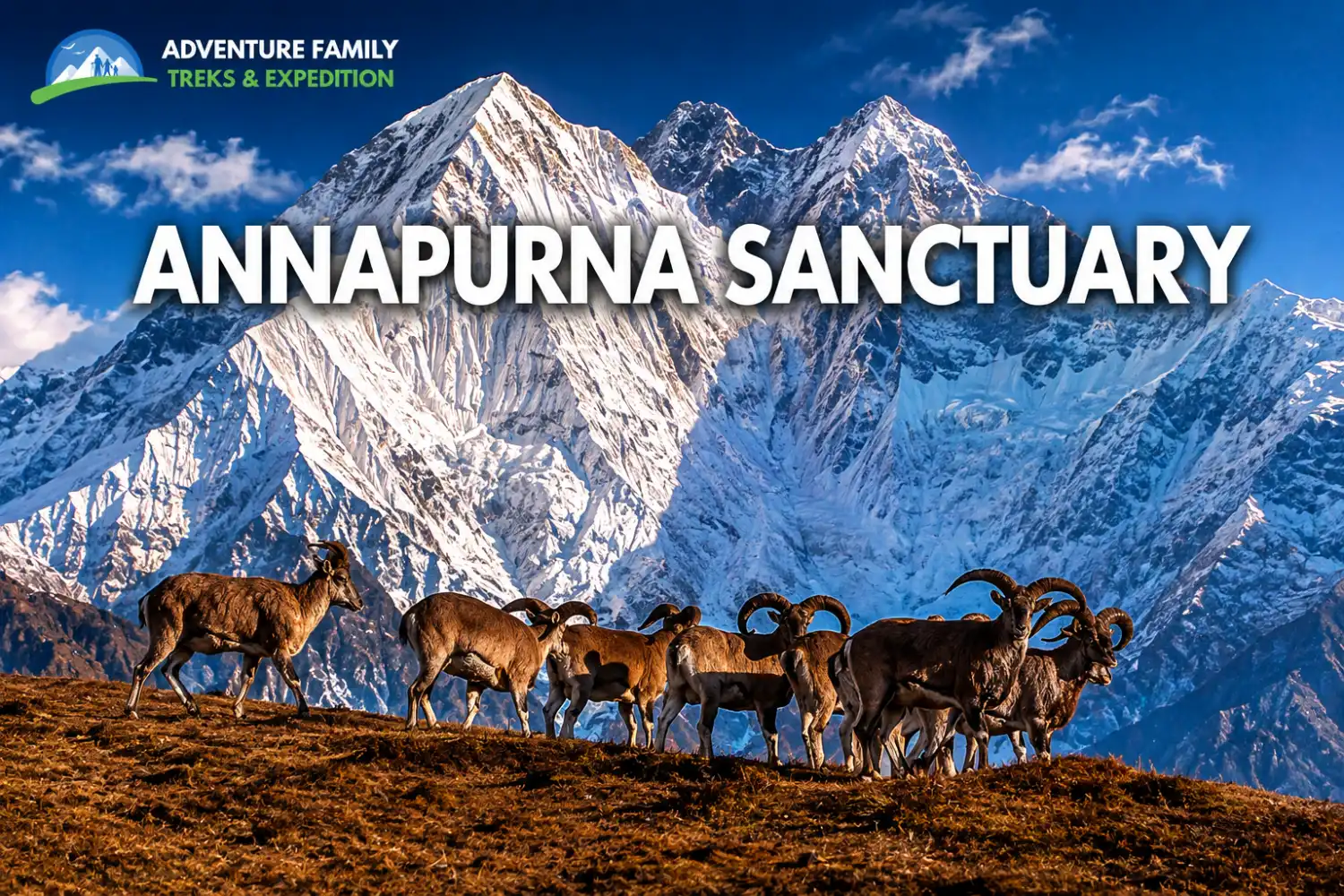
Every step of the Annapurna Base Camp Trek builds toward one destination: the Annapurna Sanctuary. This natural amphitheater of ice and rock, ringed by some of the world's highest peaks, is the reason trekkers travel from around the globe to walk this trail. Understanding what the sanctuary is — and why it feels so different from the rest of the trek — makes the final push to Base Camp even more rewarding.
In this guide, we'll cover the geography, peaks, wildlife, and trekking experience of the Annapurna Sanctuary, so you know exactly what to expect when you arrive at the heart of the Annapurna region.
The Annapurna Sanctuary is a high-altitude glacial basin enclosed by a ring of towering peaks, sitting at roughly 4,000 metres in Nepal's Annapurna Conservation Area. It's accessible only through a narrow gorge carved by the Madi Khola river, which creates a natural "gateway" into the basin — one of the reasons the sanctuary remained unexplored by outsiders until relatively recently in mountaineering history.
Because it's enclosed on nearly all sides by peaks over 6,000 and 7,000 metres, the sanctuary has a distinct microclimate and a dramatic, amphitheater-like feel that's rare among trekking destinations. Stepping into it after days of forest and village trails is often described as one of the most striking transitions in Himalayan trekking.
The Annapurna Sanctuary is named for the peaks that enclose it, several of which rank among the most recognizable mountains in Nepal:
Together, these peaks create the natural "walls" of the sanctuary, which is part of what makes Annapurna Base Camp feel so enclosed and immersive compared to more open trekking valleys elsewhere in Nepal.
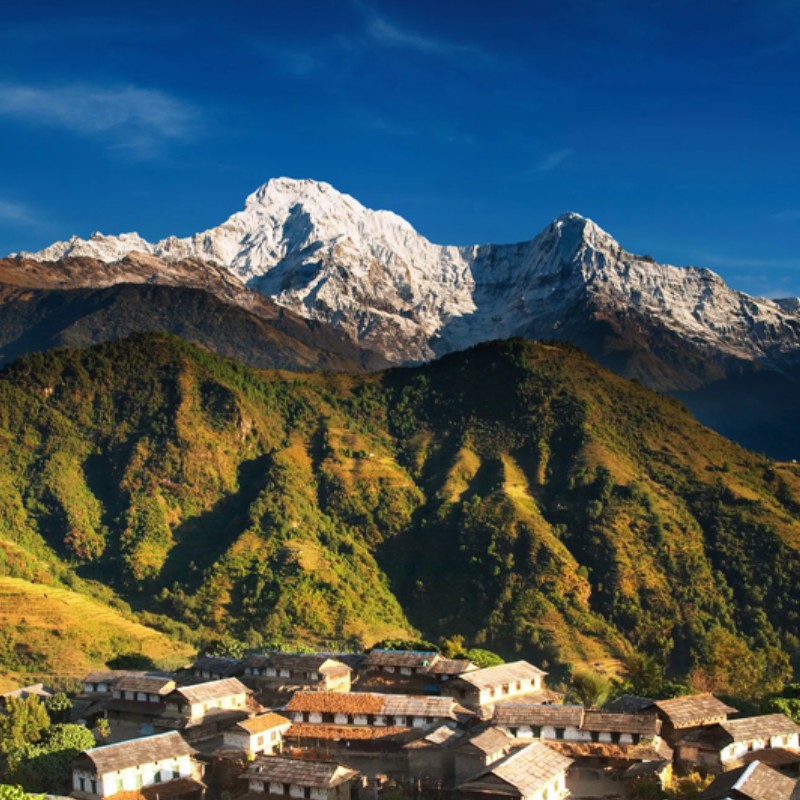
The trail to Annapurna Base Camp passes through several distinct ecological zones — subtropical forest, rhododendron woodland, and alpine terrain — before opening into the sanctuary itself. That transition is sudden: trekkers pass through the narrow Modi Khola gorge near Hinku Cave and Deurali, and within a few hours, the landscape shifts from steep forested valley to wide, open glacial basin.
Inside the sanctuary, trees disappear, the air feels noticeably colder, and the peaks seem to rise almost vertically on every side. Many trekkers say this final stretch — from Machapuchare Base Camp (MBC) to Annapurna Base Camp (ABC) — is the most memorable part of the entire trek.
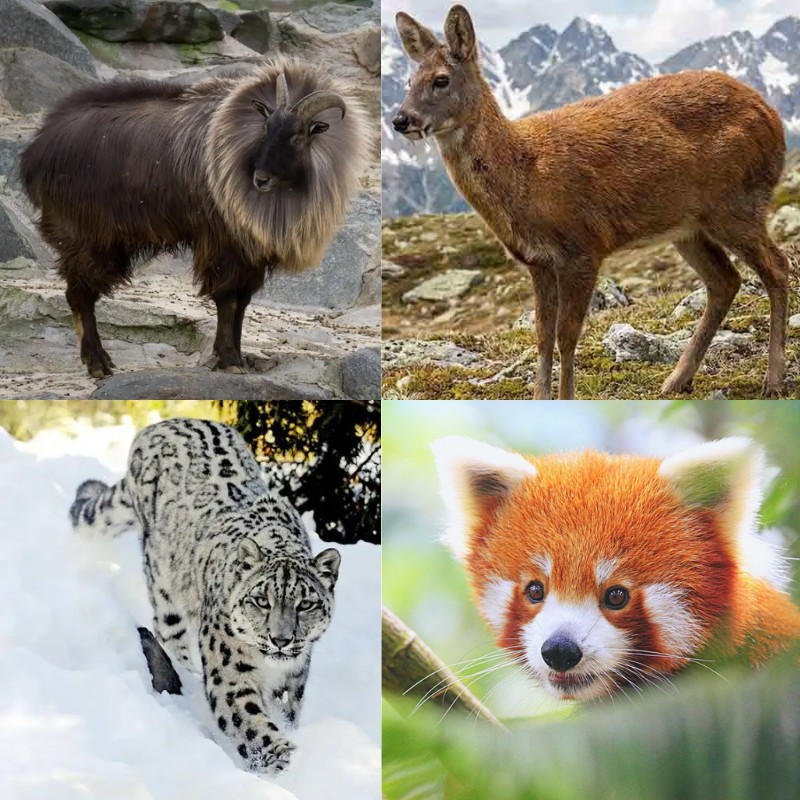
The Annapurna Sanctuary sits within the Annapurna Conservation Area, Nepal's largest protected area, established to preserve the region's biodiversity and support community-led conservation. While the high alpine terrain of the sanctuary itself supports limited wildlife due to the elevation and cold, the surrounding conservation area is home to species such as Himalayan tahr, musk deer, and, occasionally, signs of snow leopard activity at higher elevations.
Lower down the trail, the forested zones leading up to the sanctuary are far richer in biodiversity, including rhododendron forests that bloom vividly in spring.
The Annapurna Sanctuary holds a significant place in mountaineering history. Annapurna I was the first 8,000-metre peak ever successfully climbed, summited by a French expedition in 1950 — years before Everest's first ascent. That climbing history adds a layer of significance for trekkers walking into the same basin today, even though reaching Base Camp itself requires no technical climbing.
Machapuchare, meanwhile, remains formally unclimbed. Considered sacred by local communities, it has never received official permission for a summit attempt since a British expedition came close to the top in 1957.
Reaching the Annapurna Sanctuary typically takes 5–6 days from the trailhead near Pokhara, following the standard Annapurna Base Camp Trek route through Ghandruk or Tikhedhunga, Chhomrong, and Sinuwa. Once inside the sanctuary, trekkers usually spend one or two nights at Machapuchare Base Camp and Annapurna Base Camp before descending.
Sunrise at Annapurna Base Camp is the highlight for most trekkers — the surrounding peaks catch the first light in a wash of orange and pink, with Annapurna I and Machapuchare often the first to glow. Because of the altitude and thinner air, mornings inside the sanctuary are notably cold, even outside winter, so warm layers are essential for sunrise viewing.
What is the Annapurna Sanctuary?
The Annapurna Sanctuary is a high-altitude glacial basin at roughly 4,000 metres, enclosed by a ring of major peaks including Annapurna I, Machapuchare, Annapurna South, and Gangapurna. It's the final destination of the Annapurna Base Camp Trek.
How do you get to the Annapurna Sanctuary?
The sanctuary is reached by trekking through the Annapurna Base Camp route, entering through a narrow gorge carved by the Modi Khola river near Machapuchare Base Camp.
Can you climb Machapuchare inside the sanctuary?
No. Machapuchare is considered sacred and has not been officially climbed since a 1957 British expedition stopped short of the summit; it remains closed to climbing permits.
How long does it take to reach the Annapurna Sanctuary?
Most trekkers reach the sanctuary in 5–6 days from the trailhead near Pokhara, depending on their itinerary and acclimatization schedule.
Is the Annapurna Sanctuary part of a protected area?
Yes. It lies within the Annapurna Conservation Area, Nepal's largest protected area, which requires an ACAP permit to enter.
What makes the Annapurna Sanctuary different from other parts of the trek?
Its enclosed, amphitheater-like geography creates a dramatic shift in landscape, climate, and atmosphere compared to the forested and village sections of the trail lower down.
The Annapurna Sanctuary is more than just the endpoint of a trek — it's a self-contained mountain world, shaped by glaciers and ringed by some of the Himalayas' most iconic peaks. Reaching it is the payoff for days of walking through forest, farmland, and village trails, and it's what makes the Annapurna Base Camp Trek one of Nepal's most rewarding treks. If you're planning your journey into the sanctuary, check out our complete Annapurna Base Camp Trek guide or reach out to our team to start planning your route.
