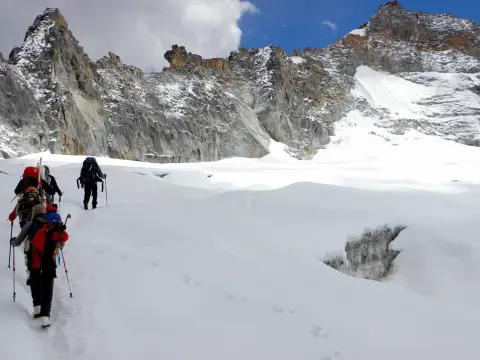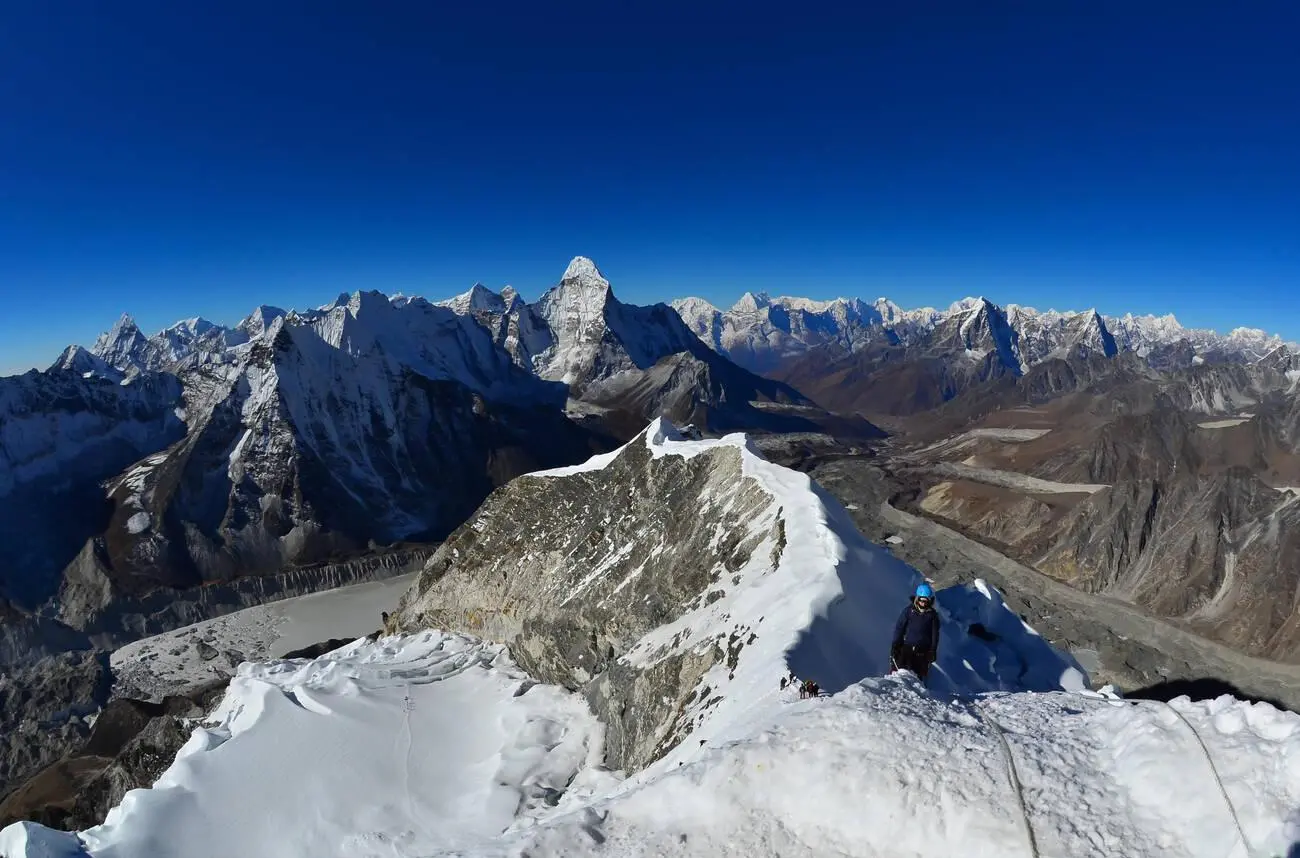
Island Peak, also known as Imja Tse, is one of the most popular trekking peaks in the Everest region of Nepal. Standing at 6,189 meters (20,305 ft), it offers climbers an excellent introduction to high-altitude mountaineering. The peak is famous for its panoramic views of iconic mountains, including Mount Everest, Lhotse, Nuptse, Ama Dablam, and Makalu. Unlike technical peaks, Island Peak combines trekking and mountaineering, making it accessible to moderately experienced climbers.
The expedition usually begins with a flight from Kathmandu to Lukla, followed by trekking through picturesque villages, rhododendron forests, and Sherpa settlements. Notable stops include Namche Bazaar, Tengboche, Dingboche, Lobuche, and Gorakshep, with acclimatization days to reduce altitude sickness risks. A summit attempt typically starts from Island Peak Base Camp at 5,087 meters, requiring climbers to navigate ice, snow ridges, and small crevasses under the guidance of trained guides.
Short Point List:
Adventure Family Treks and Expedition provides full-service packages, including experienced climbing guides, porters, equipment, and permits, ensuring climbers have a safe and memorable experience. Their team emphasizes safety, acclimatization, and personalized support for every climber.
The best time to climb Island Peak is during the pre-monsoon (spring) season from March to May and the post-monsoon (autumn) season from late September to November. During these periods, the weather is stable, skies are clear, and the risk of snowstorms is minimal. Spring brings vibrant rhododendron blooms and moderate temperatures, while autumn offers crisp, clear skies and perfect visibility of the surrounding Himalayan peaks.
Climbers are advised to avoid the monsoon season (June to early September) due to heavy rains, landslides, and slippery trails. Winter climbs (December to February) are technically possible but challenging due to extreme cold, limited daylight, and snow accumulation. The weather in the high Himalayas can be unpredictable, so climbers must be prepared for sudden storms even in peak seasons.
Short Point List:
Adventure Family Treks and Expedition ensures that your trek is planned according to the ideal season, providing up-to-date weather forecasts, expert guidance, and acclimatization schedules to maximize summit success and safety.
Island Peak is classified as a moderate trekking peak by the Nepal Mountaineering Association. While it is non-technical for experienced trekkers, the summit climb involves basic ice and snow techniques, rope work, and using crampons and ice axes. Proper fitness, endurance, and altitude acclimatization are crucial. The climb is not recommended for beginners without prior trekking or mountaineering experience, though Adventure Family Treks and Expedition offers training sessions to prepare climbers.
Transportation:
Short Point List:
Adventure Family Treks and Expedition provides highly trained guides, porters, and equipment, ensuring climbers navigate safely and confidently throughout the journey.
During the Island Peak expedition, accommodation is primarily in tea houses and lodges along the trekking route. In villages like Namche Bazaar, Tengboche, and Dingboche, lodges offer private rooms with basic amenities, hot showers (where available), and dining facilities. As you ascend higher, especially at Lobuche and Gorakshep, lodges become more basic due to altitude, but meals are hearty and designed for high-energy needs.
The food typically includes a combination of Nepali dishes (dal bhat, momo, noodles) and international cuisine such as pasta, soup, and oatmeal. Adventure Family Treks and Expedition ensures that climbers receive balanced, high-calorie meals to sustain energy for trekking and climbing. For Island Peak Base Camp, meals are prepared by the expedition team, ensuring warmth and nutrition before summit attempts.
Short Point List:
Guides and porters assist with packing, setting up tents, and carrying supplies, making the trekking and climbing experience comfortable despite high-altitude challenges.
Climbing Island Peak requires several permits, which Adventure Family Treks and Expedition handles on behalf of climbers. Key permits include:
Obtaining these permits individually can be complicated, but Adventure Family Treks and Expedition ensures all documentation, fees, and approvals are completed smoothly. This allows climbers to focus solely on training, acclimatization, and summit preparation without bureaucratic delays.
Short Point List:
The company also provides insurance guidance, emergency evacuation plans, and liaison with park authorities, ensuring legal compliance and safety throughout the expedition.
Island Peak is ideal for adventurers seeking a challenging yet accessible Himalayan climbing experience. It offers:
Choosing Adventure Family Treks and Expedition adds immense value. Their experienced guides, professional climbers, and logistic support guarantee climbers a safe, organized, and rewarding expedition. The team emphasizes:
Short Point List:
Island Peak climbing with Adventure Family Treks and Expedition is not just a journey to a summit—it’s a life-changing adventure that combines Himalayan exploration, cultural immersion, and mountaineering thrill.
After an early breakfast, you will take a spectacular mountain flight from Kathmandu to Lukla, a small airstrip surrounded by towering peaks. From Lukla, the trek begins as you follow the Dudh Koshi River through rhododendron forests and charming villages, arriving at Phakding by late afternoon. The trail is relatively gentle, giving your body a chance to start acclimatizing to higher altitudes. Along the way, you can observe local Sherpa villages and small suspension bridges. Upon arrival in Phakding, settle into your teahouse and enjoy a hearty dinner while admiring the serene Himalayan views.
Today’s trek is more challenging as you ascend steadily through pine forests and small settlements along the Dudh Koshi River. The highlight of the day is crossing several suspension bridges and walking past picturesque villages, where local culture and traditions are visible at every step. As you approach Namche Bazaar, the gateway to the high Himalayas, the views of majestic peaks like Thamserku and Kongde Ri will leave you in awe. Upon reaching Namche, you can explore the vibrant market, interact with local traders, and enjoy a warm meal while absorbing the Himalayan atmosphere.
Namche Bazaar is a key acclimatization stop, allowing your body to adjust to the increasing altitude. Today, you will take a moderate hike to Everest View Hotel or nearby viewpoints, which offer panoramic views of Everest, Lhotse, and Ama Dablam. This gentle climb helps prevent altitude sickness while providing incredible photo opportunities. After returning to Namche, you can explore local shops, monasteries, and cafés, immersing yourself in the rich Sherpa culture. This day also includes discussions with guides about high-altitude trekking techniques and safety measures for the Island Peak climb.
The trek today takes you through lush pine forests and traditional Sherpa villages. After a steady climb, you will reach Tengboche, famous for its beautiful monastery perched on a ridge with a backdrop of Ama Dablam. The Tengboche Monastery is a spiritual and cultural highlight, offering insight into Tibetan Buddhism and Sherpa traditions. From the monastery, you can enjoy panoramic views of Everest, Lhotse, and Nuptse. Overnight in Tengboche provides a peaceful setting to rest and reflect while soaking in the tranquil Himalayan environment.
As you leave Tengboche, the trail descends slightly before following the Imja Khola River valley. You will pass through scattered villages and yak pastures, observing the local lifestyle in high-altitude conditions. The trek gradually becomes steeper as you approach Dingboche, a charming settlement with stone houses and prayer flags fluttering in the wind. The dramatic views of towering peaks like Lhotse and Island Peak make this day visually stunning. Upon arrival, you can relax and prepare for the next day’s acclimatization hike, enjoying the crisp mountain air and the peaceful atmosphere of Dingboche.
Today is dedicated to acclimatization and preparing your body for higher altitudes. You will take a moderate hike to nearby ridges or Chhukung Valley, allowing your body to adapt while enjoying breathtaking views of Ama Dablam, Lhotse, and Island Peak. This hike is crucial for preventing altitude sickness during the Island Peak climb. In the afternoon, you can explore Dingboche village, interact with locals, and learn about traditional farming practices. Evening is spent resting, hydrating, and reviewing the climbing gear and strategy for Island Peak.
Leaving Dingboche, the trail gradually ascends through the rocky terrain of the Khumbu region, passing memorials dedicated to climbers and trekkers. The landscape becomes more dramatic, with glaciers and rugged mountains surrounding the trail. Arrival at Lobuche, a small settlement near the Khumbu Glacier, provides stunning views of peaks like Pumori and Nuptse. The teahouses here are basic but comfortable, offering warmth and a chance to socialize with fellow trekkers. This day sets the stage for the challenging high-altitude trek ahead, emphasizing proper rest and nutrition.
The trek to Gorakshep involves a gradual ascent across moraines and glacial trails. Gorakshep serves as the final stop before reaching Everest Base Camp. After settling in, you will hike to Kala Patthar, famous for the most iconic views of Mount Everest and surrounding peaks. The climb is strenuous but rewarding, providing a sense of achievement and breathtaking photographic opportunities. Return to Gorakshep for overnight stay, where the thin air and cold temperatures emphasize the importance of rest and proper hydration for high-altitude trekking.
After a restful night at Gorakshep, you begin the descent back to Lobuche. The journey offers more time to enjoy the surrounding glaciers and mountains at a leisurely pace. The descent helps your body recover from higher altitudes and provides a change of scenery, showcasing the dramatic landscapes from different perspectives. Along the way, you can interact with fellow trekkers, share experiences, and take photos of the awe-inspiring Khumbu region. Reaching Lobuche in the evening allows time for relaxation and preparation for the next stage toward Island Peak Base Camp.
Today’s trek is challenging, involving a crossing of the Khongma La Pass. The trail winds through rocky landscapes and glacial valleys, offering spectacular views of Ama Dablam, Island Peak, and surrounding high mountains. Arriving in Chhukung, a small settlement nestled in a valley, provides an ideal location for acclimatization before the final ascent to Island Peak Base Camp. The village is surrounded by pristine alpine scenery, with opportunities to interact with local residents and learn about their lifestyle in extreme conditions. Evening is spent resting and preparing for the climb.
From Chhukung, the trail gradually ascends toward Island Peak Base Camp, passing moraines, glacial streams, and rocky terrain. The climb requires focus and stamina, but the reward is the spectacular Base Camp, with panoramic views of Island Peak and surrounding mountains. Here, you will meet high-altitude guides, prepare climbing gear, and attend a detailed briefing on the summit attempt. The Base Camp provides a sense of excitement and anticipation as you settle into tents or teahouses, feeling the thrill of standing at the gateway to Island Peak.
An early pre-dawn start marks the summit attempt. Guided by experienced mountaineers, you will ascend steep snow and ice slopes using crampons and ropes. Reaching the summit of Island Peak is an exhilarating experience, offering 360-degree views of towering Himalayan giants including Lhotse, Ama Dablam, and Makalu. After celebrating at the summit and capturing memories, you will carefully descend back to Chhukung, where you can rest, recover, and reflect on the incredible achievement of climbing Island Peak.
Descending from the Base Camp, you retrace your steps through Chhukung and continue toward Pangboche. The trail offers a mix of alpine meadows, rugged terrain, and spectacular views of Ama Dablam. Pangboche is home to one of the oldest monasteries in the region, providing a cultural highlight and a serene environment for rest. The descent allows your body to recover from high-altitude exertion, and evenings are spent enjoying local cuisine and sharing stories with fellow trekkers.
The trek back to Namche Bazaar is moderately challenging, with a mix of ascents and descents through forests and villages. The journey offers opportunities to revisit stunning viewpoints and capture final photographs of Ama Dablam, Thamserku, and other peaks. Upon arrival in Namche, you can relax at teahouses, shop for souvenirs, and reflect on your trek. This day also allows time to reconnect with local guides and experience the vibrant Sherpa culture before continuing toward Lukla.
Descending through lush forests, rivers, and villages, the trek back to Lukla is a rewarding journey filled with scenic beauty and final glimpses of the high Himalayas. The trail becomes progressively gentler, giving your legs a welcome relief after days of trekking at high altitude. Arriving in Lukla, you will stay overnight in comfortable lodges, preparing for your flight back to Kathmandu. The evening is a time for celebration, sharing experiences, and enjoying a farewell dinner with your trekking team.
After breakfast, take an early morning flight from Lukla back to Kathmandu. The flight offers breathtaking aerial views of the Himalayas, glaciers, and valleys you have traversed. Upon arrival in Kathmandu, you will be transferred to your hotel for rest. The remainder of the day is free for sightseeing, shopping, or relaxing at your hotel. This marks a moment to reflect on the incredible journey, the high-altitude achievements, and the unforgettable memories of the Island Peak adventure.
After breakfast, you will be transferred to Tribhuvan International Airport for your departure flight. This concludes your Island Peak adventure with Adventure Family Treks and Expedition. You leave Nepal with lifelong memories, stunning photographs, and a sense of accomplishment from conquering one of the most iconic peaks in the Himalayas. Our team ensures a smooth and hassle-free departure, bidding farewell while hoping to welcome you on future Himalayan adventures.

Clothing
Handwear
Footwear
Technical Gear / Climbing Equipment
Sleeping & Camp Equipment
Hydration & Nutrition
Toiletries & Health
Electronics & Miscellaneous
Optional / Peak-Specific Items
The best time for Island Peak climbing is during the pre-monsoon (March to May) and post-monsoon (September to November) seasons. During these periods, the weather is relatively stable, offering clear skies and safer trekking and climbing conditions. Adventure Family Treks and Expedition ensures that your trek aligns with these optimal seasons to maximize your chances of a successful summit.
Island Peak is considered a moderate trekking peak, suitable for trekkers with prior high-altitude trekking experience. While technical climbing skills are required for the final ascent, Adventure Family Treks and Expedition provides expert guides, proper equipment, and training to help climbers safely navigate ice, snow, and steep rock sections.
The highest point of Island Peak is 6,189 meters (20,305 ft). Trekkers will reach intermediate high points at Gorakshep and Island Peak Base Camp, making acclimatization essential. Adventure Family Treks and Expedition emphasizes gradual altitude gain and includes rest days to reduce the risk of altitude sickness.
A good level of physical fitness is essential for Island Peak. Daily trekking ranges from 3 to 7 hours, with steep climbs at high altitudes. Adventure Family Treks and Expedition recommends cardiovascular training, strength exercises, and endurance hikes before the trek to ensure climbers are well-prepared.
The standard itinerary with Adventure Family Treks and Expedition spans 18 days, starting from Kathmandu and including acclimatization days in Namche and Dingboche, a summit attempt at Island Peak, and return to Kathmandu. Each day is carefully planned to allow proper acclimatization, ensuring safety and a higher success rate for climbers.
While prior trekking experience at high altitudes is strongly recommended, you do not need extensive technical mountaineering experience. Adventure Family Treks and Expedition provides basic training in the use of crampons, ice axes, and ropes before the summit attempt to ensure safety for all participants.
With proper acclimatization, training, and guidance from certified guides of Adventure Family Treks and Expedition, most climbers successfully reach the summit. Weather conditions, physical fitness, and altitude adaptation all play key roles, and the itinerary includes buffer days to increase the likelihood of a successful summit.
Accommodation varies from hotels in Kathmandu to tea houses and lodges along the trekking route. At higher camps, like Island Peak Base Camp, tents are used with sleeping mats and shared facilities. Adventure Family Treks and Expedition ensures comfortable and safe lodging options throughout the trek.
During the trekking portion, meals typically include breakfast, lunch, and dinner, with options ranging from Nepali cuisine to simple Western dishes. At base camps, meals are hearty and high-energy to support climbers. Adventure Family Treks and Expedition focuses on nutritious, altitude-friendly meals to maintain energy levels.
Climbers should have warm clothing, insulated jackets, trekking boots, crampons, ice axes, gloves, and other mountaineering gear. Adventure Family Treks and Expedition provides guidance on the necessary equipment and also offers rental options for essential climbing gear.