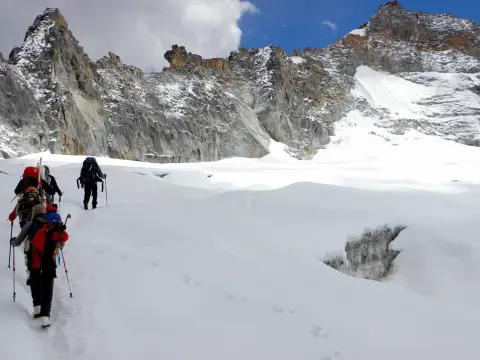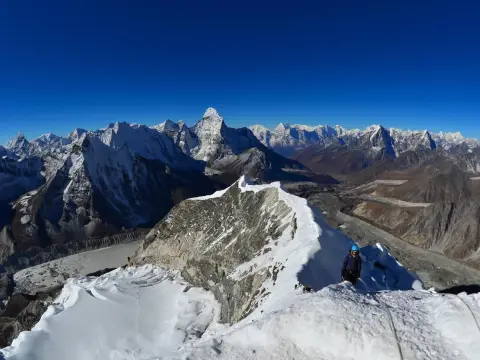
Pisang Peak, located in the Annapurna region of Nepal, stands at 6,091 meters (19,985 ft) and is a popular trekking peak for mountaineers seeking a combination of trekking and climbing experience. The ascent of Pisang Peak offers climbers a chance to experience the dramatic landscapes of the Annapurna range, including panoramic views of Annapurna II, Gangapurna, Manaslu, and Pisang Peak itself. The climb involves both trekking and technical climbing, making it ideal for adventurers with some mountaineering experience or those looking to undertake their first high-altitude climb.
Adventure Family Treks and Expedition provides a well-structured itinerary that ensures climbers are properly acclimatized and supported throughout the journey. The climb typically starts from Kathmandu, followed by road transfer and gradual trekking through scenic villages such as Jagat, Dharapani, Chame, and Upper Pisang, giving participants the opportunity to experience the rich culture, hospitality, and lifestyle of local communities.
The best time to climb Pisang Peak is during the pre-monsoon (spring) season from March to May and post-monsoon (autumn) from late September to early November. These periods offer stable weather, clear skies, and excellent mountain visibility. Spring provides blooming rhododendrons and lush greenery along the trekking route, while autumn showcases crisp air and golden hues in the terraced fields and surrounding forests.
Winter can be extremely cold with heavy snowfall, which can make the climb more technical and challenging. Summer (monsoon) brings heavy rains, slippery trails, and the risk of landslides, making it less suitable for climbing. Proper planning with Adventure Family Treks and Expedition ensures climbers embark during optimal conditions to enhance safety and success rates.
Pisang Peak is classified as a trekking peak with moderate difficulty. While the route is non-technical at lower altitudes, it involves glacier travel, snow slopes, and basic ice climbing near the summit, requiring proper mountaineering skills. Climbing this peak demands physical fitness, acclimatization, and mental preparedness to handle high-altitude conditions. The ascent to High Camp and summit can be strenuous due to steep sections and thin air at 6,000 meters.
Transportation begins in Kathmandu, the capital of Nepal, where climbers are picked up from the airport and driven to Jagat. The journey continues through the scenic Marsyangdi Valley with jeep and bus rides. Daily trekking stages take you from Dharapani to Chame, Pisang, and eventually to the Pisang Peak Base Camp, providing gradual acclimatization along the way. Adventure Family Treks and Expedition ensures all logistics, transport, and support staff are organized for a smooth journey.
During the Pisang Peak expedition, food and accommodation vary depending on altitude. In lower villages like Jagat, Dharapani, and Chame, trekkers stay in cozy teahouses offering local Nepali meals such as dal bhat (rice and lentils), noodles, and soups. As the trek progresses to higher altitudes like Upper Pisang and Pisang Peak Base Camp, accommodation shifts to tents or basic mountain lodges with essential amenities.
Adventure Family Treks and Expedition ensures that climbers have access to nutritious meals, hot beverages, and adequate shelter even at high altitudes. Acclimatization days are carefully planned to allow climbers to rest and adapt, while the expedition team manages cooking, meal preparation, and hydration, crucial for high-altitude success.
Climbers require several permits to ascend Pisang Peak. The primary permit is the Annapurna Conservation Area Permit (ACAP), which allows entry into the protected region. Additionally, a climbing permit issued by the Nepal Mountaineering Association (NMA) is mandatory for Pisang Peak. These permits ensure that climbers are officially recognized, contribute to local conservation efforts, and receive support in case of emergencies.
Adventure Family Treks and Expedition takes care of all permit arrangements, including ACAP and NMA permits, so climbers can focus entirely on their trek and climb. The team also provides guidance on necessary documents, equipment checks, and regulations to comply with Nepalese mountaineering laws.
Choosing Adventure Family Treks and Expedition for Pisang Peak offers climbers a professional, safe, and enjoyable experience. Their expert guides, experienced Sherpa support, and carefully crafted itinerary ensure climbers are well-acclimatized and physically prepared for the summit. The company provides personalized services, including high-quality gear, nutritious meals, and logistical support.
Additionally, the team emphasizes safety, environmental responsibility, and cultural immersion. From exploring traditional Gurung and Manangi villages to trekking through rhododendron forests and high-altitude landscapes, climbers experience the Annapurna region in a comprehensive and rewarding way. Adventure Family Treks and Expedition has built a reputation for reliability, attention to detail, and a commitment to creating unforgettable mountain adventures.
After an early breakfast, the journey starts with a scenic drive from Kathmandu to Jagat, crossing terraced fields, small villages, and the roaring Trishuli River. The drive takes several hours, providing glimpses of rural Nepalese life and Himalayan foothills. Upon arrival in Jagat, you will check into a teahouse or lodge and enjoy a hot meal. This day allows for light stretching and preparation for the trek ahead, ensuring everyone is rested and energized for the initial trekking phase through the beautiful Marsyangdi Valley.
The trek begins in earnest today, winding along trails lined with rhododendron forests and traditional Gurung villages. The route gradually ascends, offering spectacular views of terraced fields and mountain scenery. Along the way, trekkers may cross small suspension bridges and local streams while observing traditional Nepalese lifestyles. The village of Dharapani serves as a cozy overnight stop where you can enjoy a hearty meal, interact with locals, and experience the tranquility of the valley. This stage is an excellent introduction to trekking in the Annapurna region.
Today’s trek is longer and more challenging as the path ascends steadily through forests of pine and rhododendron, with occasional glimpses of the Annapurna range. Chame, the district headquarters of Manang, is a picturesque village surrounded by terraced fields and apple orchards. Trekkers can explore the local monastery and enjoy the panoramic views of Annapurna II and Lamjung Himal. After arriving, the evening is spent at a teahouse or lodge, enjoying warm meals and preparing for higher altitude trekking. This day strengthens endurance and allows for gentle acclimatization.
From Chame, the trek gradually climbs through a dramatic valley, following the Marsyangdi River. You will pass through beautiful villages like Braka and lower Pisang, witnessing ancient Buddhist shrines and stone mani walls. The trail offers increasing mountain vistas, with snow-capped peaks becoming more prominent. Arriving at Upper Pisang, perched on a ridge, trekkers are treated to breathtaking panoramic views of Annapurna II, Gangapurna, and Pisang Peak itself. The evening is spent acclimatizing, enjoying warm meals, and preparing mentally and physically for the challenging altitude ahead.
An important acclimatization day allows trekkers to adjust to higher altitudes, reducing the risk of altitude sickness. You can explore Upper Pisang village, visit its ancient monastery, and hike to nearby viewpoints for stunning panoramas of the Annapurna and Manang ranges. Adventure Family Treks and Expedition guides will conduct altitude awareness briefings, practice trekking techniques, and ensure everyone is hydrated and rested. This day balances light activity with rest, enabling the body to adapt efficiently while enjoying the serene Himalayan environment.
Today’s trek becomes more challenging as the path climbs steeply toward Pisang Peak Base Camp. You will traverse rocky trails, glacial moraines, and alpine landscapes. The air becomes thinner, and the majestic peaks of Pisang and Annapurna dominate the horizon. Base Camp offers a strategic location for rest and preparation for the summit attempt, with panoramic views of glaciers and snow-capped peaks. Adventure Family Treks and Expedition guides will provide final instructions for the climb, check equipment, and ensure everyone is acclimatized for the next day’s ascent.
The climb intensifies as trekkers ascend from Base Camp to High Camp. The trail becomes steeper, often crossing snow and ice patches. Guides from Adventure Family Treks and Expedition ensure safety with fixed ropes, harnesses, and proper acclimatization techniques. This stage demands stamina, focus, and careful pacing. High Camp offers breathtaking views of the surrounding peaks and glaciers, providing a sense of achievement. Trekkers rest, hydrate, and prepare for the early morning summit push, knowing that altitude, weather, and teamwork will define the climb ahead.
Summit day is the pinnacle of the adventure. Starting pre-dawn, trekkers ascend steep snow slopes, navigate crevasses, and use fixed ropes as needed. Reaching the summit of Pisang Peak is an exhilarating experience, offering 360-degree views of Annapurna II, Lamjung Himal, and surrounding valleys. After celebrating the achievement and taking photos, the descent to Base Camp begins cautiously, ensuring safety. Guides from Adventure Family Treks and Expedition manage the team’s descent, provide encouragement, and ensure everyone is well-supported after this physically demanding and emotionally rewarding day.
A flexible day allows for rest or dealing with unforeseen weather or health issues. Trekkers can relax, explore the area around Base Camp, or take short acclimatization hikes. Adventure Family Treks and Expedition uses this day strategically to ensure safety and maintain schedule flexibility. It provides an opportunity for reflection on the summit experience, enjoying the alpine scenery, and preparing for the continued trek down the valley. This day helps reduce stress and ensures everyone is fit for the journey toward Manang and further destinations.
Descending from Base Camp, trekkers follow scenic trails leading into the fertile Manang Valley. The landscape changes from rugged alpine terrain to lush valley floors with terraced fields and small villages. The air becomes slightly easier to breathe, allowing the body to recover. In Manang, trekkers can enjoy the village’s cultural richness, visit the monastery, and savor local cuisine. This stretch offers a balance between challenging trekking and comfortable accommodation, with Adventure Family Treks and Expedition ensuring smooth logistics and support along the picturesque route.
The trek continues uphill from Manang to Yak Kharka, crossing alpine meadows dotted with grazing yaks. The scenery is stunning, with distant peaks reflecting sunlight on glacial surfaces. The trail is moderate but requires attention to altitude. Yak Kharka provides basic yet comfortable accommodation, and trekkers can enjoy the serene environment. Adventure Family Treks and Expedition guides advise on proper hydration, nutrition, and light acclimatization hikes to maintain readiness for Thorong La Pass. This stage builds endurance while immersing trekkers in the majestic high-altitude Himalayan landscape.
The final approach to Thorong La begins today, with trails passing through barren landscapes, rocky ridges, and small mani walls marking the sacred path. Thorong Phedi is the last stop before the challenging Thorong La Pass, offering a base for rest and final preparation. Adventure Family Treks and Expedition ensures all equipment, hydration, and acclimatization strategies are checked. Trekkers can enjoy the quiet, high-altitude environment, take short walks to nearby viewpoints, and mentally prepare for the early morning ascent to Thorong La, the ultimate Himalayan high point on this trek.
An early morning start leads to Thorong La Pass, one of the highest trekking passes in Nepal. The climb is steep and challenging, but the panoramic views from the summit are unforgettable. After crossing the pass, the descent to Muktinath offers spiritual experiences, visiting sacred temples and shrines. Continuing to Jomsom, trekkers enjoy views of the Kali Gandaki Gorge, terraced hillsides, and traditional villages. The journey is long, but Adventure Family Treks and Expedition ensures smooth logistics, meals, and rest stops, culminating in an evening arrival in Jomsom, where a comfortable stay awaits.
Today begins with a short scenic flight from Jomsom to Pokhara, offering breathtaking aerial views of the Annapurna and Dhaulagiri ranges. Pokhara is a beautiful city by Phewa Lake, known for its relaxed atmosphere and lakeside activities. Upon arrival, trekkers can enjoy leisure time, explore lakeside cafes, or shop for souvenirs. Adventure Family Treks and Expedition assists with transfers, hotel check-in, and optional short excursions. This day allows trekkers to rest, reflect on their Himalayan journey, and enjoy the comfort of a city after weeks of trekking in remote high-altitude terrain.
After breakfast, the journey back to Kathmandu begins via a scenic drive through winding roads, hills, and small towns. Trekkers can enjoy views of terraced fields, rivers, and rural Nepalese life. On arrival in Kathmandu, you will be transferred to your hotel for relaxation. Adventure Family Treks and Expedition can arrange a farewell dinner, celebrating the successful completion of the Pisang Peak climb. The evening is ideal for sharing memories, photographs, and reflections with fellow trekkers and guides, marking the end of a transformative Himalayan adventure.
After breakfast, you will be transferred to Tribhuvan International Airport for your departure flight. Adventure Family Treks and Expedition ensures smooth airport transfers and assistance with any last-minute arrangements. As you leave Nepal, you carry memories of towering peaks, serene valleys, cultural encounters, and the incredible achievement of climbing Pisang Peak. The journey concludes with a sense of fulfillment, adventure, and inspiration, leaving the door open for future Himalayan expeditions with Adventure Family Treks and Expedition.

Clothing
Handwear
Footwear
Technical Gear / Climbing Equipment
Sleeping & Camp Equipment
Hydration & Nutrition
Toiletries & Health
Electronics & Miscellaneous
Optional / Peak-Specific Items
The optimal seasons for Pisang Peak climbing are pre-monsoon (March to May) and post-monsoon (September to November). During these months, the weather is relatively stable, the skies are clear, and the trekking routes are safer. Summer months are generally avoided due to heavy rainfall, while winter can be extremely cold with heavy snowfall, making the ascent more challenging. Adventure Family Treks and Expedition recommends these peak seasons to maximize safety and enjoyment.
Pisang Peak is classified as a trekking peak, which means it is suitable for climbers with some trekking and basic mountaineering experience. While the trek itself is moderate to strenuous due to high altitudes, the actual climb requires basic ice axe, crampon skills, and familiarity with fixed ropes. Adventure Family Treks and Expedition ensures proper guidance, training, and acclimatization for all climbers, making the experience achievable and safe.
No prior technical mountaineering experience is strictly required, but basic climbing skills such as walking with crampons, using ice axes, and comfort with heights are helpful. Adventure Family Treks and Expedition provides thorough pre-climb instruction and on-site guidance to ensure climbers are confident and safe during the ascent.
The climb usually starts with arrival in Kathmandu, followed by a scenic drive to Jagat, and trekking through Dharapani, Chame, Upper Pisang, Pisang Peak Base Camp, and High Camp. Summit day is followed by descent to Base Camp, further trekking to Manang Valley, and eventually crossing Thorong La Pass to Muktinath and Jomsom, before flying to Pokhara and returning to Kathmandu. Adventure Family Treks and Expedition carefully plans each day to include acclimatization, rest, and contingency days for safety.
The full itinerary is approximately 17 days, including arrival, trekking, summit, and return. This schedule balances trekking, climbing, acclimatization, and sightseeing in the Annapurna region. Adventure Family Treks and Expedition prioritizes safety and proper acclimatization to reduce the risk of altitude sickness.
The trek starts from around 1,300 meters in Kathmandu and gradually ascends to the summit of Pisang Peak at 6,091 meters. Daily trekking and acclimatization help climbers adjust to higher altitudes safely. Adventure Family Treks and Expedition provides expert advice on altitude management and ensures adequate rest days to prevent altitude-related issues.
Yes, with proper guidance, preparation, and fitness, beginners with good trekking experience can attempt Pisang Peak. The climb is designed to gradually increase in altitude, with acclimatization days included. Adventure Family Treks and Expedition provides professional guides, safety measures, and step-by-step instructions to make the experience accessible and rewarding for novice climbers.
Climbers need proper trekking and climbing gear, including warm clothing, trekking boots, crampons, ice axes, harnesses, and helmets. Adventure Family Treks and Expedition can provide guidance on rental options or purchase lists and ensures that clients are fully equipped for both trekking and climbing sections.
Yes, Adventure Family Treks and Expedition ensures that experienced guides and porters accompany the team, trained in first aid and emergency response. Adequate oxygen and medical supplies are carried, and evacuation plans are in place in case of emergencies or altitude sickness.
Along the trekking trail, accommodation is mainly in teahouses offering basic facilities like beds, meals, and bathrooms. At higher camps near Pisang Peak Base and High Camp, accommodations are simpler tents with essential amenities. Adventure Family Treks and Expedition coordinates bookings to ensure comfort, hygiene, and safety throughout the trek.
Booking can be done directly through Adventure Family Treks and Expedition’s website or by contacting their office. The company offers personalized itineraries, logistical support, and advice on permits, equipment, and travel arrangements to ensure a smooth and memorable adventure.