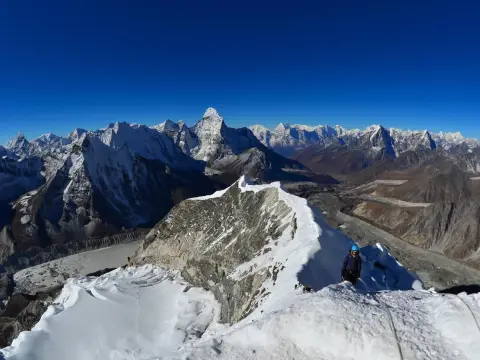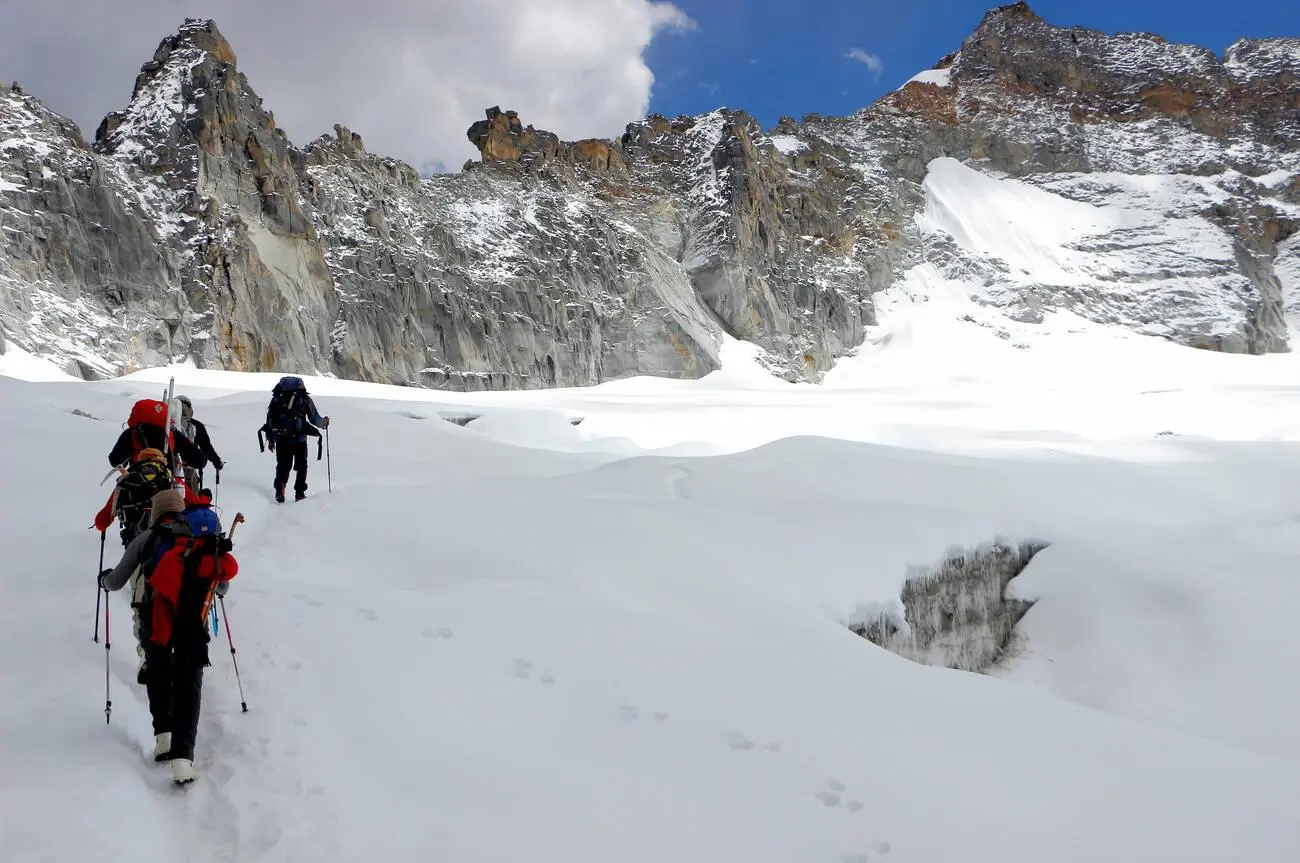
Mera Peak, standing at 6,461 meters (21,199 feet), is the highest trekking peak in Nepal. Located in the Everest region, it offers climbers an extraordinary experience of high-altitude mountaineering without the extreme technical difficulties of other Himalayan giants. The trek to Mera Peak passes through the scenic landscapes of the Solu-Khumbu and Hinku Valley regions, giving adventurers a perfect blend of trekking and climbing. From lush forests at lower altitudes to rugged high-altitude terrains, the journey itself is a visual feast. Climbers are rewarded with panoramic views of Everest, Makalu, Cho Oyu, and Kanchenjunga, creating a once-in-a-lifetime photo opportunity.
The expedition usually begins with a flight from Kathmandu to Lukla, the gateway to the Everest region, followed by a multi-day trek through Sherpa villages, suspension bridges, and dense pine forests. As you ascend, the environment transitions from alpine meadows to rocky terrains, preparing your body for the higher altitudes ahead. Adventure Family Treks and Expedition offers guided climbs with expert Sherpa support, ensuring both safety and enjoyment. Their experienced guides provide detailed briefings on altitude management, climbing techniques, and acclimatization strategies, making the journey comfortable even for moderately experienced climbers.
Highlights of Mera Peak Climbing:
The best time to climb Mera Peak is during the pre-monsoon (spring) and post-monsoon (autumn) seasons. Spring, from late March to May, provides blooming rhododendrons, moderate temperatures, and clear skies. Autumn, from late September to early November, is equally favorable due to stable weather, spectacular mountain views, and minimal precipitation. Both seasons offer relatively safer trekking conditions and excellent opportunities for photography, making your expedition more enjoyable.
Winter climbs (December to February) are possible but challenging due to extreme cold, heavy snowfall, and icy trails. Monsoon season (June to August) is generally avoided because of landslides, slippery paths, and poor visibility. Adventure Family Treks and Expedition schedules their expeditions carefully to coincide with these optimal periods, ensuring climbers experience the best possible conditions for safety and enjoyment. They also provide insights on clothing and gear suited for seasonal challenges, from layering systems for warmth to sun protection for high-altitude exposure.
Season Highlights:
Mera Peak is classified as a non-technical trekking peak, suitable for climbers with basic mountaineering experience. While the summit push involves steep snow slopes of up to 35-40 degrees, it does not require advanced technical climbing skills. Climbers should have excellent physical fitness, endurance, and mental preparation to handle long trekking days, high altitude, and thin oxygen levels. The trek’s gradual ascent, with strategic acclimatization days, helps minimize the risk of altitude sickness.
Transportation to the starting point is convenient. Most climbers take a short scenic flight from Kathmandu to Lukla, known for its dramatic mountain runway and breathtaking aerial views. From Lukla, the trek begins with moderate trails through villages, forests, and river valleys, gradually rising in altitude. Adventure Family Treks and Expedition ensures all logistics are efficiently arranged, including airport transfers, internal flights, and porter support, making the journey smooth and stress-free. Their guides provide thorough briefings on trekking pace, altitude management, and safety protocols.
Difficulty and Transport Key Points:
During the Mera Peak expedition, food and accommodation are thoughtfully arranged to provide comfort in remote high-altitude regions. On the trekking route, climbers typically stay in teahouses or lodges, offering basic but warm rooms with blankets, hot showers where possible, and friendly local hospitality. Adventure Family Treks and Expedition ensures that meals are nutritious and balanced, supporting climbers’ energy requirements at high altitudes. Common dishes include rice, dal (lentils), noodles, potatoes, soups, and occasionally fresh vegetables, with occasional options for tea, coffee, and snacks.
At higher altitudes such as Khare and Mera High Camp, simple tents are provided, equipped with sleeping bags and essential supplies. Meals are often pre-prepared by the team’s cooks, focusing on high-calorie and easily digestible foods to sustain climbers during rigorous ascents. Adequate hydration is emphasized, and portable water purification methods are used to ensure safety. Adventure Family Treks takes care of all logistics, so climbers can focus on acclimatization and climbing rather than cooking or carrying heavy loads.
Food & Accommodation Highlights:
Climbing Mera Peak requires specific permits from the Nepal government to ensure safety and regulation. The two main permits are the Sagarmatha National Park Permit and the Trekkers’ Information Management System (TIMS) Card. These permits help monitor trekkers, preserve the environment, and maintain safety standards. For the actual climbing of Mera Peak, a Mera Peak Climbing Permit issued by the Ministry of Tourism is also mandatory.
Adventure Family Treks and Expedition assists in securing all necessary permits before your journey. Their team ensures that paperwork is completed in advance, avoiding delays or complications at the start of the trek. They also provide guidance on carrying permit copies, understanding regulations, and respecting local rules. The company emphasizes responsible climbing practices, including proper waste disposal and environmentally friendly trekking to preserve the pristine Himalayan ecosystem.
Permit Summary:
Mera Peak climbing is an ideal expedition for adventure seekers, offering a perfect balance of trekking and high-altitude climbing. It provides a chance to summit a Himalayan peak without technical ice-climbing requirements, making it accessible to climbers with moderate experience. The journey through remote Sherpa villages, high passes, and scenic valleys allows travelers to immerse themselves in the culture, nature, and spectacular Himalayan vistas. Choosing a professional operator like Adventure Family Treks and Expedition ensures safety, comfort, and well-organized logistics throughout the expedition.
Their experienced guides provide detailed pre-climb training, acclimatization strategies, and technical support during the summit push. With years of expertise, Adventure Family Treks takes care of permits, accommodation, meals, equipment, and emergency contingencies, allowing climbers to focus solely on the experience. Mera Peak is not only an adventure but also a life-changing journey, offering breathtaking views, personal achievement, and memories that last a lifetime.
Reasons to Choose Mera Peak:
Today is reserved for exploring the cultural and historical treasures of Kathmandu. We will visit the UNESCO World Heritage Sites such as Swayambhunath Stupa (Monkey Temple), Durbar Square, and Pashupatinath Temple. In between sightseeing, our team will conduct a thorough trek preparation session, including checking climbing gear, reviewing itinerary details, and providing tips for altitude adjustment. This day balances adventure planning with cultural immersion, giving you insight into Nepalese traditions and lifestyle. In the evening, we gather for a final pre-trek briefing and enjoy a traditional Nepali dinner.
After an early morning flight to Lukla, known for its dramatic airstrip and Himalayan vistas, we begin our trek to Paiya. The trail winds through picturesque landscapes, terraced fields, and small villages, offering your first glimpses of the snow-capped peaks. Along the way, our guides from Adventure Family Treks and Expedition will introduce you to local culture and natural surroundings. The moderate trek provides an excellent opportunity to adjust to altitude while enjoying breathtaking views, forested paths, and the serene ambiance of the Khumbu region, culminating in an overnight stay in Paiya.
Today’s trek from Paiya to Panggom offers a scenic journey through forests of pine, rhododendron, and bamboo, along the trail that follows the Dudh Koshi River. You will pass quaint Sherpa villages where children wave and locals go about their daily routines, giving an authentic glimpse of rural Himalayan life. The trail is gently ascending, allowing your body to acclimatize naturally. Upon reaching Panggom, you can relax and enjoy the magnificent view of surrounding hills. The evening is spent with fellow trekkers, sharing stories and preparing for the days of higher altitude trekking ahead.
From Panggom, the trail continues to Ningsow, offering progressively stunning views of the Himalayan panorama. Today’s trek is moderate, giving you time to appreciate the changing scenery, including terraced fields, traditional Sherpa houses, and glacial streams. Your guides from Adventure Family Treks and Expedition will brief you on altitude safety and proper trekking etiquette. Upon arrival in Ningsow, you can rest in the tea houses, enjoy local cuisine, and soak in the serene environment, while preparing for the longer trekking days that follow.
This is one of the longer trekking days, as we cross varied terrain including suspension bridges, rivers, and forested trails. The journey from Ningsow to Chhatra Khola is physically engaging, with multiple small ascents and descents, offering abundant opportunities to witness local flora and fauna. The trail passes through remote settlements, allowing trekkers to observe traditional lifestyles. Arriving at Chhatra Khola in the late afternoon, you will find comfort in cozy tea houses. Our guides will provide tips for recovery and acclimatization to ensure you are ready for higher altitudes in the coming days.
The trek from Chhatra Khola to Kothe marks a significant increase in altitude, and the landscape transforms dramatically. Terraced fields give way to rugged trails, with spectacular views of towering peaks in the Mera region. The climb is steady but challenging, allowing trekkers to gradually adapt to thinner air. Kothe offers a traditional Himalayan village atmosphere with friendly locals and rustic lodges. The afternoon can be spent exploring the surroundings, photographing snow-capped peaks, and preparing for the steep ascent to Thaknak the next day.
From Kothe, we make a shorter but steeper trek to Thaknak, giving your body crucial time to acclimatize. The trail becomes more rugged and less populated, with panoramic views of the Mera Peak massif. Along the way, you may encounter high-altitude wildlife and unique vegetation. The village of Thaknak is small, surrounded by glaciers and rocky terrain, offering a sense of remoteness and tranquility. Here, our guides provide instructions for high-altitude trekking and review the next steps of the climb. Evening rest is essential for preparing for the approach to Khare.
Today’s trek to Khare brings you closer to the base of Mera Peak, crossing moraines and glacial streams. The air is thinner, so the pace is slower to help with acclimatization. Khare serves as the base camp for climbers, with a few lodges offering basic but comfortable accommodations. Our team will conduct a pre-climb briefing, checking your climbing equipment and reviewing safety procedures. The stunning views of surrounding peaks, glaciers, and high-altitude landscapes make this day rewarding despite the physical exertion. Evening preparations focus on summit day strategies.
This day is dedicated entirely to acclimatization and training in Khare. Trekkers practice using crampons, ice axes, and ropes under the guidance of our experienced Adventure Family Treks and Expedition team. Short hikes near Khare allow your body to adjust to the high altitude while providing breathtaking views of neighboring peaks. Hydration, rest, and nutrition are emphasized. Evening is spent reviewing summit strategy and ensuring all gear is ready. This crucial day increases your chances of a safe and successful climb, while giving you time to mentally prepare for the challenging ascent ahead.
The ascent to Mera High Camp is both exhilarating and demanding, traversing rocky ridges, snowfields, and glacial terrain. The trek is steep, and our guides closely monitor climbers for signs of altitude sickness. Along the way, you will encounter stunning vistas of Everest, Lhotse, and Makalu in the distance. Upon reaching High Camp, climbers set up tents and rest, while enjoying panoramic sunset views. Evening preparations include checking climbing ropes, harnesses, and oxygen levels. This high-altitude camp serves as the final staging point for the summit attempt.
Summit day is the highlight of the expedition. Climbers depart in the early pre-dawn hours to ascend the final stretch of Mera Peak. The climb involves technical ice and snow sections, requiring focus and careful footwork. Upon reaching the summit, trekkers are rewarded with unmatched 360-degree Himalayan views, including Everest, Kanchenjunga, and Makalu. After celebrating the achievement, climbers descend carefully back to Khare for rest and recovery. The sense of accomplishment, combined with the dramatic landscape, makes this day unforgettable, marking the pinnacle of the Adventure Family Treks and Expedition experience.
This day serves as a contingency for unexpected delays, such as weather or health-related issues during the climb. Trekkers can use this day for additional acclimatization, rest, or short exploratory hikes around Khare. The flexibility ensures safety and provides extra buffer time to maximize the chances of a successful summit. Evening is spent preparing for the descent journey, reflecting on the experience, and enjoying camaraderie with fellow climbers in the serene high-altitude environment.
The trek down from Khare to Kothe is physically easier but requires careful navigation through rocky and glacial terrain. Descending gradually helps your body recover from the high-altitude exertion. Along the trail, you will have a chance to revisit some of the scenic spots you passed on the way up. Upon reaching Kothe, trekkers are welcomed with warm hospitality at the lodges, where a hearty meal and rest provide relief. The evening can be spent sharing stories and photographs from the summit adventure.
Today’s trek gradually ascends towards Thuli Kharka, traversing alpine meadows and small streams. The journey offers spectacular views of snow-capped peaks, glacial valleys, and isolated Sherpa settlements. This section of the trek emphasizes endurance and observation, with opportunities to photograph wildlife and the pristine environment. Thuli Kharka serves as a peaceful stopover with basic teahouses, perfect for reflecting on the journey and preparing for the challenging Zatrwa La pass crossing the next day.
Crossing the Zatrwa La Pass is a thrilling experience, offering panoramic views of surrounding peaks and deep valleys. The descent towards Lukla involves steep trails, rocky ridges, and glacial streams. This is one of the most scenic days of the trek, providing photo opportunities and a sense of accomplishment as you near the end of the expedition. Upon arrival in Lukla, trekkers celebrate their journey with the team, enjoying local cuisine and preparing for the flight back to Kathmandu.
After a memorable trekking journey, we take an early morning flight back to Kathmandu. The flight offers stunning aerial views of the Himalayan range, glaciers, and valleys, giving one last perspective of the high mountains. Upon arrival, trekkers are transferred to their hotel for rest, souvenir shopping, and optional cultural exploration. The evening includes a farewell dinner hosted by Adventure Family Treks and Expedition, celebrating the successful Mera Peak expedition and reflecting on the shared experiences with fellow climbers.
On the final day, after breakfast, trekkers are transferred to Tribhuvan International Airport for their onward flights. Adventure Family Treks and Expedition ensures all logistics are smooth, making your departure stress-free. This is the moment to bid farewell to Nepal, carrying memories of towering peaks, cultural encounters, and the triumphant summit of Mera Peak. The journey leaves a lasting impression of Himalayan beauty, adventure, and camaraderie, with the knowledge that your climbing goals have been achieved safely and successfully.

Clothing
Handwear
Footwear
Technical Gear / Climbing Equipment
Sleeping & Camp Equipment
Hydration & Nutrition
Toiletries & Health
Electronics & Miscellaneous
Optional / Peak-Specific Items
The best time to climb Mera Peak is during the pre-monsoon (spring) season from March to May and the post-monsoon (autumn) season from September to November. During these periods, the weather is generally stable, the skies are clear, and the temperatures are moderate. Adventure Family Treks and Expedition recommends planning your trek within these windows to ensure safer climbing conditions and stunning views of the Himalayas.
Mera Peak is considered a trekking peak, suitable for moderately experienced climbers. Climbers should have good cardiovascular fitness, endurance for long trekking days, and basic mountaineering skills. Adventure Family Treks and Expedition advises pre-trip training, including long hikes with a loaded backpack and basic climbing exercises to ensure safety and enjoyment on the expedition.
The climb to Mera Peak’s summit (6,461m / 21,199ft) involves steep snow slopes and requires the use of mountaineering gear. While not as technically demanding as major Himalayan peaks, it requires stamina, focus, and proper acclimatization. Adventure Family Treks and Expedition guides closely monitor climbers for altitude sickness and provide step-by-step instructions to maximize safety.
Altitude sickness is a significant concern at high elevations like Khare and Mera High Camp. Adventure Family Treks and Expedition incorporates acclimatization days, slow trekking, and pre-climb training to minimize risks. Guides are trained to recognize symptoms and administer first aid or descend if necessary to ensure climbers’ safety.
Yes, travel insurance is mandatory for all Mera Peak climbers. Adventure Family Treks and Expedition strongly recommends insurance that covers high-altitude trekking, evacuation, and medical emergencies. This ensures peace of mind for climbers and enables safe handling of unexpected situations.
While prior climbing experience is helpful, it is not strictly necessary for Mera Peak. Adventure Family Treks and Expedition provides professional guides who teach essential techniques such as using crampons, ice axes, and rope safety. The expedition also includes acclimatization days to prepare trekkers for high-altitude conditions.
The standard Mera Peak climbing itinerary with Adventure Family Treks and Expedition lasts 18 days, starting from arrival in Kathmandu, trekking through remote villages, ascending Mera Peak, and returning to Kathmandu. This schedule includes acclimatization days and contingency days to ensure safe summit attempts.
The expedition starts in Kathmandu, Nepal’s capital. From there, a scenic flight takes climbers to Lukla, the gateway to the Everest region. The trek then passes through Paiya, Ningsow, and Kothe before reaching Mera Peak. Adventure Family Treks and Expedition handles all logistics, including domestic flights, permits, and trekking support, making the journey smooth and well-organized.
During the trek, trekkers stay in teahouses or lodges in villages along the route, which provide basic amenities such as beds, blankets, and meals. At high camps like Mera High Camp, accommodation is simple and often in tents. Adventure Family Treks and Expedition ensures that accommodations are safe, clean, and comfortable wherever possible.
Climbers should bring warm clothing, waterproof layers, gloves, hiking boots, crampons, ice axes, and sleeping bags suitable for extreme cold. Adventure Family Treks and Expedition provides specialized climbing gear and offers advice on packing, ensuring that climbers are fully equipped for both trekking and high-altitude conditions.
Yes, beginners with good physical fitness and determination can attempt Mera Peak. Adventure Family Treks and Expedition provides professional support, training, and guidance throughout the trek and climb, making it accessible for newcomers to high-altitude mountaineering while ensuring safety and a rewarding experience.