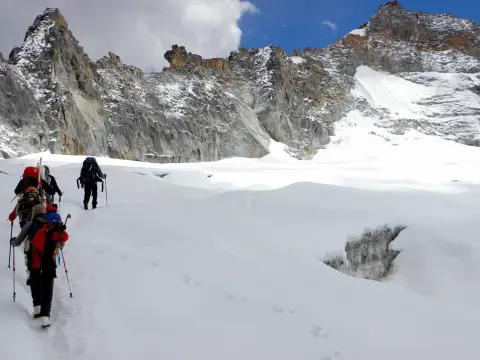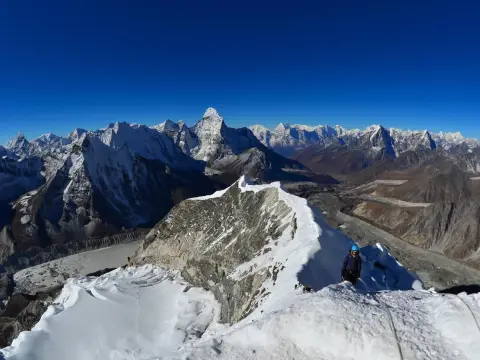
Lobuche Peak, standing at 6,119 meters (20,075 ft), is one of the most popular trekking peaks in the Everest region of Nepal. This climb offers an exciting mix of trekking and mountaineering, making it suitable for climbers who have some experience in high-altitude trekking but may not have extensive technical climbing experience. Located near the famous Khumbu region and close to the Everest Base Camp, Lobuche Peak offers breathtaking panoramic views of the surrounding Himalayan giants, including Mount Everest, Lhotse, Nuptse, and Ama Dablam. The climb allows adventurers to experience the thrill of stepping onto a Himalayan summit while following a well-established route, supported by experienced guides and Sherpas.
The trek to Lobuche Peak begins from Lukla, passing through iconic villages such as Phakding, Namche Bazaar, Tengboche, Dingboche, and Gorak Shep. The ascent combines trekking on rocky ridges, snow-covered slopes, and glacial terrain, providing both scenic beauty and mountaineering challenges. Adventure Family Treks and Expedition specializes in organizing this trek, ensuring climbers receive expert guidance, proper acclimatization, and full support throughout the journey. Their experienced team ensures safety measures are strictly followed while making the expedition enjoyable.
Key Highlights:
The best seasons for climbing Lobuche Peak are during spring (March to May) and autumn (September to November). During these months, the weather is generally stable, with clear skies and moderate temperatures, making it ideal for both trekking and climbing. In spring, the valleys bloom with rhododendron flowers, while autumn offers crisp skies that enhance the visibility of Everest and other surrounding peaks. These months also reduce the risk of heavy snowfall or avalanches, which can occur during winter, and avoid the monsoon season, when heavy rainfall can make trails slippery and dangerous.
During the pre-monsoon spring season, temperatures at lower altitudes remain comfortable, and snow conditions on the upper slopes are generally manageable for climbers. Similarly, autumn season provides excellent trekking conditions and stable snow on the peak, making summit attempts safer. Weather patterns in the Everest region can change rapidly, so the expedition team from Adventure Family Treks and Expedition closely monitors forecasts and adjusts itineraries if necessary to ensure climbers’ safety.
Key Points:
Lobuche Peak is considered a moderate trekking peak, suitable for climbers with prior trekking experience and basic mountaineering skills. The climb is non-technical to moderately technical, with some steep snow slopes, rock scrambling, and glacier crossings. While no advanced technical climbing skills are required, climbers should be familiar with the use of crampons, ice axes, and ropes, as guided by Adventure Family Treks and Expedition. Proper acclimatization is essential, as the ascent takes climbers above 6,000 meters, where altitude sickness can be a serious concern.
Transportation: The journey begins with a flight from Kathmandu to Lukla, one of the most thrilling short flights in the world, landing at Lukla Airport (2,840 m). From Lukla, the trek follows a well-marked route through Sherpa villages and lush valleys. Helicopter evacuation services are available in case of emergencies, adding an extra layer of safety. Ground transportation is generally not used due to the rugged terrain; everything from supplies to equipment is carried by porters or yaks.
Key Points:
During the Lobuche Peak expedition, food and accommodation are primarily provided in teahouses (lodges) along the trekking route. Teahouses in villages like Namche Bazaar, Tengboche, and Dingboche offer warm meals such as dal bhat, noodles, soups, and local specialties, as well as hot drinks to help with acclimatization. At higher elevations, especially near Lobuche and Gorak Shep, the options may be limited, so climbers often rely on the meals provided by their expedition team, which includes high-calorie, easy-to-digest food.
Accommodation is generally basic but comfortable, with shared rooms, bedding, and communal bathrooms. For the high-altitude climbing days, camping at Lobuche High Camp is arranged with proper tents and sleeping bags supplied by Adventure Family Treks and Expedition, ensuring climbers remain warm and rested before summit attempts. Hydration is critical at high altitudes, so boiled water and energy drinks are provided regularly.
Key Points:
Climbing Lobuche Peak requires specific permits, which are mandatory for legal and safe expeditions in Nepal. Two main permits are required:
The cost of permits varies depending on nationality and season, and Adventure Family Treks and Expedition handles all paperwork, allowing climbers to focus on preparation and acclimatization. Carrying these permits is crucial, as checkpoints exist along the trekking route to ensure compliance with park and climbing regulations.
Key Points:
Choosing Adventure Family Treks and Expedition for Lobuche Peak climbing guarantees a safe, organized, and memorable experience. Their team includes experienced guides, Sherpas, and support staff who ensure that climbers are properly acclimatized, equipped, and monitored throughout the journey. Safety is a priority, with first aid, emergency evacuation plans, and technical guidance provided at all times.
Additionally, the company offers customized itineraries based on experience level and fitness, ensuring climbers enjoy the trek at a comfortable pace. They also handle logistics such as permits, accommodation, food, and high-altitude gear, allowing climbers to focus solely on the adventure. Choosing them ensures a balance of challenge, safety, and cultural immersion in the Khumbu region, making the Lobuche Peak expedition a once-in-a-lifetime Himalayan experience.
Key Points:
Today, we take an early morning scenic flight from Kathmandu to Lukla, surrounded by spectacular Himalayan peaks. Upon arrival, we meet our trekking crew, organize our packs, and start our trek towards Phakding. The trail passes through Sherpa villages, Buddhist monasteries, and lush forests along the Dudh Koshi River. This is a gentle introduction to trekking at altitude and helps us begin acclimatization gradually. Overnight at a teahouse in Phakding allows for relaxation and early preparation for the next day’s ascent.
The trek to Namche Bazaar takes us through suspension bridges over roaring rivers and pine forests. We encounter small villages and tea houses, offering glimpses into traditional Sherpa life. The trail steadily ascends, giving panoramic views of Thamserku, Kusum Kanguru, and Kongde Ri. As we approach Namche Bazaar, the bustling “capital of the Khumbu” welcomes us with vibrant markets and teahouses. Arriving in the afternoon, you can explore the town, visit the local museum, and enjoy the spectacular Himalayan panorama.
Acclimatization is crucial to prevent altitude sickness, so today is dedicated to exploring Namche Bazaar and its surroundings. We take a short hike to the Everest View Hotel or the nearby hills, offering magnificent views of Everest, Lhotse, and Ama Dablam. This day also provides time to rest, adjust to the thinner air, and interact with locals, experiencing Sherpa culture and Buddhist monasteries. Gentle walks and light activity prepare the body for the higher altitudes we will face in the coming days.
The trail climbs through forests of rhododendron and pine, with occasional stone stairways, leading to Tengboche. The highlight of today is the iconic Tengboche Monastery, the largest in the Khumbu region, perched on a ridge with breathtaking views of Ama Dablam. The serene atmosphere of the monastery, combined with panoramic views of Everest, Lhotse, and Nuptse, makes this a truly spiritual stop. Overnight at a local teahouse allows you to enjoy warm meals and rest before the higher altitude trekking ahead.
From Tengboche, the trail descends to the Imja Khola valley and gradually ascends towards Dingboche, passing through small Sherpa villages and grazing lands. The hike offers spectacular vistas of the surrounding peaks, including Lhotse and Island Peak. Dingboche, located in a wide valley, is a perfect place to acclimatize and enjoy the quiet Himalayan environment. Upon arrival, we settle in a teahouse, rest, and prepare for tomorrow’s acclimatization hike.
Today, we take a short hike into Chukkung Valley to help the body adjust to higher altitudes. The valley is surrounded by towering peaks like Ama Dablam and Island Peak, offering incredible photo opportunities. The moderate hike increases endurance and strengthens our lungs for the upcoming Lobuche ascent. Returning to Dingboche, we enjoy the warm teahouse environment, a hearty meal, and rest, ensuring we are well-acclimatized for the trek to Lobuche tomorrow.
The trail today passes through moraines and glacial streams, gradually ascending towards Lobuche. As we climb higher, the scenery becomes more dramatic with towering peaks like Pumori and Nuptse surrounding us. Lobuche is a small settlement with teahouses providing basic accommodation, but it offers stunning sunset and sunrise views over the Khumbu Glacier. We rest, hydrate, and prepare our gear for the demanding high-altitude days ahead.
Today is an exciting day as we trek to Gorak Shep and then proceed to Everest Base Camp. The trail is rocky and challenging but offers breathtaking views of the Khumbu Icefall and surrounding peaks. At Everest Base Camp, we take in the sense of achievement while admiring the base of the world’s tallest mountain. Returning to Gorak Shep in the late afternoon, we rest at a teahouse and prepare for the early morning hike to Kala Patthar.
We start early to hike up Kala Patthar, the highest viewpoint in the region, offering panoramic sunrise views of Everest, Lhotse, and Nuptse. The climb is physically demanding but incredibly rewarding with photo opportunities that are unmatched. After soaking in the vistas, we descend to Gorak Shep for a quick refreshment and continue trekking back to Lobuche, where we spend the night, resting our bodies in preparation for the Lobuche Peak climb.
Today, we ascend to Lobuche High Camp, the final staging point for the summit attempt. The climb is gradual but the altitude can be challenging. This day focuses on final preparations, organizing climbing gear, and a light acclimatization hike near the high camp to help the body adjust to extreme altitude. A nutritious meal and early rest are essential for the summit attempt scheduled for tomorrow.
Summit day! We begin the ascent pre-dawn to tackle Lobuche Peak. The climb involves snow, ice, and rocky terrain, demanding focus and endurance. From the summit, we are rewarded with breathtaking 360-degree views of the Everest region. After celebrating the achievement and taking photos, we carefully descend to High Camp for rest. The day is long and physically challenging, but reaching the summit makes every step worth it.
After a well-deserved rest, we descend through the rugged trail towards Pangboche village. The path winds past glacial moraines, icefalls, and Sherpa settlements, offering a peaceful trekking experience. Pangboche is famous for its ancient monastery and stunning mountain views, providing a cultural and scenic stop. Overnight at a local teahouse allows for relaxation and reflection on the summit achievement.
Descending further, we retrace our steps towards Namche Bazaar. The trail passes through forests and Sherpa villages, with multiple opportunities for photography and cultural interactions. Arriving in Namche, we enjoy the bustling town atmosphere, visit local shops, and savor traditional Sherpa cuisine. The descent helps the body recover while still providing gentle trekking exercise after the high-altitude climb.
We continue our descent along the Dudh Koshi River, crossing suspension bridges and passing through beautiful villages. The trail gradually flattens as we approach Lukla, where the mountains open up to reveal the Himalayan valley. In Lukla, we celebrate the successful trek and summit attempt with the trekking team, enjoying a warm meal and reflecting on the adventure. Overnight at a teahouse in Lukla prepares us for tomorrow’s flight to Kathmandu.
A short scenic flight brings us back to Kathmandu. Upon arrival, we transfer to our hotel for rest, relaxation, and perhaps some last-minute shopping for souvenirs. In the evening, we have a farewell dinner with the Adventure Family Treks and Expedition team, sharing stories, photos, and memories from this incredible journey.
After breakfast, we transfer you to Tribhuvan International Airport for your onward flight. You depart Kathmandu with memories of spectacular mountains, cultural experiences, and the unforgettable achievement of climbing Lobuche Peak.

Clothing
Handwear
Footwear
Technical Gear / Climbing Equipment
Sleeping & Camp Equipment
Hydration & Nutrition
Toiletries & Health
Electronics & Miscellaneous
Optional / Peak-Specific Items
The best seasons to climb Lobuche Peak are pre-monsoon (March to May) and post-monsoon (late September to November). During these periods, the weather is relatively stable with clear skies and minimal snowfall, making the trek and climb safer. Summer months bring heavy monsoon rains, which increase the risk of landslides and slippery trails. Winter is extremely cold with high chances of snowstorms. Adventure Family Treks and Expedition ensures climbers are briefed on the safest time windows and prepared for changing weather conditions.
Lobuche Peak is classified as a moderate to challenging trekking peak. It requires prior high-altitude trekking experience, stamina, and basic mountaineering skills such as using an ice axe, crampons, and fixed ropes. The ascent involves steep snow and rock sections, especially near the summit, which can be physically demanding. Adventure Family Treks and Expedition provides professional guides, porters, and necessary training before attempting the climb, ensuring climbers are well-prepared for both the physical and technical challenges.
Climbing Lobuche Peak requires strong cardiovascular fitness, endurance, and leg strength due to long trekking days and steep ascents. Preparation should include aerobic exercises like running, hiking, or cycling, as well as strength training for the legs, core, and back. Adventure Family Treks and Expedition recommends a training routine starting several months before the expedition, along with practice treks at moderate altitudes to help your body adapt to high-altitude conditions.
Altitude sickness is a serious concern at elevations above 3,500 meters. Adventure Family Treks and Expedition emphasizes gradual acclimatization, rest days, and hydration. Key acclimatization stops include Namche Bazaar and Dingboche. Guides are trained to recognize symptoms and can provide supplemental oxygen, medications, or evacuation if necessary. Climbing schedules are flexible to allow additional rest days if a climber shows signs of altitude-related illness, ensuring safety is always the top priority.
Safety is the highest priority for Adventure Family Treks and Expedition. All climbers receive a pre-expedition briefing on risks, emergency protocols, and altitude illness prevention. The team carries first-aid kits, oxygen cylinders, satellite phones, and high-altitude rescue options. Guides continuously monitor weather, trail conditions, and climbers’ health. Proper acclimatization, experienced leadership, and well-equipped support teams ensure that all participants can enjoy the expedition safely while minimizing the risks associated with high-altitude climbing.
While prior mountaineering experience is beneficial, it is not strictly required. Lobuche Peak is considered a trekking peak rather than a technical mountaineering peak. However, climbers should have experience trekking at high altitudes and be comfortable with basic climbing techniques. Adventure Family Treks and Expedition offers professional guidance, proper acclimatization schedules, and training on using climbing equipment, making it accessible for moderately experienced trekkers willing to take on a challenging peak.
The typical Lobuche Peak expedition lasts approximately 17 days, including arrival in Kathmandu, trekking to Everest Base Camp, acclimatization days, the climb itself, and return to Kathmandu. This schedule allows sufficient time for acclimatization at key altitudes such as Namche Bazaar, Dingboche, and Lobuche High Camp, minimizing the risk of altitude sickness. Adventure Family Treks and Expedition carefully plans each day to balance trekking duration, rest periods, and summit preparation.
Summit day is the most demanding part of the expedition, typically taking 8–10 hours for ascent and descent. Climbers face steep snow slopes, rocky ridges, and extreme cold near the summit at 6,119 meters. Strong physical endurance, mental focus, and prior acclimatization are critical. Adventure Family Treks and Expedition carefully plans summit day logistics, guides climbers through technical sections, and monitors weather conditions to maximize safety and increase the chances of a successful summit.
Climbers need high-altitude clothing, mountaineering boots, crampons, ice axe, climbing harness, helmet, sleeping bags, and personal trekking gear. Specialized equipment such as ropes and protective gear will be provided by Adventure Family Treks and Expedition. It is crucial to have layered clothing for warmth, waterproof outerwear, gloves, and sunglasses for snow protection. Guides will ensure all equipment is checked and suitable for the climb.
Yes, hiring a guide, sherpa, and support team is highly recommended for safety, navigation, and logistical support. Adventure Family Treks and Expedition provides experienced high-altitude guides, porters for carrying equipment, and trained staff for summit assistance. Guides also help with acclimatization, technical climbing sections, and emergency procedures, significantly improving the success rate of the summit attempt while ensuring climbers focus on the experience rather than logistics.