
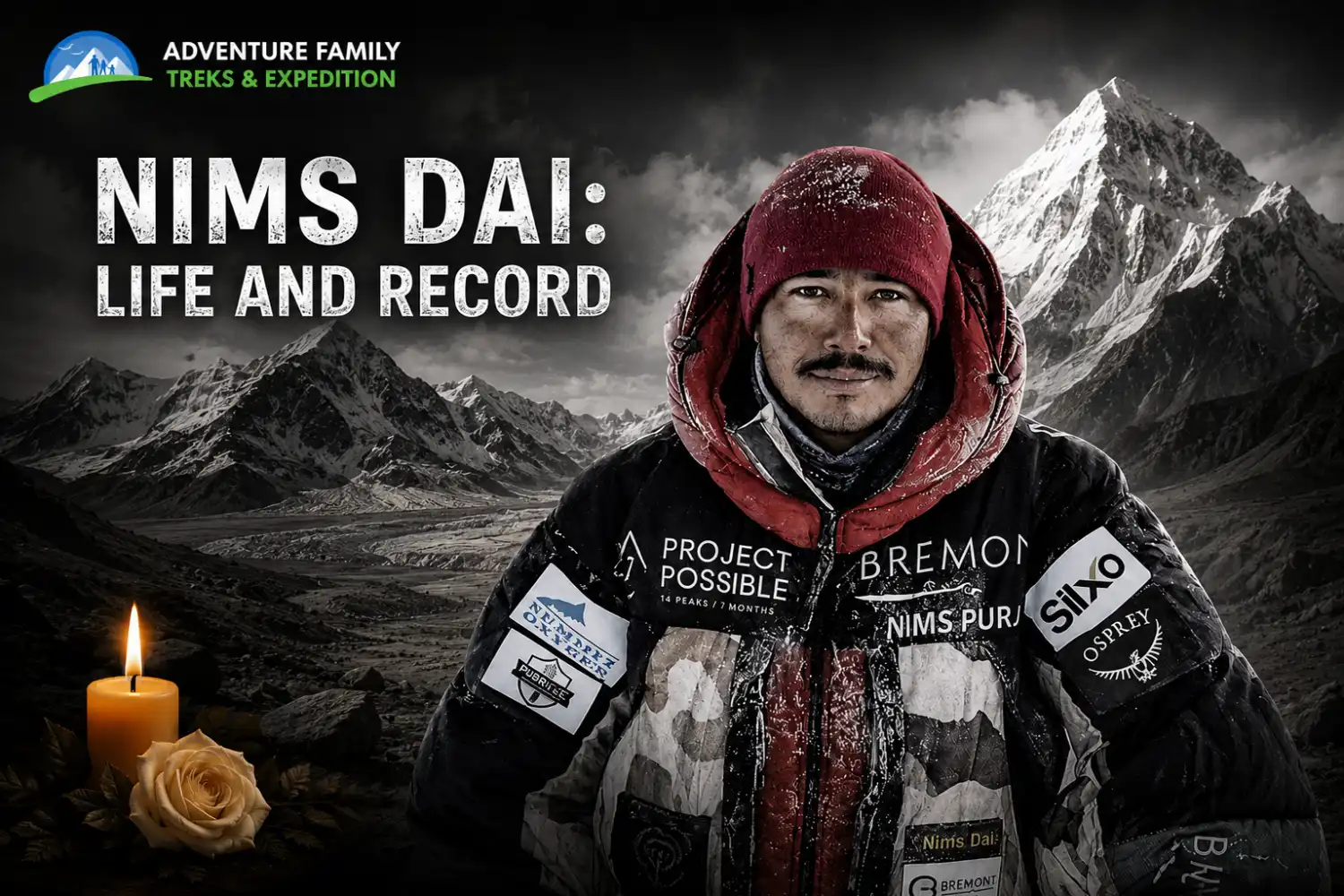
Nirmal "Nimsdai" Purja was one of the most recognizable names in modern mountaineering, a former Gurkha soldier who went on to rewrite the record books on the world's highest peaks. In August 2026, his death in an avalanche on Pakistan's Broad Peak brought an outpouring of tributes from climbers, world leaders, and fans across the globe. This is his story.
Nirmal Purja was born on July 25, 1983, in Dana, a small village in Nepal's Myagdi District, near the Dhaulagiri range. He came from a Magar family, and his parents' intercaste marriage reportedly brought social and financial hardship in their early years.
When Purja was around four years old, his family relocated to the Chitwan District in Nepal's lowlands so that he and his siblings could have better access to education. He attended school in Bharatpur, partly funded by his three older brothers, who had already enlisted as Gurkha soldiers.
Unlike many mountaineers, Purja did not grow up dreaming of the Himalayas. His early ambition was simpler: to follow his father and brothers into military service.
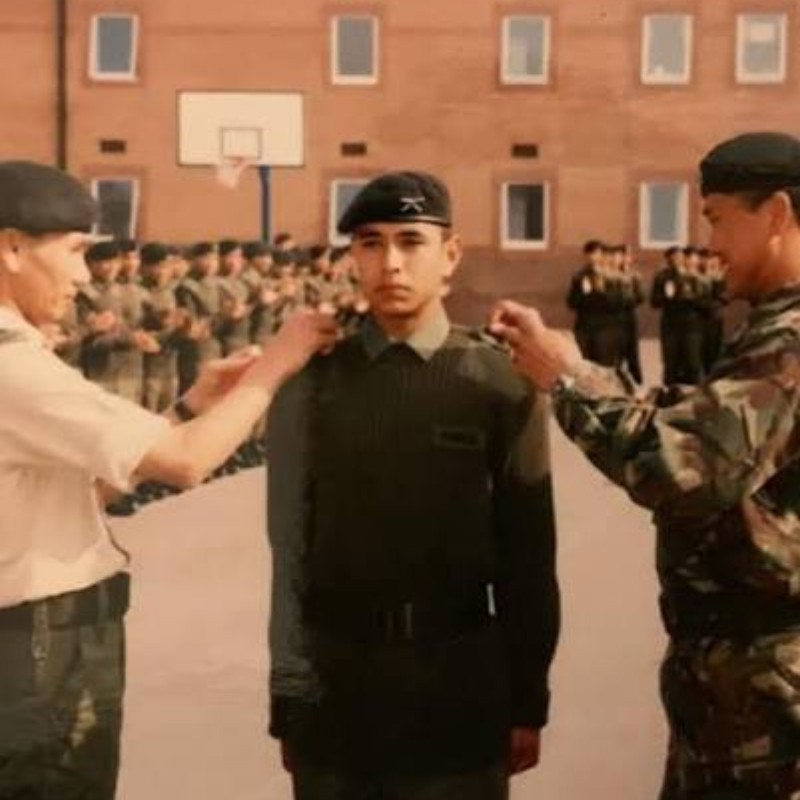
In 2003, at age 18, Purja joined the British Army's Brigade of Gurkhas. Six years later, in 2009, he became the first Gurkha ever selected for the United Kingdom's elite Special Boat Service (SBS), one of the most demanding special forces units in the world.
Over a military career spanning roughly 16 years, Purja specialized in cold-weather warfare — training that would later shape how he approached extreme altitude. His introduction to the mountains came almost by accident, during a period of military leave in December 2012, when he trekked to Everest Base Camp. The experience stayed with him and set the course for the rest of his life.
Purja's first major Himalayan climb came in 2012 on Lobuche East. He summited Mount Everest for the first time on May 13, 2016, and the following year, in May 2017, he led a team of 13 serving Gurkha soldiers on the G200E Gurkha Everest Expedition, marking 200 years of Gurkha service to the British Crown.
During this period, Purja was also involved in a high-altitude rescue that helped save a Gurkha expedition from disaster. In June 2018, he was appointed a Member of the Order of the British Empire (MBE) for his achievements in extreme high-altitude mountaineering.
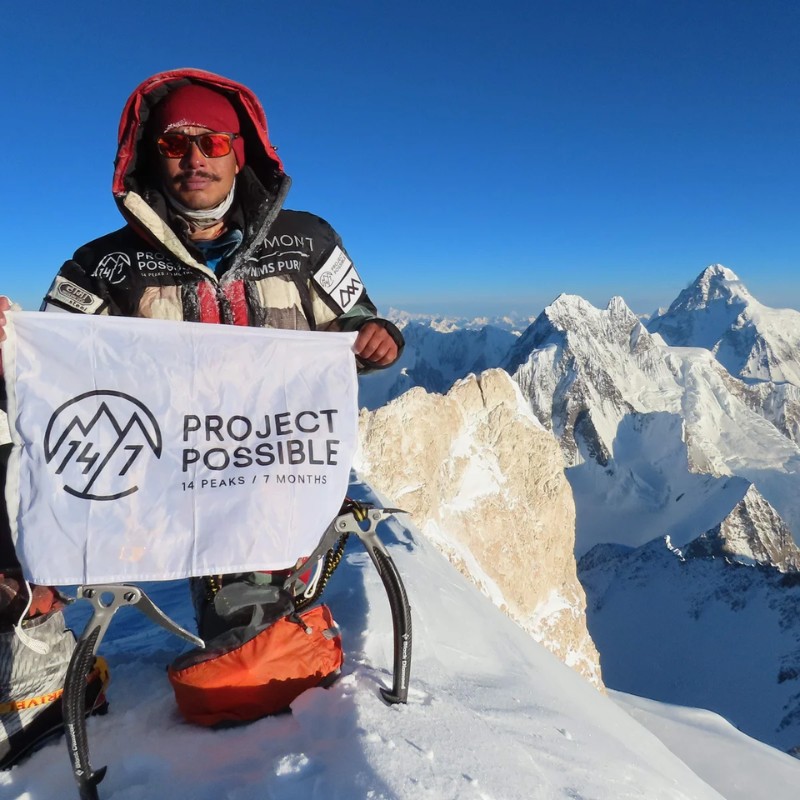
Nirmal Purja's defining achievement came in 2019, with a challenge he called Project Possible. His goal was to climb all 14 of the world's mountains above 8,000 metres — the "eight-thousanders" — faster than anyone in history.
He completed the challenge in just six months and six days (189 days), shattering the previous record, which had stood at nearly eight years. The feat is widely regarded as one of the greatest achievements in the history of mountaineering, combining physical endurance, logistical precision, and the support of Nepali and Sherpa climbing teams whose contributions Purja consistently credited.
Purja's Project Possible expedition was later documented in the Netflix film 14 Peaks: Nothing Is Impossible, which introduced his story to a global audience and turned him into a household name well beyond the climbing world. The film's success was followed by a bestselling memoir detailing his journey from a modest Nepali upbringing to the summit of the world's highest mountains.
Purja's achievements didn't stop with Project Possible.
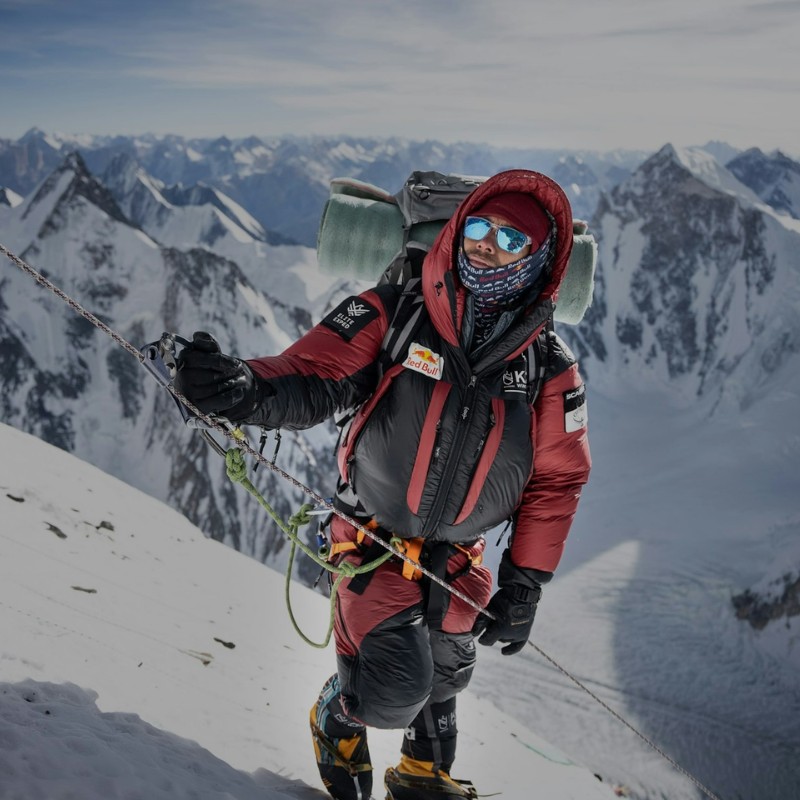
Beyond his own climbs, Purja founded Elite Exped, described as the first international expedition guiding company owned and operated by Nepalis. Through the company, he worked to shift more recognition, leadership, and economic benefit in high-altitude guiding toward Nepali and Sherpa climbers, who have historically done much of the most dangerous work on these expeditions with far less visibility than their foreign clients.
He also ran the Nimsdai Foundation, a charitable initiative supporting climbing communities and causes connected to the mountains he called home. In November 2023, Purja formalized his Non-Resident Nepali citizenship, reflecting his continued connection to Nepal even while holding British nationality.
In July 2026, Purja traveled to Pakistan's Karakoram range as part of what was reported to be his "Hattrick" project, initially centered on Gasherbrum II, with Broad Peak added to the itinerary later in the expedition.
On July 30, 2026, an avalanche struck Broad Peak's normal route at around midday, sweeping away all ten members of the climbing group as they pushed for the summit. Purja was leading the expedition. Rescue and recovery efforts began immediately but were hampered by the remote and difficult terrain.
On August 1, 2026, Purja's expedition company, Elite Exped, confirmed that he had died in the avalanche, along with the rest of the expedition team. Among those who lost their lives were his guide Nima Sherpa, senior climbing guide Kili Pemba "Kilu" Sherpa — who had summited Nanga Parbat just weeks earlier to complete his own set of all 14 eight-thousanders — and other Nepali, Pakistani, and international climbers. Purja was 43 years old.
Nepal's Prime Minister Balendra Shah publicly offered condolences, and tributes followed from mountaineers, government officials, and fans around the world who had followed Purja's career.
Nirmal Purja's legacy is difficult to overstate. He compressed what once took mountaineers years — sometimes entire careers — into months, while consistently pushing for greater recognition of the Nepali and Sherpa climbers who make high-altitude expeditions possible. His records on Everest, Lhotse, Kanchenjunga, and K2 will likely stand for years, and his story, immortalized in 14 Peaks: Nothing Is Impossible, introduced millions of people to the realities and risks of high-altitude climbing.
His death on Broad Peak is a stark reminder that even the most experienced and record-breaking climbers remain at the mercy of the mountains. As with earlier disasters like the 2008 K2 tragedy and the 2015 Everest avalanches, Broad Peak's 2026 avalanche has renewed conversations about safety, weather unpredictability, and risk in high-altitude expeditions.
Who was Nirmal Purja?
Nirmal Purja, known as "Nimsdai," was a Nepali-British mountaineer and former Gurkha and UK Special Boat Service operator, famous for climbing all 14 of the world's 8,000-metre peaks in a record six months and six days in 2019.
How did Nirmal Purja die?
Purja died in an avalanche on Broad Peak, a 8,051-metre mountain in Pakistan's Karakoram range, on July 30, 2026. His death was confirmed by his expedition company, Elite Exped, on August 1, 2026.
What is Project Possible?
Project Possible was Purja's 2019 challenge to summit all 14 of the world's eight-thousanders in under seven months. He completed it in 189 days, smashing the previous record.
What documentary was made about Nirmal Purja?
Netflix released "14 Peaks: Nothing Is Impossible" in 2021, documenting his Project Possible expedition and bringing his story to a global audience.
Did Nirmal Purja serve in the military?
Yes. He joined the British Army's Brigade of Gurkhas in 2003 and later became the first Gurkha selected for the UK's Special Boat Service in 2009, serving a 16-year military career before transitioning fully into mountaineering.
What other climbing records did Nirmal Purja hold?
Alongside Project Possible, he was part of the first winter ascent of K2 in January 2021, completed a record-fast "triple header" of Kanchenjunga, Everest, and Lhotse without oxygen in 2022, and climbed all 14 eight-thousanders without supplemental oxygen by October 2024.
What was Elite Exped?
Elite Exped was the Nepali-owned and operated expedition guiding company Purja founded, aimed at giving Nepali and Sherpa climbers greater leadership and recognition in the high-altitude guiding industry.
Who else died in the Broad Peak avalanche?
The avalanche killed all ten members of the expedition team, including guides Nima Sherpa and Kili Pemba "Kilu" Sherpa, alongside other Nepali, Pakistani, and international climbers.
Nirmal Purja's life was a story of transformation — from a modest village in Myagdi District to the summits of the world's highest and most dangerous mountains. His records may stand for years, but it's his relentless drive, his advocacy for Nepali climbers, and his belief that "giving up is not in the blood" that will define how he's remembered. As the mountaineering world mourns his loss on Broad Peak, his legacy continues to inspire a new generation of climbers to push what's considered possible. If you'd like to explore more stories from the world of high-altitude mountaineering, browse our related trekking and expedition guides, or get in touch with our team to learn more.
