[{"name":"Everest Base Camp Trek","duration":"14","image_url":"https:\/\/www.adventurefamilytreks.com\/public\/storage\/trip-galleries\/1\/thumb_267f7609e190738f5789263f4581ee8c.webp","offer_price":1399,"url":"https:\/\/www.adventurefamilytreks.com\/public\/trips\/everest-base-camp-trek"},{"name":"Everest Three Passes Trek","duration":"18","image_url":"https:\/\/www.adventurefamilytreks.com\/public\/storage\/trip-galleries\/2\/thumb_0e53861c05eacf22be83d712ebc8262e.webp","offer_price":2549,"url":"https:\/\/www.adventurefamilytreks.com\/public\/trips\/everest-three-passes-trek"},{"name":"Gokyo Lake Trek","duration":"12","image_url":"https:\/\/www.adventurefamilytreks.com\/public\/storage\/trip-galleries\/3\/thumb_e391b4c86379cf4923fdf2c4b19c6627.webp","offer_price":1325,"url":"https:\/\/www.adventurefamilytreks.com\/public\/trips\/gokyo-lake-trek"},{"name":"Everest Panorama Trek","duration":"11","image_url":"https:\/\/www.adventurefamilytreks.com\/public\/storage\/trip-galleries\/4\/thumb_95bcd76d71f2ed77080cc7103aff9eee.webp","offer_price":1255,"url":"https:\/\/www.adventurefamilytreks.com\/public\/trips\/everest-panorama-trek"},{"name":"Annapurna Base Camp Trek","duration":"9","image_url":"https:\/\/www.adventurefamilytreks.com\/public\/storage\/trip-galleries\/5\/thumb_178547896b3136459b4f87627a3a3a6e.webp","offer_price":950,"url":"https:\/\/www.adventurefamilytreks.com\/public\/trips\/annapurna-base-camp-trek"},{"name":"Annapurna Circuit Trek","duration":"17","image_url":"https:\/\/www.adventurefamilytreks.com\/public\/storage\/trip-galleries\/6\/thumb_764d91bdecc6fe371510b4fe6759c5c1.webp","offer_price":1360,"url":"https:\/\/www.adventurefamilytreks.com\/public\/trips\/annapurna-circuit-trek"},{"name":"Ghorepani Poon Hill Trek","duration":"8","image_url":"https:\/\/www.adventurefamilytreks.com\/public\/storage\/trip-galleries\/7\/thumb_ac00562c98cb449924bab4c2a6127b2f.webp","offer_price":499,"url":"https:\/\/www.adventurefamilytreks.com\/public\/trips\/ghorepani-poon-hill-trek"},{"name":"Mardi Himal Trek","duration":"9","image_url":"https:\/\/www.adventurefamilytreks.com\/public\/storage\/trip-galleries\/8\/thumb_cfa64840203bfceedc7bc13315f48167.webp","offer_price":950,"url":"https:\/\/www.adventurefamilytreks.com\/public\/trips\/mardi-himal-trek"},{"name":"Manaslu Circuit Trek","duration":"16","image_url":"https:\/\/www.adventurefamilytreks.com\/public\/storage\/trip-galleries\/9\/thumb_25a43c369c14da548a5c1060511db8af.webp","offer_price":1350,"url":"https:\/\/www.adventurefamilytreks.com\/public\/trips\/manaslu-circuit-trek"},{"name":"Tsum Valley and Manaslu Circuit Trek","duration":"19","image_url":"https:\/\/www.adventurefamilytreks.com\/public\/storage\/trip-galleries\/10\/thumb_75785836f8c5b616ca1089209b5c9114.webp","offer_price":2395,"url":"https:\/\/www.adventurefamilytreks.com\/public\/trips\/tsum-valley-and-manaslu-circuit-trek"},{"name":"Langtang Valley Trek","duration":"10","image_url":"https:\/\/www.adventurefamilytreks.com\/public\/storage\/trip-galleries\/11\/thumb_45fec48f749f7de3de7796f7b990d9c6.webp","offer_price":950,"url":"https:\/\/www.adventurefamilytreks.com\/public\/trips\/langtang-valley-trek"},{"name":"Langtang Valley and Gosainkunda Trek","duration":"14","image_url":"https:\/\/www.adventurefamilytreks.com\/public\/storage\/trip-galleries\/12\/thumb_5a9fdc7afecc2a40e55de88b5fa91354.webp","offer_price":1090,"url":"https:\/\/www.adventurefamilytreks.com\/public\/trips\/langtang-valley-and-gosainkunda-trek"},{"name":"Langtang Gosaikunda and Helambu Trek","duration":"17","image_url":"https:\/\/www.adventurefamilytreks.com\/public\/storage\/trip-galleries\/13\/thumb_31bf05eceaad7335ecc7d6c1d4f82894.webp","offer_price":1105,"url":"https:\/\/www.adventurefamilytreks.com\/public\/trips\/langtang-gosaikunda-and-helambu-trek"},{"name":"Tamang Heritage Trail Trek","duration":"10","image_url":"https:\/\/www.adventurefamilytreks.com\/public\/storage\/trip-galleries\/14\/thumb_e2111974173f92e4b73dfd6cb0a71028.webp","offer_price":795,"url":"https:\/\/www.adventurefamilytreks.com\/public\/trips\/tamang-heritage-trail-trek"},{"name":"Lower Mustang Trek","duration":"10","image_url":"https:\/\/www.adventurefamilytreks.com\/public\/storage\/trip-galleries\/15\/thumb_0331ace1dc2a0b2ce5cd70ef9d111a0c.webp","offer_price":1085,"url":"https:\/\/www.adventurefamilytreks.com\/public\/trips\/lower-mustang-trek"},{"name":"Upper Mustang Overland Tour","duration":"12","image_url":"https:\/\/www.adventurefamilytreks.com\/public\/storage\/trip-galleries\/16\/thumb_6efa991d81256b1e2bdc4c7697d75b76.webp","offer_price":1470,"url":"https:\/\/www.adventurefamilytreks.com\/public\/trips\/upper-mustang-overland-tour"},{"name":"Upper Mustang Trek","duration":"16","image_url":"https:\/\/www.adventurefamilytreks.com\/public\/storage\/trip-galleries\/17\/thumb_ef4cc4eabad957d6fce177afa2467fda.webp","offer_price":1749,"url":"https:\/\/www.adventurefamilytreks.com\/public\/trips\/upper-mustang-trek"},{"name":"Jomsom Muktinath Trekking","duration":"7","image_url":"https:\/\/www.adventurefamilytreks.com\/public\/storage\/trip-galleries\/18\/thumb_459abc824710ec143d3d1b4ac4e9ca2f.webp","offer_price":880,"url":"https:\/\/www.adventurefamilytreks.com\/public\/trips\/jomsom-muktinath-trekking"},{"name":"Everest Base Camp Trek via Gokyo Lake","duration":"18","image_url":"https:\/\/www.adventurefamilytreks.com\/public\/storage\/trip-galleries\/19\/thumb_ed0cd8e82d19354d7648f4567d292ea4.webp","offer_price":1550,"url":"https:\/\/www.adventurefamilytreks.com\/public\/trips\/everest-base-camp-trek-via-gokyo-lake"},{"name":"Pikey Peak Trek","duration":"11","image_url":"https:\/\/www.adventurefamilytreks.com\/public\/storage\/trip-galleries\/20\/thumb_f6c4c9d7fa961381a7ebb39b261ad479.webp","offer_price":795,"url":"https:\/\/www.adventurefamilytreks.com\/public\/trips\/pikey-peak-trek"},{"name":"Annapurna Circuit with Tilicho Lake Trek","duration":"18","image_url":"https:\/\/www.adventurefamilytreks.com\/public\/storage\/trip-galleries\/21\/thumb_42f46fd430bcd10b82b08fa84172a695.webp","offer_price":1420,"url":"https:\/\/www.adventurefamilytreks.com\/public\/trips\/annapurna-circuit-with-tilicho-lake-trek"},{"name":"Kanchenjunga Circuit Trek","duration":"22","image_url":"https:\/\/www.adventurefamilytreks.com\/public\/storage\/trip-galleries\/22\/thumb_57b4698a87bd68798f3b8d19bda7c051.webp","offer_price":2755,"url":"https:\/\/www.adventurefamilytreks.com\/public\/trips\/kanchenjunga-circuit-trek"},{"name":"Lower Dolpo Trek","duration":"18","image_url":"https:\/\/www.adventurefamilytreks.com\/public\/storage\/trip-galleries\/23\/thumb_5f44bdb1e3a48466c738966e98116a90.webp","offer_price":2395,"url":"https:\/\/www.adventurefamilytreks.com\/public\/trips\/lower-dolpo-trek"},{"name":"Upper Dolpo Trek","duration":"24","image_url":"https:\/\/www.adventurefamilytreks.com\/public\/storage\/trip-galleries\/24\/thumb_358dce4b51923768bd638a409a6a2d65.webp","offer_price":3140,"url":"https:\/\/www.adventurefamilytreks.com\/public\/trips\/upper-dolpo-trek"},{"name":"Rara Lake Trek","duration":"15","image_url":"https:\/\/www.adventurefamilytreks.com\/public\/storage\/trip-galleries\/25\/thumb_eb5f3d47ec26a85d1c6df91a05a9d152.webp","offer_price":2299,"url":"https:\/\/www.adventurefamilytreks.com\/public\/trips\/rara-lake-trek"},{"name":"Kathmandu Pokhara Lumbini Chitwan Tour","duration":"10","image_url":"https:\/\/www.adventurefamilytreks.com\/public\/storage\/trip-galleries\/26\/thumb_de043396bb4ce7cea6902ddf4e59a9fe.webp","offer_price":1155,"url":"https:\/\/www.adventurefamilytreks.com\/public\/trips\/kathmandu-pokhara-lumbini-chitwan-tour"},{"name":"Kathmandu Pokhara Lumbini Tour","duration":"8","image_url":"https:\/\/www.adventurefamilytreks.com\/public\/storage\/trip-galleries\/27\/thumb_a73a2b91734ef7fd18d9e3b8b4b250c3.webp","offer_price":1070,"url":"https:\/\/www.adventurefamilytreks.com\/public\/trips\/kathmandu-pokhara-lumbini-tour"},{"name":"Kathmandu Pokhara Chitwan Tour","duration":"8","image_url":"https:\/\/www.adventurefamilytreks.com\/public\/storage\/trip-galleries\/28\/thumb_711054ccb4283af4b1b972714e4a5f41.webp","offer_price":1040,"url":"https:\/\/www.adventurefamilytreks.com\/public\/trips\/kathmandu-pokhara-chitwan-tour"},{"name":"Kathmandu Pokhara Tour","duration":"7","image_url":"https:\/\/www.adventurefamilytreks.com\/public\/storage\/trip-galleries\/29\/thumb_013e25b67e0e0dc65a0bade481e76896.webp","offer_price":890,"url":"https:\/\/www.adventurefamilytreks.com\/public\/trips\/kathmandu-pokhara-tour"},{"name":"Kathmandu Chitwan Tour","duration":"6","image_url":"https:\/\/www.adventurefamilytreks.com\/public\/storage\/trip-galleries\/30\/thumb_019a401ba1cb7c3b960009367df3e163.webp","offer_price":790,"url":"https:\/\/www.adventurefamilytreks.com\/public\/trips\/kathmandu-chitwan-tour"},{"name":"Nepal Highlight Tour","duration":"10","image_url":"https:\/\/www.adventurefamilytreks.com\/public\/storage\/trip-galleries\/31\/thumb_c3749ca10c1940ae9943c8fecc621e75.webp","offer_price":1340,"url":"https:\/\/www.adventurefamilytreks.com\/public\/trips\/nepal-highlight-tour"},{"name":"Nagarkot Sunrise View and Changunarayan Hike","duration":"1","image_url":"https:\/\/www.adventurefamilytreks.com\/public\/storage\/trip-galleries\/32\/thumb_8a77f44e597a8e0499b9ce0e21f53634.webp","offer_price":75,"url":"https:\/\/www.adventurefamilytreks.com\/public\/trips\/nagarkot-sunrise-view-and-changunarayan-hike"},{"name":"Chitwan Jungle Safari Tour","duration":"3","image_url":"https:\/\/www.adventurefamilytreks.com\/public\/storage\/trip-galleries\/33\/thumb_bca35529a62e84527dfc1e699e7edffb.webp","offer_price":305,"url":"https:\/\/www.adventurefamilytreks.com\/public\/trips\/chitwan-jungle-safari-tour"},{"name":"Chitwan Wildlife Adventure Tour","duration":"4","image_url":"https:\/\/www.adventurefamilytreks.com\/public\/storage\/trip-galleries\/34\/thumb_9fb0d6f7644726d75597b3080333d378.webp","offer_price":445,"url":"https:\/\/www.adventurefamilytreks.com\/public\/trips\/chitwan-wildlife-adventure-tour"},{"name":"Bardia National Park Tour","duration":"7","image_url":"https:\/\/www.adventurefamilytreks.com\/public\/storage\/trip-galleries\/35\/thumb_0c1f6dd7e950d1aa9a8cac473953f4b1.webp","offer_price":945,"url":"https:\/\/www.adventurefamilytreks.com\/public\/trips\/bardia-national-park-tour"},{"name":"Hindu Pilgrimage Tour in Nepal","duration":"10","image_url":"https:\/\/www.adventurefamilytreks.com\/public\/storage\/trip-galleries\/36\/thumb_476a3de7ae7d6d2bc5ff518dcddbde33.webp","offer_price":1455,"url":"https:\/\/www.adventurefamilytreks.com\/public\/trips\/hindu-pilgrimage-tour-in-nepal"},{"name":"Buddhist Pilgrimage Tour in Nepal","duration":"8","image_url":"https:\/\/www.adventurefamilytreks.com\/public\/storage\/trip-galleries\/37\/thumb_b0d4276fe307d8ae8be112a481af8f03.webp","offer_price":1050,"url":"https:\/\/www.adventurefamilytreks.com\/public\/trips\/buddhist-pilgrimage-tour-in-nepal"},{"name":"Rara Lake Tour","duration":"9","image_url":"https:\/\/www.adventurefamilytreks.com\/public\/storage\/trip-galleries\/38\/thumb_60fb6ddcc9c7c7cd5ace271c7c8f505b.webp","offer_price":1895,"url":"https:\/\/www.adventurefamilytreks.com\/public\/trips\/rara-lake-tour"},{"name":"Kathmandu Sightseeing Tour","duration":"1","image_url":"https:\/\/www.adventurefamilytreks.com\/public\/storage\/trip-galleries\/39\/thumb_2bb48f23851d0c66d8621872b3cf557c.webp","offer_price":50,"url":"https:\/\/www.adventurefamilytreks.com\/public\/trips\/kathmandu-sightseeing-tour"},{"name":"Everest Base Camp Heli Tour","duration":"1","image_url":"https:\/\/www.adventurefamilytreks.com\/public\/storage\/trip-galleries\/40\/thumb_7b8742eecb74aa7162dd5fd5171ec4e5.webp","offer_price":1435,"url":"https:\/\/www.adventurefamilytreks.com\/public\/trips\/everest-base-camp-heli-tour"},{"name":"Annapurna Base Camp Heli Tour","duration":"1","image_url":"https:\/\/www.adventurefamilytreks.com\/public\/storage\/trip-galleries\/41\/thumb_6e6ff98ec81da8fa61da935637f3c219.webp","offer_price":830,"url":"https:\/\/www.adventurefamilytreks.com\/public\/trips\/annapurna-base-camp-heli-tour"},{"name":"Trishuli River Rafting","duration":"1","image_url":"https:\/\/www.adventurefamilytreks.com\/public\/storage\/trip-galleries\/42\/thumb_e656b3999f28167b8bffb437ad918740.webp","offer_price":65,"url":"https:\/\/www.adventurefamilytreks.com\/public\/trips\/trishuli-river-rafting"},{"name":"Bhote Koshi Bungee Jumping","duration":"1","image_url":"https:\/\/www.adventurefamilytreks.com\/public\/storage\/trip-galleries\/43\/thumb_af71f5edbeff20a6327a3bf0380cacc2.webp","offer_price":235,"url":"https:\/\/www.adventurefamilytreks.com\/public\/trips\/bhote-koshi-bungee-jumping"},{"name":"Paragliding in Pokhara","duration":"1","image_url":"https:\/\/www.adventurefamilytreks.com\/public\/storage\/trip-galleries\/44\/thumb_8a419c3b30480c7e9743cc151538b363.webp","offer_price":70,"url":"https:\/\/www.adventurefamilytreks.com\/public\/trips\/paragliding-in-pokhara"},{"name":"Mera Peak Climbing","duration":"18","image_url":"https:\/\/www.adventurefamilytreks.com\/public\/storage\/trip-galleries\/45\/thumb_183ba6fe9e41d06d63baee8fdf5bea1f.webp","offer_price":2625,"url":"https:\/\/www.adventurefamilytreks.com\/public\/trips\/mera-peak-climbing"},{"name":"Island Peak Climbing","duration":"18","image_url":"https:\/\/www.adventurefamilytreks.com\/public\/storage\/trip-galleries\/46\/thumb_eaef9ff982186ea8a11e136e1fb7983e.webp","offer_price":2210,"url":"https:\/\/www.adventurefamilytreks.com\/public\/trips\/island-peak-climbing"},{"name":"Lobuche Peak Climbing","duration":"17","image_url":"https:\/\/www.adventurefamilytreks.com\/img\/default.gif","offer_price":2250,"url":"https:\/\/www.adventurefamilytreks.com\/public\/trips\/lobuche-peak-climbing"},{"name":"Pisang Peak Climbing","duration":"17","image_url":"https:\/\/www.adventurefamilytreks.com\/img\/default.gif","offer_price":2150,"url":"https:\/\/www.adventurefamilytreks.com\/public\/trips\/pisang-peak-climbing"},{"name":"Tibet Lhasa Tour","duration":"8","image_url":"https:\/\/www.adventurefamilytreks.com\/public\/storage\/trip-galleries\/49\/thumb_b98422dd8eb5c47c26c54f8ee0d73f08.webp","offer_price":2275,"url":"https:\/\/www.adventurefamilytreks.com\/public\/trips\/tibet-lhasa-tour"},{"name":"Kailash Mansarovar Overland Yatra","duration":"13","image_url":"https:\/\/www.adventurefamilytreks.com\/public\/storage\/trip-galleries\/50\/thumb_07faf7a76a0c1cd05cdc5dbac1fe104d.webp","offer_price":2550,"url":"https:\/\/www.adventurefamilytreks.com\/public\/trips\/kailash-mansarovar-overland-yatra"},{"name":"Best Bhutan Tour","duration":"9","image_url":"https:\/\/www.adventurefamilytreks.com\/public\/storage\/trip-galleries\/51\/thumb_4d3c108e80aadaf9f7869b7d58146e69.webp","offer_price":2355,"url":"https:\/\/www.adventurefamilytreks.com\/public\/trips\/best-bhutan-tour"},{"name":"Bhutan Tour from Nepal","duration":"13","image_url":"https:\/\/www.adventurefamilytreks.com\/public\/storage\/trip-galleries\/52\/thumb_6cbc3ac907f7b9f2f04c1142d69f9a8e.webp","offer_price":2585,"url":"https:\/\/www.adventurefamilytreks.com\/public\/trips\/bhutan-tour-from-nepal"},{"name":"Best Of Bhutan Tour","duration":"5","image_url":"https:\/\/www.adventurefamilytreks.com\/public\/storage\/trip-galleries\/53\/thumb_5d8bf7a8e09f0e322ea04ec257fc58b5.webp","offer_price":1785,"url":"https:\/\/www.adventurefamilytreks.com\/public\/trips\/best-of-bhutan-tour"},{"name":"Bhutan Cultural Tour-6 Days","duration":"6","image_url":"https:\/\/www.adventurefamilytreks.com\/public\/storage\/trip-galleries\/55\/thumb_0cf6ea9c199c83529e1ec4f7f9e3ef1e.webp","offer_price":2195,"url":"https:\/\/www.adventurefamilytreks.com\/public\/trips\/bhutan-cultural-tour-6-days"},{"name":"Incredible Bhutan Tour","duration":"8","image_url":"https:\/\/www.adventurefamilytreks.com\/public\/storage\/trip-galleries\/56\/thumb_e85bdd981c795f54d0d8b637fcef4c57.webp","offer_price":2450,"url":"https:\/\/www.adventurefamilytreks.com\/public\/trips\/incredible-bhutan-tour"},{"name":"Kailash Mansarovar Inner Kora","duration":"15","image_url":"https:\/\/www.adventurefamilytreks.com\/img\/default.gif","offer_price":2650,"url":"https:\/\/www.adventurefamilytreks.com\/public\/trips\/kailash-mansarovar-inner-kora"},{"name":"Best of Tibet Tours","duration":"13","image_url":"https:\/\/www.adventurefamilytreks.com\/public\/storage\/trip-galleries\/58\/thumb_8ae3f9dda6019a9584ad2a5b85c31941.webp","offer_price":3265,"url":"https:\/\/www.adventurefamilytreks.com\/public\/trips\/best-of-tibet-tours"},{"name":"Kailash Mansarovar Yatra via Lhasa","duration":"13","image_url":"https:\/\/www.adventurefamilytreks.com\/public\/storage\/trip-galleries\/59\/thumb_bd177e3aa1a94da0b224d8d74d828e2c.webp","offer_price":3130,"url":"https:\/\/www.adventurefamilytreks.com\/public\/trips\/kailash-mansarovar-yatra-via-lhasa"},{"name":"Damodar Kunda Yatra","duration":"10","image_url":"https:\/\/www.adventurefamilytreks.com\/public\/storage\/trip-galleries\/60\/thumb_15fb4316d3c4850cd146a104255a3c49.webp","offer_price":1599,"url":"https:\/\/www.adventurefamilytreks.com\/public\/trips\/damodar-kunda-yatra"}]
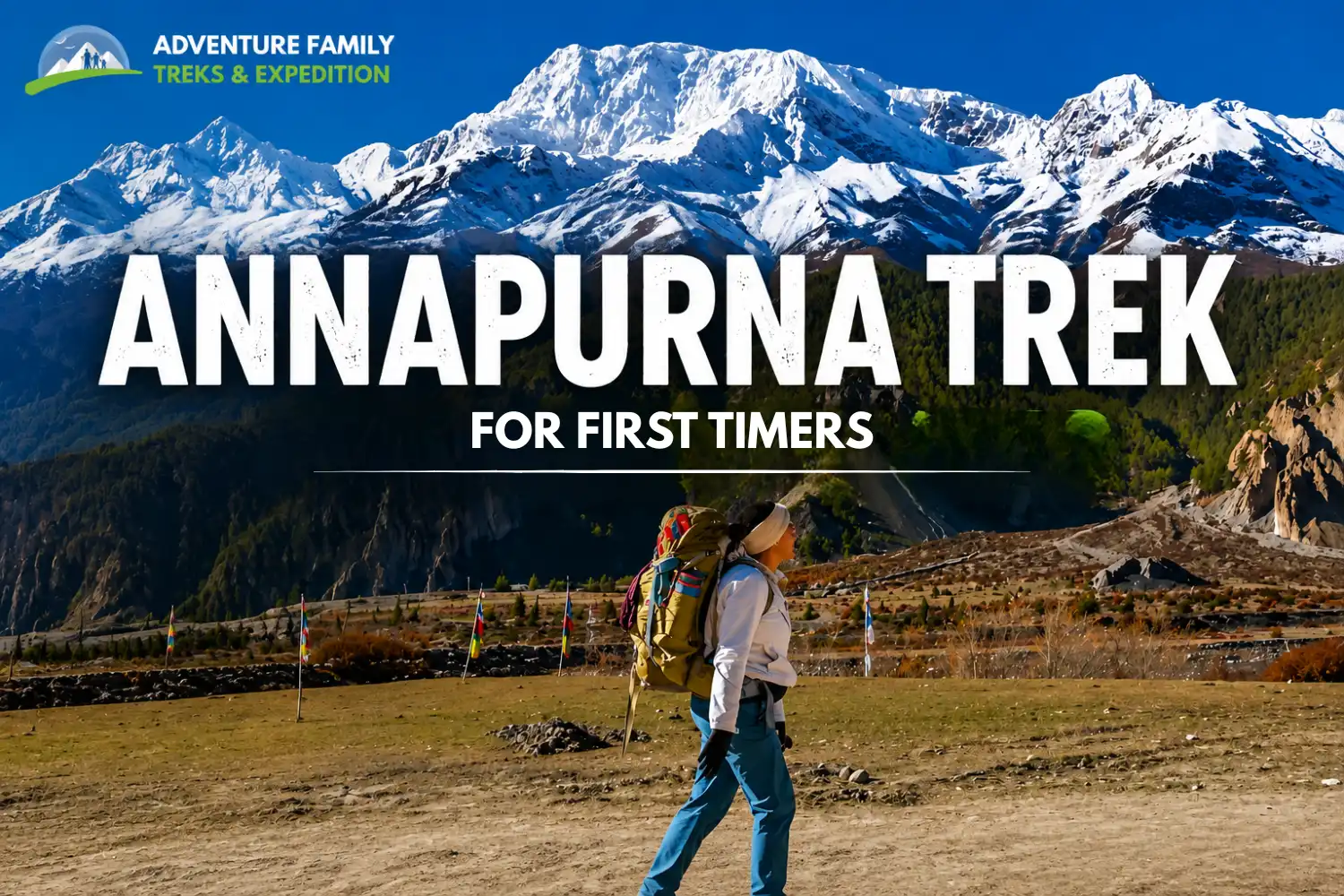
The Annapurna Base Camp Trek is one of Nepal's most iconic hikes, leading you through terraced villages, rhododendron forests, and dramatic mountain valleys straight into the heart of the Annapurna Sanctuary. If you're planning your first trek in Nepal, this guide covers everything you need — the route, cost, difficulty, best season, permits, and packing list — so you can prepare with confidence.
Unlike higher, more technical treks in the region, the Annapurna Base Camp (ABC) Trek is achievable for reasonably fit beginners while still delivering some of the most spectacular close-up mountain views in the Himalayas. It typically takes 7 to 12 days depending on your route and pace, starting and ending near Pokhara.
Why Trek to Annapurna Base Camp?
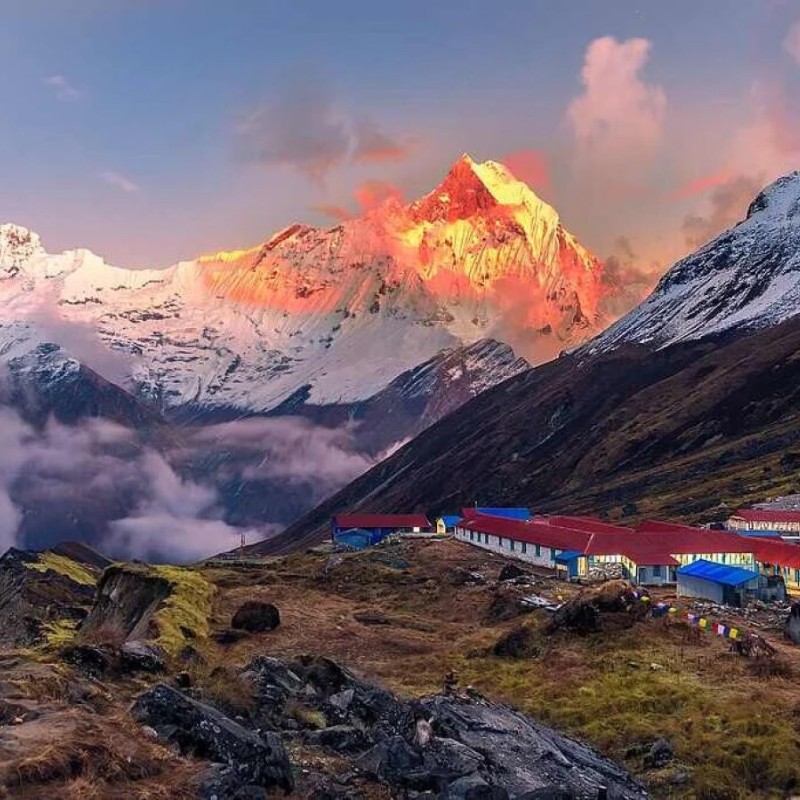
At 4,130 metres, Annapurna Base Camp sits inside a natural amphitheater of peaks known as the Annapurna Sanctuary, surrounded by Annapurna I (the world's 10th highest mountain), Machapuchare (Fishtail), Hiunchuli, and Gangapurna. Few treks in the world offer this kind of 360-degree mountain panorama without requiring technical climbing experience.
Along the way, the trail passes through Gurung and Magar villages, subtropical forest, and high alpine terrain — giving you a genuine cross-section of Nepal's landscapes and cultures in a single trek.
Golden sunrise illuminates the snow-capped Himalayan peaks above a high-altitude mountain lodge, creating a spectacular trekking landscape in Nepal.
Annapurna Base Camp Trek Itinerary
Most itineraries begin and end in Pokhara, with a drive or short flight to the trailhead. A typical 7–10 day itinerary looks like this:
Day 1: Drive from Pokhara to Nayapul, trek to Ghandruk or Tikhedhunga
Day 2: Trek to Chhomrong, gateway to the Annapurna Sanctuary
Day 3: Trek to Sinuwa or Bamboo, entering forested trail
Day 4: Trek to Deurali, gaining altitude through rhododendron and bamboo forest
Day 5: Trek to Machapuchare Base Camp (MBC), then continue to Annapurna Base Camp (ABC)
Day 6: Sunrise at Annapurna Base Camp, then descend to Bamboo or Jhinu Danda
Day 7: Relax at Jhinu Danda hot springs, or continue descending
Day 8: Trek back to Nayapul, drive to Pokhara
Some itineraries add extra acclimatization or rest days, or include a detour to Poon Hill for sunrise views over the Annapurna and Dhaulagiri ranges. If you have limited time, shorter 5–6 day versions exist, though they involve longer daily walking hours.
How Many Days Do You Need?
Most trekkers complete the ABC trek in 7 to 10 days, including acclimatization. Adding Poon Hill or extra rest days can extend this to 11–12 days. It's worth building in at least one buffer day in case of fatigue or weather delays.
Annapurna Base Camp Trek Difficulty
The ABC trek is generally rated moderate, making it a good choice for first-time trekkers with reasonable fitness. You'll walk 5–7 hours a day on well-established trails, with a mix of steep stone staircases, forest paths, and glacial valley walking.
The trek doesn't require technical climbing skills or specialized mountaineering gear, but daily elevation changes — particularly the stone steps around Ulleri and Chhomrong — can be tough on the knees. Basic hiking fitness, and ideally some training with stairs or hills beforehand, will make the trek considerably more enjoyable.
Altitude is a secondary consideration: while ABC's 4,130-metre elevation is lower than many other Himalayan treks, altitude sickness is still possible, so a sensible pace and proper acclimatization matter.
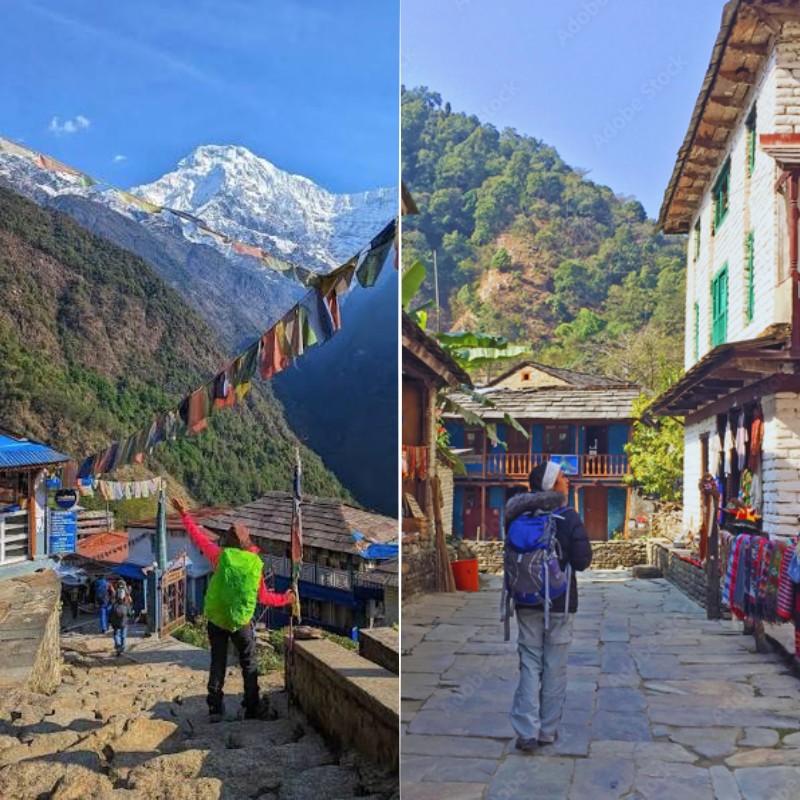
Left: Chhomrong village on the North ABC (Annapurna Base Camp) Trail, with colorful prayer flags and spectacular Himalayan views. Right: Ulleri village on the Annapurna trekking route, showcasing traditional stone-paved paths and mountain architecture.
Best Time to Trek Annapurna Base Camp
Autumn (September–November): The most popular season, with stable weather and clear mountain views.
Spring (March–May): Warmer temperatures and blooming rhododendron forests along the trail.
Winter (December–February): Quieter trails and clear skies, but colder temperatures and possible snow at higher elevations.
Monsoon (June–August): Generally avoided due to rain, leeches, and limited visibility, though the trail remains technically passable.
Conditions can vary from year to year, so it's worth checking current weather and trail reports closer to your planned departure.
Annapurna Base Camp Trek Cost
Trek costs vary depending on whether you go independently, with a guide, or through a full-service package, and they can change with fuel prices, permit fees, and lodge rates. Broadly, your budget should account for:
Permits (TIMS card and ACAP entry fee)
Guide and/or porter fees, if hired
Teahouse accommodation and meals along the route
Transport between Pokhara and the trailhead
Miscellaneous costs, like hot showers, charging, Wi-Fi, and snacks
Because permit fees, lodge prices, and porter rates can change, it's best to confirm current costs with a local trekking agency or the Nepal Tourism Board before you book.
Permits Required for the Annapurna Base Camp Trek
Two permits are required for the ABC trek:
ACAP (Annapurna Conservation Area Permit) — required since the trek passes through the Annapurna Conservation Area
TIMS Card (Trekkers' Information Management System) — used to register and track trekkers for safety purposes
Both can typically be arranged in Kathmandu, Pokhara, or through a registered trekking agency. Regulations around independent trekking and guide requirements have shifted in recent years, so check the latest rules before you go.
Famous Places Along the Annapurna Base Camp Trek
Ghandruk:
A large, well-preserved Gurung village with stone-paved paths and traditional architecture.
Chhomrong:
The last major village before entering the Annapurna Sanctuary, with excellent mountain views.
Jhinu Danda:
Home to natural hot springs, a popular stop to soothe tired legs.
Machapuchare Base Camp (MBC):
The final stop before ABC, sitting directly beneath the sacred, unclimbed Fishtail peak.
Annapurna Base Camp:
The trek's centerpiece, ringed by Annapurna I, Annapurna South, Hiunchuli, and Machapuchare.
Poon Hill (optional detour):
A renowned sunrise viewpoint over the Annapurna and Dhaulagiri ranges.
What to Pack for the Annapurna Base Camp Trek
A well-planned packing list keeps you comfortable across changing elevations and temperatures:
Clothing
Moisture-wicking base layers
Fleece or down mid-layer
Waterproof, windproof outer jacket
Trekking trousers and a warm hat
Gloves and thermal layers for higher, colder stretches
Footwear
Broken-in waterproof hiking boots
Comfortable camp shoes or sandals
Wool or synthetic hiking socks
Gear
30–40L daypack with rain cover
Sleeping bag rated for near-freezing temperatures
Trekking poles
Headlamp with spare batteries
Reusable water bottle and water purification tablets or filter
Health & Essentials
Basic first-aid kit and personal medications
Sunscreen, sunglasses, and lip balm
Hand sanitizer and toilet paper
Travel insurance details and copies of permits
Pack light but don't skimp on warm layers — temperatures at Annapurna Base Camp can drop well below freezing at night, even in the warmer trekking seasons.
Food and Accommodation on the Trail
The ABC trek follows a well-established teahouse trekking route, meaning you'll stay in family-run lodges offering simple rooms and hearty meals rather than camping. Expect classic trekking staples like dal bhat, noodle soups, momos, and porridge, with menu variety generally decreasing the higher you climb.
Most teahouses offer basic amenities like blankets, charging points, and hot showers, often for a small extra fee at higher elevations.
Tips for First-Time Trekkers
Walk at your own pace — rushing increases fatigue and altitude-related risk.
Stay hydrated and eat well, even if your appetite drops at altitude.
Break in your boots before the trek to avoid blisters.
Carry cash in Nepali rupees, as ATMs are unavailable once you leave Pokhara.
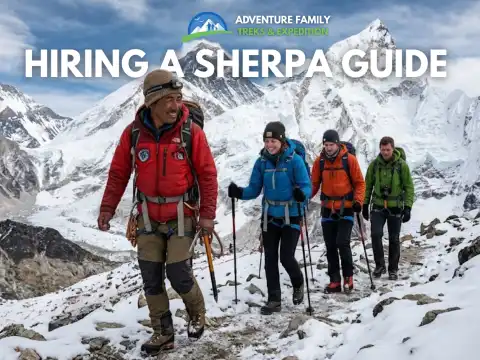
Consider a guide or porter, especially for your first Himalayan trek — it supports the local economy and adds a safety layer.
Check current permit and route regulations before departure, as rules can change.
Frequently Asked Questions
Is the Annapurna Base Camp Trek suitable for beginners?
Yes. It's considered a moderate trek and is a popular choice for first-time trekkers with reasonable fitness and no prior high-altitude experience.
How long does the Annapurna Base Camp Trek take?
Most itineraries run 7 to 10 days, including acclimatization, though shorter and longer versions are both possible depending on your pace and route.
Do I need a guide for the Annapurna Base Camp Trek?
Guide requirements and independent trekking rules have changed in recent years, so it's important to confirm current regulations before booking. Many first-timers choose a guide regardless, for safety and navigation support.
What permits do I need for the ABC trek?
You'll need an ACAP (Annapurna Conservation Area Permit) and a TIMS card, both available in Kathmandu, Pokhara, or through a trekking agency.
What is the best season for the Annapurna Base Camp Trek?
Autumn (September–November) and spring (March–May) offer the most stable weather and clearest mountain views, though winter and even monsoon treks are possible with the right preparation.
Is altitude sickness a risk on this trek?
Yes, though the risk is lower than on higher treks like Everest Base Camp or Annapurna Circuit. Acclimatizing properly, ascending gradually, and staying hydrated all help reduce the risk.
Can I do the Annapurna Base Camp Trek solo?
Solo trekking is possible for experienced hikers, though many trekkers — especially first-timers — opt for a guide or join a small group for safety and support.
What's the difference between Annapurna Base Camp and Annapurna Circuit?
ABC is shorter, generally easier, and focused on reaching the Annapurna Sanctuary, while the Annapurna Circuit is a longer, higher-altitude route that crosses the Thorong La Pass.
Conclusion
The Annapurna Base Camp Trek delivers an unforgettable mix of mountain scenery, cultural immersion, and achievable adventure — making it one of the best introductions to Himalayan trekking for first-timers. With the right preparation on itinerary, permits, and packing, you'll be ready to stand in the Annapurna Sanctuary surrounded by some of the world's highest peaks. Ready to start planning your trek? Explore our other Annapurna region guides or get in touchwith our team to build an itinerary that fits your schedule and experience level.